In today’s digital world, people often search online before choosing a company, purchasing a product, or working with a service provider. What they discover through Google search results, social media platforms, customer reviews, and business websites can strongly influence their decisions. This is why maintaining a positive digital presence has become essential for individuals and businesses. Online reputation management is the process of monitoring, improving, and protecting how a person or business is perceived across the internet. Following an online reputation management guide can help businesses understand how to maintain customer trust, strengthen brand credibility, and protect their digital image.
A strong online reputation helps businesses build customer confidence, attract potential buyers, and establish long-term credibility. On the other hand, negative reviews, misleading information, poor customer experiences, and unanswered complaints can damage public perception. By following the right strategies, businesses can maintain a trustworthy image, respond to customer concerns, and create a positive experience across digital platforms. In this guide, we will explore how reputation management works, why it matters, which strategies businesses should follow, and how the right tools can help protect and strengthen a brand’s online presence.
Online Reputation Management Services
Online reputation management services help businesses and individuals monitor, maintain, and improve their digital image. These services focus on understanding how a brand appears online and identifying factors that may influence customer opinions. They typically combine review management, search engine optimisation, brand monitoring, content development, and customer communication to create a more positive digital presence. Professional service providers begin by evaluating a company’s existing online reputation. They examine search engine results, customer reviews, social media conversations, business listings, and other public information. This assessment helps identify negative feedback, outdated information, and opportunities to improve credibility.
Another important part of these services is managing customer reviews. Businesses receive feedback through platforms such as Google, Facebook, and industry-specific review websites. Professional support helps companies respond appropriately, address complaints, and encourage genuine satisfied customers to share their experiences.
Some providers also offer negative content management and crisis communication support. When misleading or inaccurate information appears online, they help businesses assess the situation and explore appropriate responses. However, legitimate criticism cannot simply be removed because a company dislikes it. Choosing the right reputation management service can help businesses develop a consistent strategy rather than reacting to individual problems without a clear plan.
Importance of Online Reputation Management
Online reputation management services help businesses and individuals monitor, maintain, and improve their digital image. This online reputation management guide explains how these services help brands understand their online presence and identify factors that may influence customer opinions. They typically combine review management, search engine optimisation, brand monitoring, content development, and customer communication to create a more positive digital presence. Professional service providers begin by evaluating a company’s existing online reputation. They examine search engine results, customer reviews, social media conversations, business listings, and other public information. This assessment helps identify negative feedback, outdated information, and opportunities to improve credibility.
Another important part of these services is managing customer reviews. Businesses receive feedback through platforms such as Google, Facebook, and industry-specific review websites. Professional support helps companies respond appropriately, address complaints, and encourage genuine satisfied customers to share their experiences.
Some providers also offer negative content management and crisis communication support. When misleading or inaccurate information appears online, they help businesses assess the situation and explore appropriate responses. However, legitimate criticism cannot simply be removed because a company dislikes it. Choosing the right reputation management service and following an online reputation management guide can help businesses develop a consistent strategy rather than reacting to individual problems without a clear plan.
Online Brand Reputation Management
 Online brand reputation management focuses on how customers, competitors, industry professionals, and the general public perceive a business across digital platforms. It involves maintaining consistent brand messaging, monitoring public conversations, and ensuring that customers can find accurate and useful information. A strong brand reputation begins with consistency. Your website, social media accounts, Google Business Profile, and other online listings should communicate the same business identity. Differences in company information, service descriptions, contact details, or branding can create confusion and reduce customer confidence.
Content also plays an important role in shaping brand perception. Publishing informative blog posts, educational resources, company updates, and customer success stories helps demonstrate expertise. It gives potential customers an opportunity to understand what your business offers before making contact. Businesses should also pay attention to their visual identity and communication style. Professional images, clear service descriptions, helpful social media posts, and consistent messaging contribute to a recognisable brand.
For individuals and professionals, protecting a digital image is equally important. Maintaining professional profiles and publishing accurate information can help establish credibility. Businesses and individuals can also explore these personal reputation management strategies to build and protect your online image, particularly when developing a trustworthy professional presence.
Digital Reputation Management Strategies
An effective reputation strategy requires regular attention, consistent communication, and a clear understanding of customer expectations. Businesses should not wait until a serious complaint or negative search result appears before taking action. One useful approach is to conduct regular reputation audits. Search for your business name on Google and review the information that appears. Examine customer reviews, social media mentions, business listings, and other public discussions. This helps identify inaccurate details, customer concerns, and opportunities to improve your digital presence.
Another valuable strategy is publishing high-quality content. Informative articles, helpful guides, service explanations, and industry insights can demonstrate expertise and provide customers with reliable information. Over time, relevant content may also improve the visibility of important business pages in search results. Social media engagement is another important element. Businesses should respond to questions, acknowledge customer feedback, and communicate professionally. Ignoring public conversations can create the impression that a company does not value its customers.
Search engine optimisation can support these activities by improving the visibility of relevant business information. Optimised service pages, useful blog content, accurate business listings, and relevant local references can help customers discover trustworthy information. Finally, businesses should prepare for potential reputation challenges. Having a clear communication process helps teams respond quickly and consistently when complaints, misunderstandings, or unexpected public issues arise.
Business Reputation Management
Business reputation management involves protecting and improving the public perception of a company. It is particularly important for businesses operating in competitive markets where customers can easily compare different service providers. A company’s reputation develops through many interactions, including product quality, customer service, pricing transparency, delivery experiences, and after-sales support. Even an effective marketing campaign cannot compensate for consistently poor customer experiences.
For this reason, businesses should connect reputation activities with their overall customer service strategy. Employees should understand how to handle complaints, provide accurate information, and communicate respectfully with customers. Local visibility also contributes to business credibility. Accurate business listings, consistent contact information, and genuine customer feedback make it easier for potential customers to evaluate a company. For businesses targeting local customers, Google Maps visibility can play an important role in attracting relevant enquiries.
Maintaining an optimised Google Business Profile, selecting appropriate business categories, and responding to customer reviews can support local discovery. Businesses looking to improve their local presence can also read about Google Maps SEO for UK businesses and what really works. Companies should also measure reputation performance over time. Customer satisfaction, review quality, response rates, repeat purchases, and customer enquiries can provide useful insights into whether their reputation strategy is producing positive results.
Online Reputation Monitoring
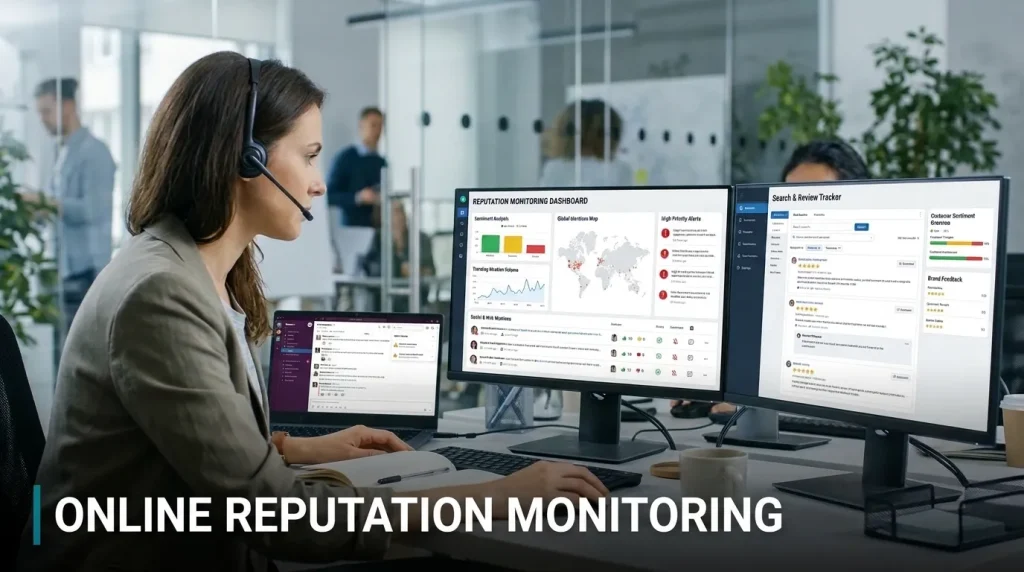 Online reputation monitoring is the process of tracking what people say about a business across websites, search engines, social media platforms, and review websites. It allows companies to understand public opinion and identify potential problems before they become larger issues. Monitoring begins with tracking brand mentions. Businesses should regularly search for their company name, products, services, and important representatives. This helps identify conversations that may not directly tag the company’s official social media accounts.
Review monitoring is equally important. New reviews should be checked regularly so that businesses can respond to customer feedback in a timely manner. Positive reviews provide an opportunity to thank customers, while negative reviews can highlight areas requiring improvement. Businesses should also monitor changes in search engine results. Outdated pages, inaccurate business information, and misleading content may affect how potential customers perceive a company. Identifying these issues early makes it easier to decide whether an update, clarification, or formal correction is necessary.
Monitoring should not be limited to negative information. Positive customer experiences, brand mentions, industry discussions, and recommendations can reveal what customers appreciate most about a company. A consistent monitoring process gives businesses better control over their communication and helps them make informed decisions about their digital presence.
Customer Reviews and Reputation Management
Customer reviews are among the most influential elements of a business’s digital reputation. Before purchasing a product or contacting a service provider, many customers read reviews to understand other people’s experiences. Positive feedback can strengthen trust and provide social proof. When customers share genuine experiences about product quality, helpful employees, timely delivery, or professional service, potential buyers gain additional confidence in the business.
However, negative reviews are also an important source of information. They can reveal recurring problems such as delayed responses, product defects, unclear pricing, or unsatisfactory customer service. Instead of treating every negative review as a threat, businesses should use reasonable criticism to identify areas for improvement. Responding to reviews is an essential part of the process. A professional response should acknowledge the customer’s concern, avoid unnecessary arguments, and offer a practical way to resolve the issue. Businesses should never share private customer information in public replies.
Companies can also encourage satisfied customers to leave honest feedback. This should be done without offering misleading incentives, purchasing reviews, or pressuring customers to provide positive ratings. A balanced collection of authentic reviews provides a more credible picture of the customer experience. Effective review management helps businesses understand their audience while strengthening long-term relationships.
How to Improve Online Reputation
Improving your digital reputation requires a combination of better customer experiences, accurate information, valuable content, and consistent communication. The first step is understanding your current online presence. Search for your business name and identify the websites, profiles, reviews, and discussions that appear most prominently. Once you understand the situation, update outdated information. Ensure that your website, social media accounts, and business listings contain accurate descriptions, contact details, operating hours, and service information. The next step is strengthening your content strategy. Publish helpful articles, answer frequently asked questions, share industry knowledge, and explain how your products or services solve customer problems. Useful content can demonstrate expertise and give potential customers more reasons to trust your business.
Customer communication should also receive attention. Respond to enquiries promptly, address complaints professionally, and provide clear information about products and services. Businesses can use messaging channels to make customer support more accessible and convenient. For example, a well-managed WhatsApp marketing service that improves customer journey management can help businesses maintain communication, answer customer questions, and provide relevant updates throughout the buying process.
Businesses should also establish a process for collecting and responding to feedback. Regularly reviewing customer concerns helps identify service problems and prevent similar issues from affecting future customers. Most importantly, reputation improvement takes time. Consistent effort and genuine improvements in customer experience are more valuable than shortcuts or artificial attempts to influence public opinion.
Online Reputation Management Tools
Reputation management tools help businesses monitor customer feedback, track brand mentions, analyse reviews, and understand changes in their online presence. They reduce the need to manually check every platform and make it easier to organise reputation-related activities. Google Alerts is a useful starting point for tracking selected business names and keywords. It can send notifications when matching content is discovered and indexed by Google, although it does not capture every online mention.
Google Business Profile provides businesses with access to customer reviews and important local business information. Companies can use it to maintain their listings, respond to feedback, and understand how customers interact with their business profile. Brand24 is another platform designed to monitor online mentions across supported digital sources. It can help businesses identify conversations, track brand visibility, and understand how people discuss their products or services.
Mention is useful for tracking brand references and monitoring online conversations. It can help marketing teams identify relevant discussions and stay informed about their public presence. Review management platforms such as Birdeye and ReviewTrackers can help businesses organise customer feedback and manage reviews across supported platforms. Their features may include review monitoring, response workflows, reporting, and customer feedback management.
The right tool depends on business size, budget, industry, and monitoring requirements. Small businesses may begin with free tools, while larger organisations may benefit from more advanced monitoring and reporting platforms. However, tools alone cannot build a positive reputation. Businesses still need to listen to customers, improve their services, and respond thoughtfully to feedback.
Benefits of Online Reputation Management
 Maintaining a positive digital reputation provides several advantages for businesses and professionals. One of the most important benefits is increased customer trust. When potential customers find accurate information, genuine positive reviews, and professional communication, they are more likely to consider a company reliable. Another benefit is improved customer acquisition. A trustworthy online presence can help businesses stand out when consumers compare competing products or services. Positive customer feedback and helpful content can encourage people to make enquiries and complete purchases.
Reputation management can also support search visibility. Although reputation activities do not guarantee higher search rankings, accurate business information, useful content, genuine reviews, and relevant brand mentions can contribute to a stronger overall digital presence. Customer retention is another advantage. Businesses that respond to feedback and resolve problems demonstrate that they value existing customers. This can strengthen relationships, encourage repeat purchases, and generate recommendations.
Furthermore, monitoring public conversations helps businesses identify customer expectations and areas requiring improvement. These insights can support better products, improved services, and more effective marketing decisions. For growing companies, reputation management also provides a competitive advantage. A business that consistently communicates with customers and maintains a trustworthy image may become a preferred choice within its industry. Ultimately, a strong reputation is a valuable business asset. Protecting it requires ongoing attention, but the benefits can extend across customer relationships, brand credibility, and long-term growth.
Conclusion
A positive digital image is essential for building customer confidence and maintaining a competitive business presence. From monitoring reviews and managing brand mentions to publishing valuable content and improving customer communication, every activity contributes to how people perceive a company. Online reputation management should be treated as an ongoing business responsibility rather than a one-time marketing activity. Businesses that listen to customers, respond professionally, maintain accurate information, and consistently improve their services are better positioned to build long-term trust. By adopting the right strategies and using suitable monitoring tools, businesses can protect their digital identity, strengthen their credibility, and create a positive online presence that supports sustainable growth.
FAQ
1. What is online reputation management?
It is the process of monitoring, influencing, improving, and protecting how individuals or businesses are perceived online. An online reputation management guide helps businesses understand how to manage reviews, monitor brand mentions, respond to feedback, and maintain accurate digital information.
2. Why is online reputation management important for businesses?
It helps businesses build customer trust, improve credibility, attract potential customers, and maintain stronger relationships. This online reputation management guide explains how a positive digital image can influence purchasing decisions and help companies compete more effectively.
3. How does online reputation management work?
It involves reviewing search results, monitoring customer feedback, responding to reviews, publishing useful content, correcting inaccurate information, and improving customer experiences. Following an online reputation management guide can help businesses develop a consistent strategy.
4. How long does it take to improve an online reputation?
The timeline depends on the company’s existing reputation, the number of issues, competition, and actions taken. Some improvements can happen quickly, while building stronger customer trust may require several months of consistent effort.
5. Can negative online reviews be removed?
Negative reviews can sometimes be removed if they violate platform policies. However, legitimate negative feedback generally cannot be removed simply because a business disagrees with it. Professional responses and genuine service improvements are often the best approach.
6. What are the best online reputation management tools?
Popular options include Google Alerts, Google Business Profile, Brand24, Mention, Birdeye, and ReviewTrackers. An online reputation management guide can help businesses choose suitable tools based on their budget and monitoring requirements.
7. How can small businesses manage their online reputation?
Small businesses can maintain accurate business listings, request honest customer feedback, respond to reviews, publish helpful website content, and monitor brand mentions. Consistency is more important than using expensive software.
8. Does online reputation management improve SEO?
It can support broader SEO efforts through useful content, relevant brand mentions, accurate business information, and genuine customer reviews. However, it does not guarantee improved search rankings because search engines use multiple ranking factors.
9. What is the difference between brand management and reputation management?
Brand management focuses on developing and communicating a company’s identity, values, and messaging. Reputation management focuses on how people perceive that company and how those perceptions can be monitored, improved, and protected.
10. Should businesses hire a professional reputation management agency?
Businesses may benefit from professional support when they have numerous reviews, complex reputation issues, negative search results, or limited internal resources. An online reputation management guide can help companies understand when professional assistance may be valuable.