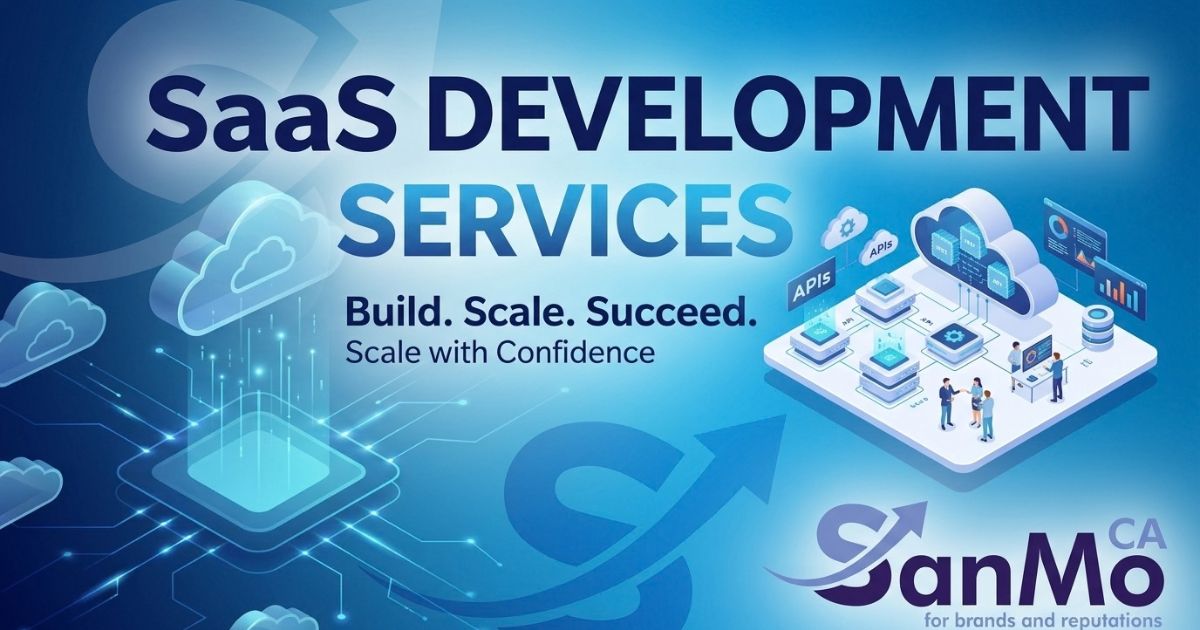
Cloud computing didn’t just change how software is built—it fundamentally redefined what’s possible. For businesses investing in SaaS development services, understanding this relationship is the difference between a product that scales effortlessly and one that buckles under pressure. This post breaks down exactly how cloud infrastructure enables modern SaaS development, what it means for businesses looking to build or expand a SaaS product, and why partnering with the right development team matters more than ever.
Whether you’re a startup exploring your first SaaS product or an established company modernizing legacy software, the cloud is no longer optional. It’s the foundation everything else is built on. By the end of this guide, you’ll have a clear picture of how cloud computing fuels SaaS development, which cloud models suit different business needs, and how SanMo CA approaches cloud-powered SaaS projects for clients across industries.
What Is the Relationship Between Cloud Computing and SaaS?
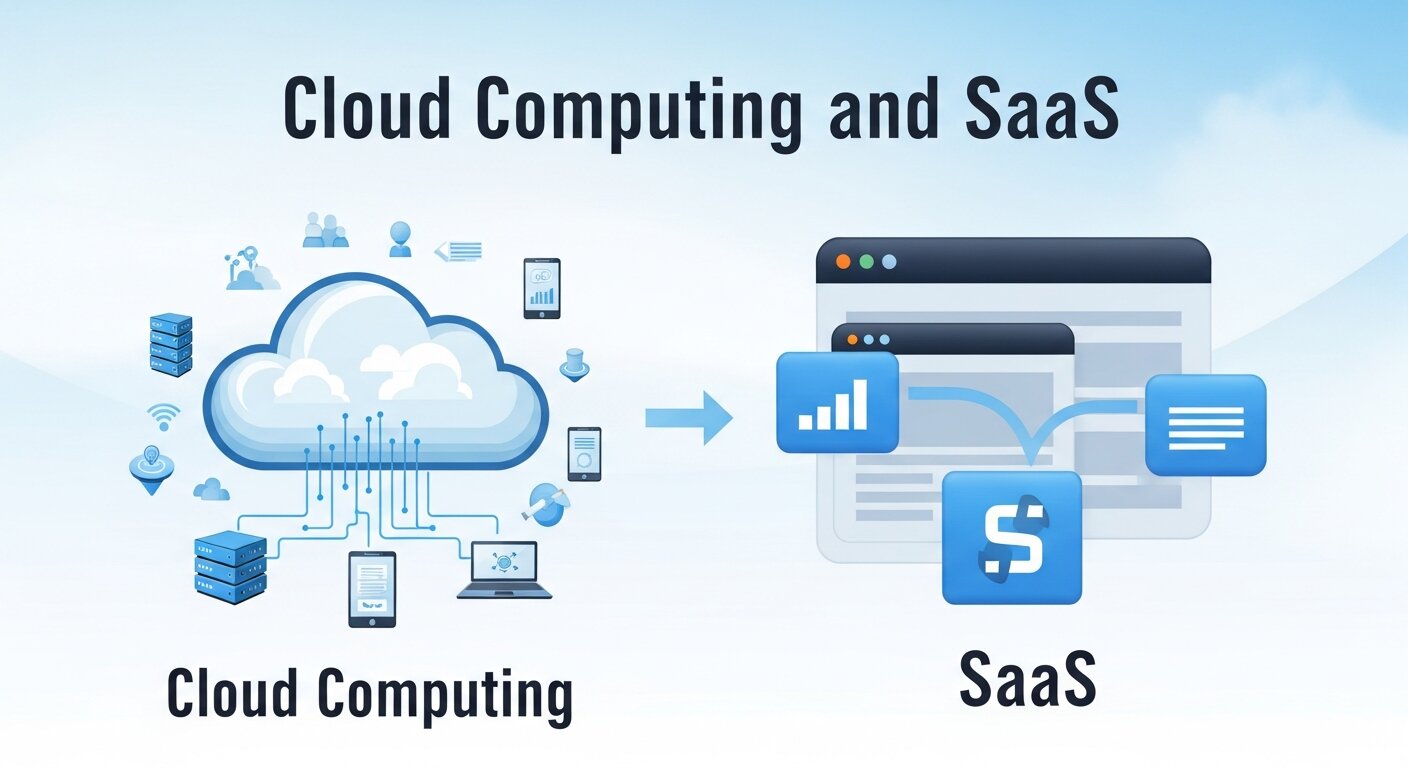 SaaS (Software as a Service) is software delivered over the internet rather than installed on local machines. Think Slack, Salesforce, or Zoom—products accessed through a browser, updated automatically, and used by thousands (or millions) of users simultaneously.
Cloud computing is the engine that makes all of this possible. By hosting applications on remote servers managed by cloud providers like Amazon Web Services (AWS), Microsoft Azure, or Google Cloud Platform (GCP), SaaS companies eliminate the need for physical infrastructure. Users get instant access, automatic updates, and reliable uptime—without ever touching a server.
The two are deeply intertwined. SaaS without cloud infrastructure would require enormous capital investment in physical servers, IT teams, and data centers. Cloud computing without SaaS delivery would leave a lot of its potential untapped. Together, they form the backbone of the modern software economy.
How Does Cloud Infrastructure Enable Scalable SaaS Development?
 Scalability is one of the most important qualities any SaaS product needs. A platform that works well for 50 users must also work well for 50,000—without a complete rebuild.
Cloud infrastructure makes this possible through a concept called elastic scaling. Rather than pre-purchasing fixed server capacity, cloud-hosted SaaS applications can automatically adjust resources based on demand. Traffic spike on a Monday morning? The system spins up additional compute power. Load drops overnight? Resources scale back down, and so do costs.
For SaaS development services, this changes the entire design philosophy. Development teams can architect applications from day one to be horizontally scalable—distributing workloads across multiple servers and regions rather than relying on a single, increasingly powerful machine. This approach is more resilient, more cost-effective, and far better suited to the unpredictable nature of real-world user behavior.
SanMo CA integrates these scalability principles directly into SaaS architecture design, ensuring that the products built for clients today won’t need expensive overhauls tomorrow.
What Cloud Deployment Models Are Used in SaaS Development?
Not all cloud environments are created equal. SaaS development teams typically work across three main deployment models, each with different trade-offs.
Public Cloud
The most common choice for SaaS products, the public cloud uses shared infrastructure managed by providers like AWS, Azure, or GCP. It’s cost-efficient, globally distributed, and packed with managed services—databases, authentication, messaging queues—that accelerate development timelines significantly.
Public cloud works well for most SaaS products, particularly those prioritizing speed-to-market and global reach.
Private Cloud
Some industries—healthcare, finance, government—require tighter control over data residency and compliance. A private cloud gives organizations dedicated infrastructure, either hosted on-premises or through a managed provider.
Private cloud deployments take longer and cost more upfront, but they offer the customization and compliance guarantees that regulated industries demand.
Hybrid Cloud
A hybrid approach combines both. Sensitive data or workloads might run on a private environment, while other application components run on the public cloud. This gives organizations flexibility without sacrificing compliance.
Choosing the right model isn’t just a technical decision—it’s a strategic one. SanMo CA works closely with clients to evaluate their regulatory requirements, budget, and growth trajectory before recommending an architecture.
How Does Cloud Computing Reduce the Cost of SaaS Development?
Traditional software development required significant upfront investment. Before writing a single line of code, companies had to purchase servers, set up data centers, hire infrastructure teams, and maintain all of it indefinitely.
Cloud computing flips this model entirely. Costs shift from capital expenditure (CapEx) to operational expenditure (OpEx). Development teams pay for what they use, when they use it.
This has three major effects on SaaS development budgets:
Lower barriers to entry: Startups can build and launch SaaS products without raising millions in infrastructure funding. A small team with a good idea can deploy a globally available application for a fraction of what it would have cost a decade ago.
Faster iteration cycles: Cloud environments can be spun up and torn down in minutes. Development and testing environments no longer require procurement cycles. Teams ship faster, test more frequently, and catch bugs earlier.
Predictable scaling costs: As a SaaS product grows, infrastructure costs scale proportionally rather than in unpredictable jumps. Finance teams can forecast more accurately, and product teams can make growth decisions based on real data.
What Role Does DevOps Play in Cloud-Powered SaaS Development?
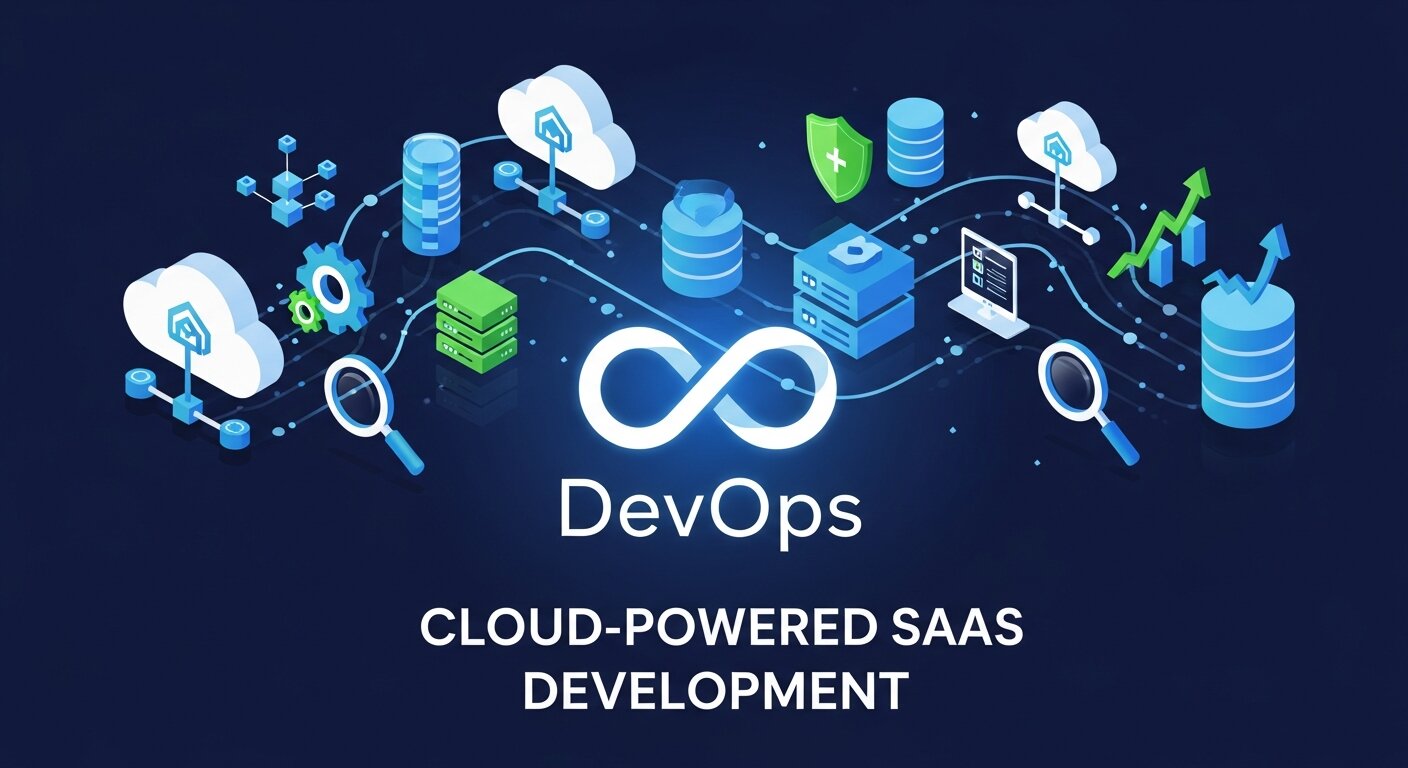 Cloud infrastructure and DevOps practices are deeply complementary. DevOps—the combination of development and operations workflows—thrives in cloud environments because the cloud provides the automation, flexibility, and observability that DevOps depends on.
In a cloud-powered SaaS development workflow, CI/CD pipelines (Continuous Integration and Continuous Deployment) allow teams to push code updates multiple times a day without manual intervention. Infrastructure as Code (IaC) tools like Terraform or AWS CloudFormation let teams define, version, and replicate entire environments programmatically.
The result? Faster releases, fewer deployment errors, and a much tighter feedback loop between what developers build and how users experience it.
SanMo CA builds DevOps practices into every SaaS engagement from the start—not as an afterthought, but as a core part of the development architecture. This ensures that clients can maintain and evolve their product confidently, even after the initial build is complete.
How Do Cloud Services Accelerate SaaS Feature Development?
One underappreciated advantage of cloud platforms is the sheer breadth of managed services available out of the box. Modern cloud providers offer ready-to-integrate solutions for authentication, machine learning, real-time messaging, video streaming, search, analytics, and more.
Rather than building these capabilities from scratch, experienced SaaS development teams leverage these managed services to dramatically accelerate timelines. A feature that might take months to build internally—like a fraud detection model or a global CDN—can be integrated in days using cloud-native tools.
This is particularly valuable for businesses with ambitious product roadmaps and tight launch windows. Speed-to-market matters. Users have high expectations, and the SaaS market moves fast.
By combining deep cloud expertise with purpose-built development practices, SanMo CA helps clients ship competitive, feature-rich products faster than internal teams working from scratch typically can.
What Are the Security Considerations in Cloud-Based SaaS Development?
Security is often cited as a concern with cloud computing, but the reality is more nuanced. Major cloud providers invest billions annually in security infrastructure—far more than most individual organizations could afford on their own.
That said, security in the cloud is a shared responsibility. Cloud providers secure the infrastructure layer. SaaS development teams are responsible for securing the application layer—how data is encrypted, how users are authenticated, how access controls are managed, and how vulnerabilities are detected and patched.
Key security practices in cloud-based SaaS development include:
- Encryption at rest and in transit to protect user data at every stage
- Role-based access control (RBAC) to limit what each user or system component can access
- Automated vulnerability scanning integrated into CI/CD pipelines
- Compliance frameworks such as SOC 2, HIPAA, or GDPR implemented at the architecture level
SanMo CA approaches security as a first-class concern, not a final checklist item. Security architecture is incorporated from the earliest stages of design, ensuring that products are built to protect user trust from day one.
Choosing the Right SaaS Development Partner for Cloud-Powered Builds
Cloud computing provides extraordinary capabilities—but those capabilities are only as useful as the team leveraging them. Building a scalable, secure, cost-efficient SaaS product requires more than cloud access. It requires experienced architects, disciplined engineers, and a development partner who understands how to translate business requirements into technical decisions.
SanMo CA specializes in end-to-end SaaS development services, from initial architecture design through to deployment, DevOps setup, and ongoing maintenance. The team brings hands-on experience across AWS, Azure, and GCP, with deep expertise in the tools and practices that separate good SaaS products from great ones.
For businesses ready to build or scale a SaaS product, SanMo CA offers a strategic advantage: a partner who understands not just the technology, but the business context behind it.
How Multi-Tenant Architecture Powers Modern SaaS Applications
 One of the defining characteristics of successful SaaS products is multi-tenant architecture. In a multi-tenant system, a single application instance serves multiple customers while keeping their data isolated and secure. This approach significantly reduces infrastructure costs, simplifies maintenance, and allows developers to deploy updates for all customers simultaneously. Instead of managing separate environments for each client, businesses can operate more efficiently while delivering a consistent user experience. Modern SaaS development services rely heavily on multi-tenant designs because they support rapid scaling and make it easier to onboard new customers. When implemented correctly, multi-tenancy creates a balance between operational efficiency, security, and performance—three qualities that every growing SaaS business depends on.
The Importance of User Experience in SaaS Development
Technology alone doesn’t determine the success of a SaaS product—user experience (UX) plays an equally important role. Even feature-rich software can struggle if users find it confusing or difficult to navigate. That’s why modern SaaS development services prioritize intuitive design, responsive interfaces, and seamless workflows from the earliest stages of development. Through user research, wireframing, prototyping, and usability testing, development teams create experiences that align with real user needs. A well-designed SaaS platform improves customer satisfaction, increases user retention, and reduces onboarding and support costs. Ultimately, great UX isn’t just a design consideration; it’s a competitive advantage that helps SaaS businesses attract, engage, and retain customers in increasingly crowded markets.
Frequently Asked Questions
What are SaaS development services?
SaaS development services refer to the end-to-end process of designing, building, deploying, and maintaining software delivered as a service over the internet. This includes architecture design, backend and frontend development, cloud infrastructure setup, DevOps implementation, security hardening, and ongoing support.
Why is cloud computing essential for SaaS products?
Cloud computing provides the scalable, globally distributed infrastructure that SaaS products require. Without it, companies would need to invest heavily in physical servers and data centers, making it difficult to scale efficiently or offer the high availability that modern users expect.
Which cloud platform is best for SaaS development—AWS, Azure, or GCP?
The best platform depends on your specific requirements. AWS offers the broadest range of managed services and the largest global footprint. Azure integrates well with Microsoft ecosystems, making it a strong choice for enterprise clients. GCP excels in data analytics and machine learning workloads. An experienced SaaS development partner can help assess which platform aligns best with your product’s needs.
How long does it take to build a SaaS product?
Timelines vary based on product complexity, feature scope, and team size. A minimum viable product (MVP) for a focused SaaS application can typically be delivered in three to six months. More complex, multi-tenant enterprise platforms may take longer. SanMo CA works with clients to prioritize features and define realistic timelines from the outset.
How does SanMo CA approach cloud-based SaaS development?
SanMo CA takes a holistic approach to SaaS development—starting with architecture design and cloud strategy, then moving through development, DevOps setup, security implementation, and deployment. The team works across AWS, Azure, and GCP, tailoring the technology stack to each client’s business goals and technical requirements.
What is the difference between SaaS, PaaS, and IaaS?
SaaS (Software as a Service) delivers fully functional applications to end users over the internet. PaaS (Platform as a Service) provides a development environment for building applications. IaaS (Infrastructure as a Service) offers raw compute, storage, and networking resources. SaaS sits at the top of the cloud stack and is the delivery model most end users interact with directly.
The Cloud Is the Foundation—Build on It Wisely
Cloud computing has made it possible for small teams to build products that compete with those of much larger organizations. It’s lowered costs, accelerated development, and enabled a generation of SaaS products that would have been impossible to deploy at scale just fifteen years ago.
The opportunity is real. But the outcomes still depend on the decisions made early: which cloud model to choose, how to architect for scale, how to build security in from the start, and who to trust with the build.
If you’re evaluating SaaS development services for an upcoming project, SanMo CA is ready to help. Reach out to discuss your goals, and let’s map out an architecture that sets your product up for long-term success.