Most content doesn’t fail because of bad writing. It fails because it was never built to perform.
You can publish consistently, target the right topics, and still watch your traffic plateau. That’s because publishing content is only half the battle. The other half? Making sure that content is optimized to reach the right people, at the right time, through the right channels.
That’s exactly what advanced content optimization does—and it’s quickly becoming one of the most important levers in a high-performing content strategy. For businesses working with professional SEO services like SanMo CA, content optimization is the difference between content that sits on page three and content that drives real, measurable results.
This post breaks down what advanced content optimization actually involves, why it matters more than ever, and how to apply it to strengthen your content strategy from the ground up.
What Is Advanced Content Optimization?
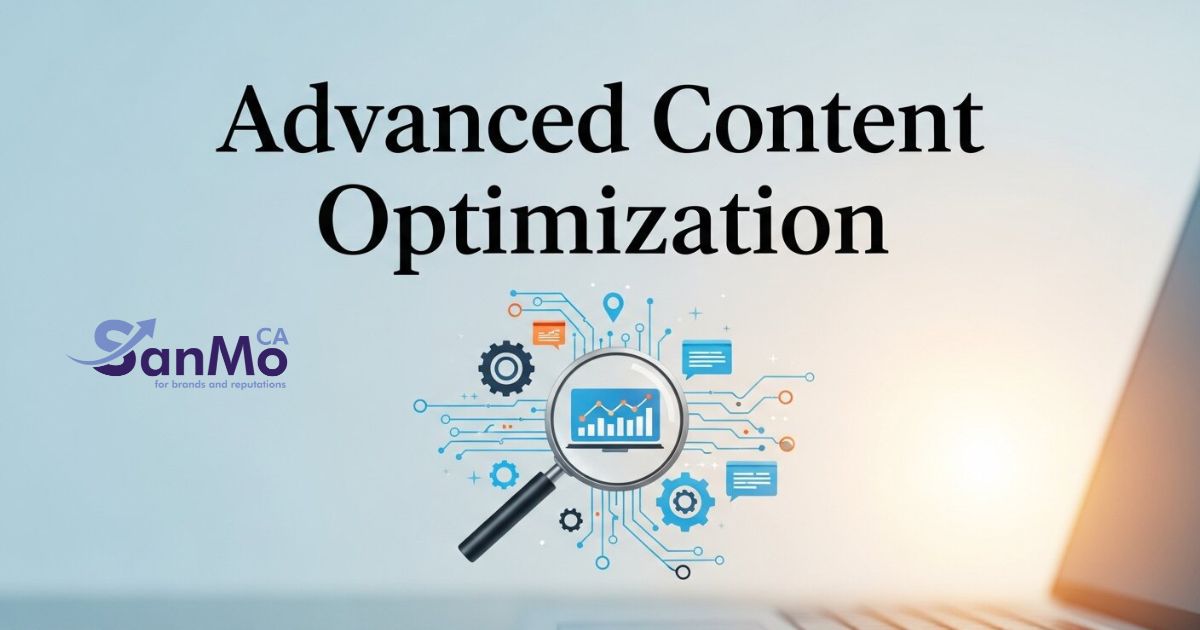
At its core, content optimization is the process of refining your content so it performs better—for both search engines and real readers. But “advanced” content optimization goes several steps further than simply adding keywords or updating a meta description.
It involves a holistic approach that considers:
- Search intent: What is the user actually trying to accomplish?
- Topical authority: Does your content signal expertise across an entire subject area?
- Content structure: Is the piece organized in a way that helps both readers and crawlers?
- Semantic relevance: Are you covering related terms and concepts that reinforce your topic?
- Performance data: What does the data tell you about where content is underperforming?
Advanced content optimization treats every piece of content as a strategic asset—one that should be regularly evaluated, refined, and updated to stay competitive.
Why Content Optimization Is Central to SEO Services Today
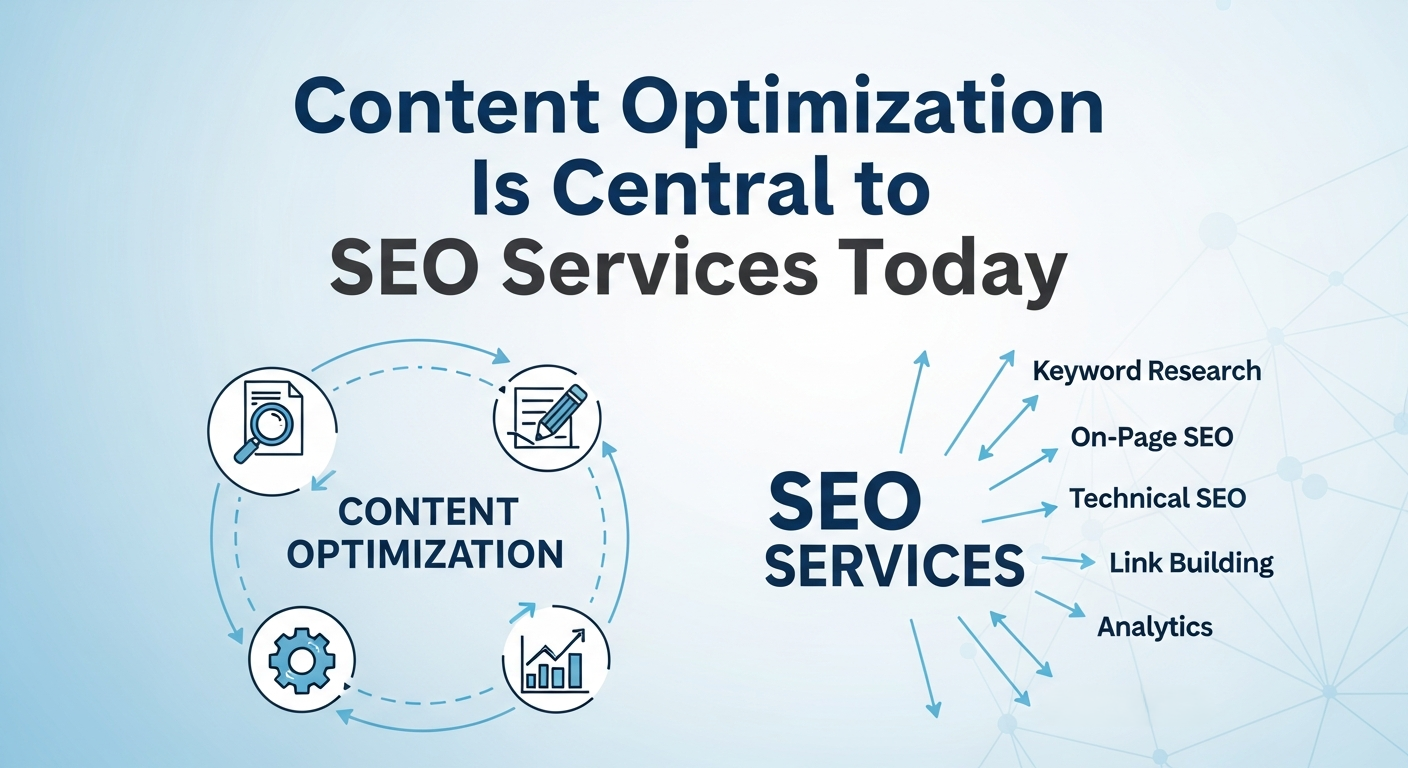 Search engines have evolved significantly. Google no longer rewards keyword-stuffed pages; it rewards content that comprehensively addresses a topic, builds trust, and delivers a positive user experience.
This shift has made content optimization inseparable from SEO services. When SanMo CA works with clients to improve their search visibility, content optimization is always part of the equation. Technical SEO lays the foundation, but optimized content is what earns rankings and keeps visitors engaged long enough to convert.
Consider this: a page that ranks #8 for a target keyword but thoroughly answers user questions will outperform a page ranking #3 that leaves readers with unanswered questions. Bounce rate, time on page, and engagement signals all feed back into Google’s ranking decisions. Optimized content addresses all of these simultaneously.
Key Pillars of Advanced Content Optimization
1. Aligning Content With Search Intent
Every search query has an intent behind it—informational, navigational, transactional, or commercial. One of the most common content mistakes is producing content that doesn’t match the intent of the keyword it’s targeting.
For example, targeting “best SEO services” with a generic blog post about what SEO is will underperform. The intent behind that keyword is commercial—users want to compare options and make a decision. The content should reflect that.
Mapping your content to the correct intent means understanding what type of result Google is already surfacing for that query. Study the top-ranking pages. Are they listicles, long-form guides, product pages, or comparison articles? That tells you everything you need to know about format and framing.
2. Building Topical Authority Through Content Clusters
Ranking for competitive keywords requires more than a single great article. Search engines look for signals that your website is a reliable, comprehensive resource on a given subject.
Content clusters help achieve this. The approach involves creating a central “pillar” page that broadly covers a core topic, supported by a network of cluster pages that go deep on specific subtopics—all internally linked together.
For a business offering SEO services, for example, a pillar page on “SEO Strategy” might link out to cluster pages on keyword research, technical audits, link building, and—of course—advanced content optimization. Each page reinforces the authority of the others.
3. Optimizing for Semantic Search
Modern search algorithms are built to understand context, not just keywords. This means your content needs to cover not just the primary keyword, but the related terms, questions, and concepts that surround it.
Tools like Google’s “People Also Ask” and “Related Searches” sections are a goldmine for this. They reveal the semantic landscape around your topic—the questions users are asking, the language they’re using, and the subtopics they expect to find addressed.
Working these terms naturally into your content, headings, and metadata signals to search engines that your content is comprehensive and relevant.
4. Refreshing and Updating Existing Content
New content gets most of the attention, but some of the biggest SEO wins come from optimizing what you already have.
Content decay is real. Pages that once ranked well gradually lose ground as competitors publish fresher, more detailed content. A strategic content refresh—updating statistics, expanding thin sections, improving internal linking, and re-optimizing for current search behavior—can recover and even improve those lost rankings without starting from scratch.
SanMo CA regularly identifies content decay opportunities for clients as part of a broader SEO services engagement. Often, a well-executed update delivers results faster than publishing something entirely new.
5. Improving Readability and User Experience
Search engines track how users interact with your content. If people land on a page and immediately leave, that’s a signal that something isn’t working—and it can drag down your rankings over time.
Readability plays a bigger role than most people realize. Long, dense paragraphs, walls of text, and unclear structure all contribute to higher bounce rates. Breaking content into digestible sections, using subheadings strategically, incorporating bullet points, and keeping sentences reasonably concise all contribute to a better on-page experience.
Optimized content isn’t just search-engine friendly—it’s human-friendly.
6. Strengthening Internal Linking
Internal links help distribute authority throughout your website and guide both users and search engines to related content. A page sitting in isolation, with no internal links pointing to it or from it, is unlikely to perform well regardless of how well-written it is.
A deliberate internal linking strategy connects your content into a coherent architecture. This improves crawlability, reduces orphan pages, and helps your most important content accumulate the authority it needs to rank.
How to Apply Advanced Content Optimization to Your Strategy
 Knowing the theory is one thing. Putting it into practice requires a structured approach.
Start with a content audit. Before creating anything new, understand what you already have. Identify your top-performing pages, your underperforming pages, and any gaps between what you’ve published and what your audience is searching for.
Prioritize by opportunity. Not all content is equal. Focus optimization efforts on pages that are close to ranking well—positions 8 through 20 are often the best candidates for quick wins. A few targeted improvements can move these pages onto the first page of results.
Use data to guide decisions. Google Search Console, Google Analytics, and third-party SEO tools provide the performance data you need. Look at impressions, click-through rates, average position, and engagement metrics to understand where content is falling short.
Set a regular review cadence. Content optimization isn’t a one-time task. Build it into your content workflow as an ongoing process—scheduling quarterly audits, refreshing high-priority pages annually, and continuously monitoring performance.
Working with an experienced SEO services provider like SanMo CA can significantly accelerate this process. Experienced professionals bring both the tools and the strategic perspective to identify opportunities that are easy to miss when you’re working close to the content.
Measuring the Impact of Content Optimization
Results from content optimization are rarely instant, but they are measurable. The key metrics to track include:
- Organic traffic: Are more users finding your content through search?
- Keyword rankings: Are you moving up for target keywords?
- Engagement metrics: Are visitors spending more time on your pages?
- Conversions: Is the content driving meaningful actions—form submissions, inquiries, purchases?
Tracking these metrics before and after optimization gives you a clear picture of what’s working and informs future decisions.
Leveraging Data Analytics for Smarter Content Optimization
 Data analytics plays a critical role in advanced content optimization. Instead of relying on assumptions, businesses can use performance data to understand exactly how their content is performing. Metrics such as click-through rate (CTR), average session duration, bounce rate, and keyword rankings provide valuable insights into user behavior. By analyzing these metrics, marketers can identify which content pieces attract traffic, which ones fail to engage readers, and where improvements are needed. For example, a page with high impressions but low clicks may need a stronger title or meta description. Data-driven optimization also helps refine keyword targeting and content structure. Over time, consistently using analytics ensures your content strategy evolves based on real performance insights rather than guesswork.
The Role of Visual Content in Optimization
Visual elements are becoming increasingly important in content optimization. Images, infographics, charts, and videos can significantly improve engagement and make complex information easier to understand. Search engines also consider user interaction signals, meaning visually appealing content can indirectly support better rankings. When readers stay longer on a page and interact with its elements, it sends positive signals about the quality and usefulness of the content. Additionally, properly optimized visuals—such as compressed images, descriptive alt text, and relevant file names—can help content appear in image search results. Visual content also improves readability by breaking up long sections of text, making articles more inviting and easier to scan for key information.
The Importance of Content Personalization
 Content personalization is emerging as a powerful strategy within advanced content optimization. Instead of delivering the same message to every visitor, businesses can tailor content based on user behavior, interests, or demographics. Personalized recommendations, dynamic content blocks, and targeted calls-to-action can significantly improve engagement and conversions. For instance, a returning visitor may be shown more advanced resources, while a first-time visitor might receive introductory content. This approach creates a more relevant and meaningful user experience. Search engines increasingly prioritize user satisfaction, so personalized experiences can indirectly support stronger SEO performance. By integrating personalization strategies into your content framework, businesses can create deeper connections with their audience and encourage long-term loyalty.
Frequently Asked Questions
What is the difference between basic and advanced content optimization?
Basic content optimization typically involves adding keywords, writing meta descriptions, and improving readability. Advanced content optimization takes a more strategic, data-driven approach—covering search intent alignment, topical authority building, semantic SEO, content refresh strategies, and user experience improvements.
How often should I optimize my content?
High-priority pages should be reviewed at least once a year, with more frequent checks for content in competitive niches. A quarterly audit of your overall content library is a good baseline to identify decay and new optimization opportunities.
Can content optimization improve rankings for old blog posts?
Yes—often significantly. Refreshing outdated content with new information, better structure, and updated keyword targeting can recover lost rankings and sometimes outperform the original version.
How do SEO services support content optimization?
Professional SEO service providers like SanMo CA bring technical expertise, data analysis, and a strategic framework that makes content optimization more effective. They identify opportunities, prioritize efforts, and implement changes based on proven methodologies rather than guesswork.
What tools are used for advanced content optimization?
Commonly used tools include Google Search Console, Google Analytics, SEMrush, Ahrefs, Surfer SEO, and Clearscope. Each serves a different purpose—from tracking rankings and traffic to analyzing content gaps and optimizing for semantic relevance.
Is content optimization a one-time project or ongoing work?
It’s ongoing. Search behavior evolves, competitors publish new content, and algorithms update regularly. Treating content optimization as a continuous process—rather than a one-time fix—is what separates consistently high-performing websites from those that plateau.
Build a Content Strategy That Lasts
Content that ranks and converts doesn’t happen by accident. It’s the result of strategic decisions, regular refinement, and a deep understanding of what your audience is actually looking for.
Advanced content optimization gives you the framework to make those decisions with confidence. From aligning content with search intent to building topical authority and refreshing existing assets, every step contributes to a stronger, more sustainable content strategy.
If you’re ready to take a more strategic approach to your content, SanMo CA’s SEO services can help you identify the highest-impact opportunities and build a roadmap to get there. Start with a content audit, prioritize your quick wins, and commit to the process—the results will follow.