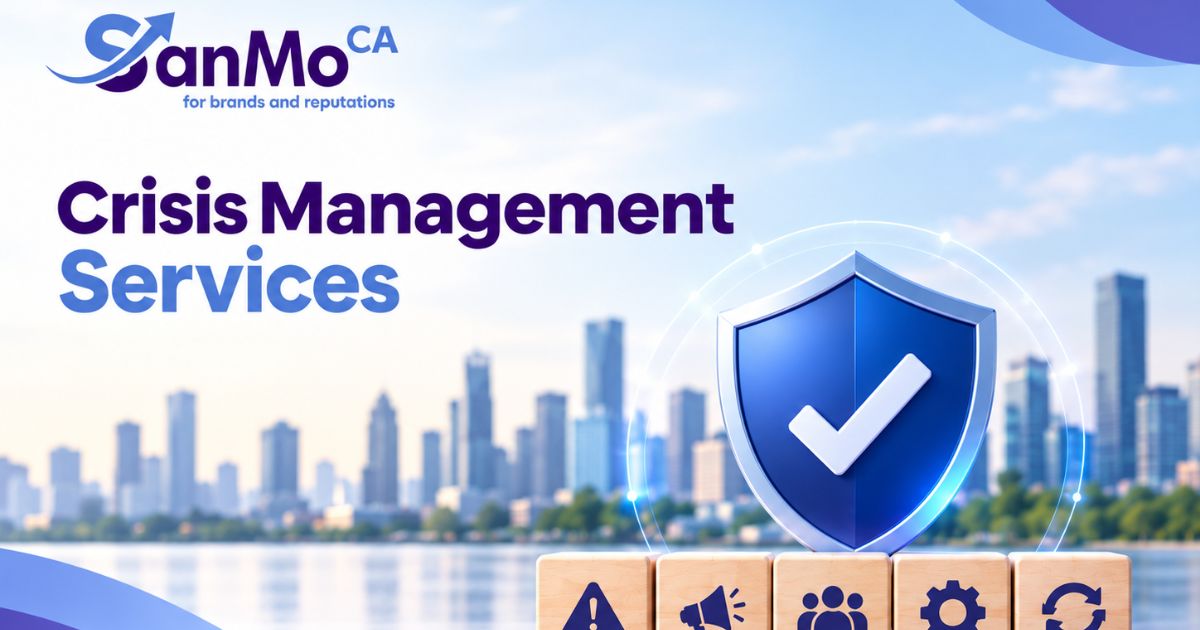
A brand emergency can happen without warning. A negative review can suddenly gain attention, a misleading story can spread across social media, or a customer complaint can develop into a larger public issue. When these situations are not handled quickly and carefully, they can affect customer trust, brand credibility, and long-term business growth. This is where professional Crisis Management Services become important.
Crisis management involves more than responding to negative comments or publishing a public statement. It requires careful monitoring, strategic communication, reputation protection, and a structured response plan. Professional crisis management teams help businesses understand what is happening, determine the potential impact, and take appropriate action before the situation becomes more difficult to control.
For businesses operating in competitive digital markets, having a reliable crisis response strategy can make a significant difference. SanMo CA provides professional reputation-focused solutions designed to help businesses manage challenging situations, protect their online presence, and maintain stronger relationships with their audiences.
Understanding Brand Emergencies in the Digital Age
 A brand emergency is any unexpected situation that can negatively affect how customers, partners, employees, or the public perceive a business. Some crises develop internally, while others begin with external events such as negative media coverage, customer complaints, social media discussions, or inaccurate information.
Common Causes of Brand Emergencies
Businesses can face reputation challenges for many different reasons. A dissatisfied customer may publish a negative experience online, while a misunderstanding can generate unwanted attention. Product-related complaints, employee disputes, data concerns, poor customer service experiences, negative news coverage, and misleading online content can also create reputational pressure.
The speed of digital communication makes these situations more challenging. A single post can reach thousands of people within a short period. If a company does not respond appropriately, the original issue can become associated with the brand for a much longer time.
Why Fast Response Matters
Timing is an important part of crisis management. A delayed response may allow inaccurate information to spread while customers form opinions without hearing the company’s perspective.
However, responding quickly does not mean responding emotionally. Businesses need to evaluate the situation before communicating publicly. Professional Crisis Management Services help organizations balance speed with accuracy so that their responses are measured, relevant, and aligned with their reputation goals.
How Professional Crisis Management Services Handle Emergencies
Professional crisis management follows a structured process rather than relying on random responses. The exact approach can vary depending on the type and severity of the crisis, but several important stages are commonly involved.
Crisis Monitoring and Detection
The first step is identifying potential reputation threats. Professional teams monitor relevant online channels to understand what people are saying about a business, brand, product, or service.
Monitoring may include brand mentions, online reviews, social media discussions, news coverage, search results, and other publicly available conversations. Early detection gives businesses more time to assess a problem before it develops into a larger crisis.
Effective monitoring is particularly important for businesses with a significant online presence because reputation issues can emerge across multiple platforms simultaneously.
Assessing the Severity of the Situation
Not every negative comment requires a full-scale crisis response. A professional team evaluates the nature, reach, and potential impact of an issue before recommending an appropriate response.
For example, an isolated customer complaint may require customer service intervention, while a widely shared allegation may require a broader communication strategy. Understanding this difference prevents businesses from overreacting to minor issues or underestimating serious ones. The assessment process also helps determine whether the issue is temporary, developing, or likely to create long-term reputation concerns.
Developing a Strategic Crisis Response
Once the situation is understood, the next step is developing a response strategy. A crisis response should address the actual issue while protecting the credibility of the organization.
Creating Clear and Consistent Communication
Confusing or contradictory statements can make a difficult situation worse. Professional Crisis Management Services help businesses develop clear messaging that communicates relevant information without unnecessarily escalating the issue.
The communication strategy should reflect the facts available at the time. When information is incomplete, businesses should avoid making unsupported claims. Clear and honest communication can help reduce confusion and demonstrate that the company is taking the situation seriously.
Choosing the Right Communication Channels
Different crises require different communication channels. A business may need to respond through its website, social media accounts, customer service channels, press communications, or other appropriate platforms.
Using the right channel helps ensure that the response reaches the audience most affected by the situation. Professional crisis management teams can help determine where and how the response should be communicated.
Managing Negative Online Attention
 Online reputation is particularly important because search engines and social platforms can keep negative information visible long after an incident has ended.
Monitoring Search Results
When a crisis receives significant online attention, people may search for the business before deciding whether to purchase its products or services. Negative content appearing prominently in search results can therefore influence perceptions.
Professional reputation management may involve monitoring branded search results and identifying content that could create reputational concerns. This provides businesses with a clearer understanding of how the crisis is affecting their online visibility.
Responding to Online Conversations
Not every negative comment should receive a public response. Responding to every criticism can sometimes increase attention around the issue.
A professional approach considers the context, audience, accuracy, and potential impact of each conversation. Appropriate responses can address genuine concerns, provide clarification, or move sensitive discussions into a more suitable private channel.
Protecting Customer Trust During a Crisis
Customer trust can become one of the most important assets during a brand emergency. Customers want to know whether a company recognizes the issue and is taking appropriate steps to address it.
Demonstrating Accountability
When a business is responsible for a problem, avoiding the issue may create additional frustration. Acknowledging legitimate concerns and communicating appropriate corrective actions can help demonstrate accountability.
At the same time, businesses should avoid making statements that are unsupported by available facts. Crisis communication should remain accurate, professional, and consistent with the organization’s actual actions.
Maintaining Customer Communication
Silence can create uncertainty, particularly when customers are actively looking for information. Maintaining appropriate communication helps customers understand what the company knows, what it is doing, and when additional information may become available.
This does not mean providing constant updates regardless of circumstances. Instead, communication should be purposeful and based on meaningful developments.
How SanMo CA Supports Crisis Management
Businesses dealing with reputation challenges may require specialized support beyond traditional marketing activities. SanMo CA focuses on digital reputation and related professional services that can help businesses navigate challenging online situations.
The goal is to provide businesses with a structured approach to reputation-related challenges rather than relying on short-term reactions. By combining reputation management strategies with digital communication practices, businesses can work toward protecting their online presence during and after a crisis.
Reputation-Focused Strategy
Every crisis is different, so businesses need strategies that reflect their specific situation. SanMo CA can help businesses approach reputation challenges by considering their digital presence, audience, existing reputation, and the nature of the issue.
A strategic approach can help businesses move from immediate crisis response toward longer-term reputation recovery.
Long-Term Reputation Recovery
Crisis management should not necessarily end when public attention decreases. Negative content, search results, and customer perceptions can continue affecting a business after the original incident has passed.
Long-term reputation management focuses on strengthening the overall digital presence and ensuring that accurate, useful, and trustworthy information remains accessible to audiences.
The Role of Reputation Monitoring After a Crisis
Post-crisis monitoring is an important part of maintaining reputation stability. A business should continue watching relevant online discussions even after the immediate situation appears to be under control.
Identifying New Reputation Risks
A crisis can sometimes lead to secondary issues. New discussions, follow-up articles, customer reactions, or social media conversations may appear after the initial incident.
Continued monitoring allows businesses to identify these developments and determine whether additional communication or reputation management action is necessary.
Measuring Reputation Progress
Businesses can also evaluate whether public attention is declining and whether their online presence is recovering. Changes in search visibility, brand mentions, customer sentiment, and online engagement can provide useful indicators.
These measurements should be interpreted carefully because online reputation is influenced by many factors. However, consistent monitoring can help businesses make more informed decisions.
Why Businesses Need a Crisis Management Plan
Waiting until a crisis occurs to decide what to do can create unnecessary confusion. A documented crisis management plan gives businesses a framework for responding to unexpected situations.
Preparing Before a Crisis Happens
A crisis plan can define communication responsibilities, escalation procedures, approval processes, monitoring methods, and response protocols. Preparation allows key decision-makers to focus on the situation instead of creating a process from scratch.
Businesses should also regularly review their crisis plans because communication channels, customer expectations, and digital platforms can change over time.
Learning From Previous Incidents
After a crisis has been managed, businesses can review what happened and identify areas for improvement. Understanding what caused the issue, how quickly it was detected, and how audiences responded can help strengthen future crisis preparedness. This makes crisis management an ongoing business function rather than a one-time emergency activity.
Building a Stronger Brand After a Crisis
 A crisis can create challenges, but the recovery period can also provide an opportunity to improve communication, customer service, and reputation practices.
Businesses can strengthen their digital presence by consistently publishing accurate information, responding professionally to customers, maintaining transparent communication, and improving areas that contributed to the original problem.
Professional Crisis Management Services can support this process by helping businesses move beyond immediate damage control and focus on sustainable reputation management.
Conclusion
Brand emergencies can develop quickly, particularly in an environment where information spreads rapidly through search engines, social media, review platforms, and digital publications. Businesses therefore need more than a quick reaction. They need structured monitoring, accurate communication, strategic decision-making, and long-term reputation management.
Professional Crisis Management Services help businesses approach these challenges through a planned and organized process. From detecting emerging issues and assessing their severity to managing communication and monitoring recovery, professional support can help organizations navigate difficult reputation situations more effectively.
For businesses looking for professional support with reputation-related challenges, SanMo CA provides solutions focused on protecting and strengthening digital brand presence. A proactive approach to crisis management can help businesses remain prepared, communicate responsibly, and work toward rebuilding trust when unexpected challenges arise.
Frequently Asked Questions
1. What are Crisis Management Services?
Crisis Management Services are professional solutions designed to help businesses identify, assess, respond to, and recover from situations that may negatively affect their reputation. They can include monitoring, crisis communication, reputation management, and recovery strategies.
2. Why are Crisis Management Services important for businesses?
A reputation crisis can spread quickly through digital channels. Professional crisis management helps businesses respond in a structured way, communicate clearly, monitor developments, and reduce the potential long-term impact of a reputation issue.
3. What can cause a brand crisis?
Brand crises can result from negative reviews, customer complaints, inaccurate information, negative media coverage, social media incidents, product problems, service failures, or other situations that create significant public concern.
4. How quickly should a business respond to a crisis?
Businesses should assess a crisis promptly, but the response should be based on accurate information rather than emotion. A professional team can help determine the appropriate timing, message, and communication channel.
5. Can Crisis Management Services help with negative online content?
Yes. Professional crisis management can include monitoring negative online content, evaluating its potential impact, developing appropriate responses, and supporting broader reputation management strategies.
6. Does every negative review require crisis management?
No. An individual negative review does not necessarily represent a brand crisis. The appropriate response depends on the content, context, reach, accuracy, and potential impact of the issue.
7. How does social media affect crisis management?
Social media can accelerate the spread of information and public reactions. Professional crisis management helps businesses monitor relevant conversations and develop appropriate communication strategies for social platforms.
8. Can a business recover after a reputation crisis?
Recovery is possible, but the process can vary depending on the nature and impact of the crisis. Consistent communication, appropriate corrective actions, reputation monitoring, and long-term reputation management can support recovery efforts.
9. Why should businesses prepare a crisis management plan?
A crisis management plan provides a framework for responding to unexpected events. It can help businesses establish responsibilities, communication procedures, escalation processes, and monitoring practices before an emergency occurs.
10. How can SanMo CA help with crisis management?
SanMo CA provides professional digital reputation-focused solutions that can support businesses facing reputation challenges. Its approach can include strategic reputation management, online monitoring, communication support, and longer-term reputation recovery efforts.