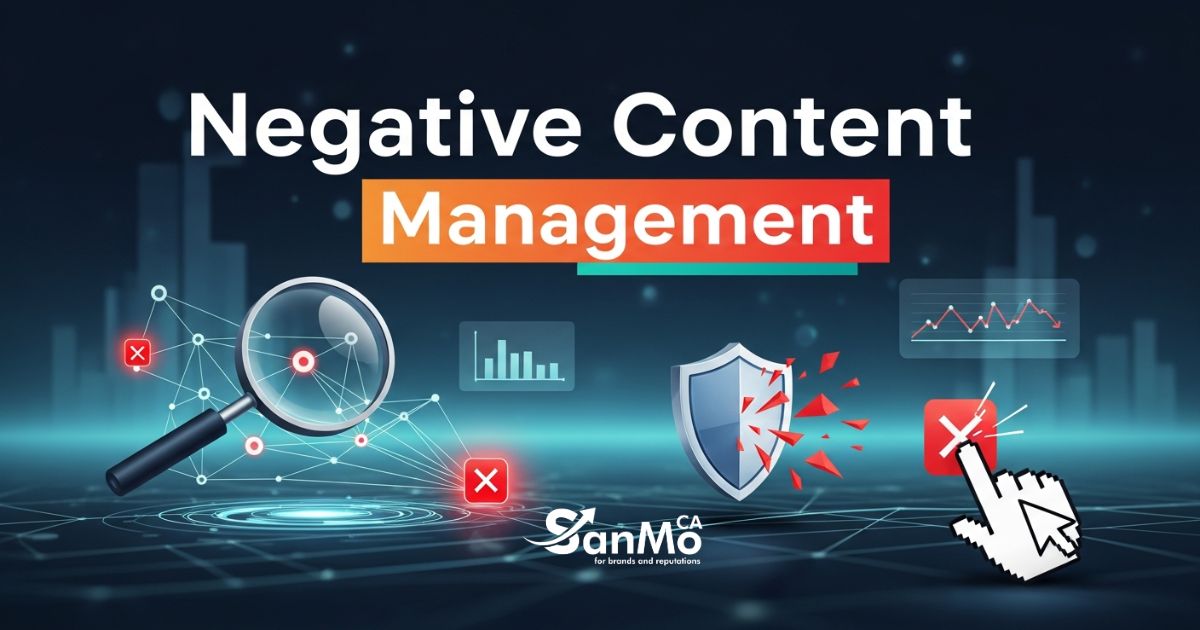
Negative content can appear without warning. A disgruntled customer leaves a one-star review. A competitor posts misleading claims. An old news article refuses to drop off the first page of Google. For businesses, the damage can be immediate—and lasting.
The good news? Negative content management is a skill that can be learned, refined, and executed strategically. With the right approach, businesses can not only limit the damage caused by harmful content but actively rebuild trust and take control of their digital narrative.
This guide covers the core strategies businesses need to address negative content online—from monitoring and responding to suppression and legal recourse. Whether you’re dealing with a one-off crisis or a persistent pattern of damaging content, the frameworks outlined here will help you respond with clarity and confidence.
Why Negative Content Management Matters More Than Ever
 Search engines have fundamentally changed how reputations are built and destroyed. A single negative article, review, or social media post can rank on the first page of Google for months—sometimes years. Prospective customers, investors, and partners all search before they engage. What they find shapes what they decide.
Research consistently shows that most consumers read online reviews before making a purchase, and a significant portion of those consumers will avoid a business after encountering negative content—even if that content is outdated or inaccurate.
For businesses in competitive markets, this makes negative content management not just a PR concern, but a bottom-line business issue. The longer harmful content sits unchallenged, the more authority it gains in search rankings—and the harder it becomes to displace.
How to Identify and Monitor Negative Content About Your Business
Effective negative content management begins with visibility. You cannot respond to what you do not know exists.
Set Up a Consistent Monitoring System
Google Alerts is a free and simple starting point—set up alerts for your business name, key executives, and branded product names. Beyond that, tools like Mention, Brand24, and Semrush’s brand monitoring feature offer more granular tracking across news outlets, blogs, forums, and social media platforms.
Review sites such as Yelp, Google Business Profile, Trustpilot, and industry-specific platforms also require regular attention. Many businesses make the mistake of only checking these sites when something goes wrong, rather than monitoring them proactively.
Prioritize by Impact
Not all negative content carries the same weight. A low-traffic blog comment buried on page six of Google is far less urgent than a critical article ranking in the top three results for your brand name. Assess each piece of content based on:
- Search visibility: Does it appear on the first page of results?
- Source authority: Is it published on a high-domain site like a news outlet?
- Reach: How many people have seen or shared it?
- Accuracy: Is the claim factually incorrect, misleading, or simply unflattering?
This triage approach allows your team to allocate resources where they’ll have the most meaningful impact.
How to Respond to Negative Reviews and Public Criticism
 Silence is not a strategy. Failing to respond to negative content—particularly reviews—signals to potential customers that you either don’t care or have no rebuttal. Both interpretations are damaging.
Responding to Negative Reviews the Right Way
When a negative review appears, respond promptly, professionally, and specifically. Generic responses like “We’re sorry you had a bad experience” signal that no one has actually read the complaint.
A strong response should:
- Acknowledge the issue without being defensive
- Offer context where relevant, particularly if the complaint involves a misunderstanding
- Provide a clear resolution path, such as a direct contact for follow-up
- Stay concise—a response is not the place for lengthy rebuttals
Avoid the temptation to argue publicly. Even when a reviewer is factually wrong, escalating the conversation in a public forum rarely benefits the business. Move the conversation offline as quickly as possible.
Addressing Criticism on Social Media
Social media criticism moves fast. A comment or post that gains traction can spread across platforms within hours. Respond quickly—ideally within a few hours during business hours—and keep your tone measured. If the criticism reflects a genuine service failure, own it directly. Customers respond well to accountability and poorly to deflection.
SanMo CA works with businesses to craft tailored response strategies that strike the right balance between transparency and brand protection—ensuring that public replies de-escalate rather than inflame.
Negative Content Management Strategies for Long-Term Suppression
When harmful content ranks prominently in search results, the most sustainable solution is not always removal—it’s suppression. By building a strong volume of positive, authoritative content, businesses can push negative results further down the search rankings, where fewer people are likely to see them.
Build a Content Ecosystem That Outranks the Negative
Search engines favor fresh, relevant, high-authority content. A consistent publishing strategy that includes blog posts, press releases, guest articles, and thought leadership pieces can gradually displace negative results.
Focus on:
- Owned media: Your website’s blog, resource pages, and about content
- Earned media: Press coverage, industry features, and podcast appearances
- Third-party profiles: LinkedIn, Crunchbase, Google Business Profile, and industry directories
Each of these represents a potential positive result that can appear in search rankings for your brand name.
Optimize Positive Content for Search Visibility
Publishing content is only half the equation. That content also needs to be optimized to rank. Use your brand name naturally throughout, build backlinks from credible external sources, and ensure that technical SEO basics—page speed, mobile optimization, clean URL structure—are in order.
SanMo CA specializes in this kind of long-term negative content management, helping businesses develop content strategies designed specifically to restore and strengthen their search presence over time.
Leverage Review Generation Campaigns
A flood of negative reviews becomes far less damaging when it’s surrounded by a large volume of positive ones. Proactively invite satisfied customers to leave reviews on Google, Yelp, or industry-specific platforms. Keep the request simple and direct, and make it easy—send a direct link to your review page rather than leaving customers to find it themselves.
Avoid incentivizing reviews, which violates most platforms’ terms of service. Instead, time your requests strategically—immediately after a successful purchase, service completion, or positive interaction.
When to Pursue Content Removal
 Suppression is the long game. In some cases, though, removal is both possible and appropriate.
Requesting Removal from the Source
If the negative content is factually inaccurate, defamatory, or violates a platform’s terms of service, contact the publisher directly and request removal. Many webmasters will comply, particularly if the content is clearly incorrect or was published in error. Be specific in your request—cite the inaccuracy, provide supporting evidence, and make it easy for the publisher to act.
Submitting Platform-Specific Removal Requests
Review platforms like Google and Yelp allow businesses to flag reviews that violate their policies—content that is fraudulent, irrelevant, or contains prohibited material. Google also allows de-indexing requests for specific categories of sensitive personal information.
These requests are not always granted, and the process can be slow. But when the content in question genuinely meets the removal criteria, it’s worth pursuing.
When Legal Options Apply
Defamatory content—content that makes false statements of fact that cause harm—may warrant legal action. This is a complex and often expensive path, but in cases where a business’s reputation has suffered serious damage from demonstrably false content, it may be the most effective route.
Before pursuing legal options, consult with a qualified attorney who specializes in defamation or internet law. The legal standards for defamation vary significantly depending on jurisdiction and the nature of the content.
Building a Reputation That’s Resilient to Negative Content
 The most powerful long-term defense against negative content is a strong, established reputation that gives search engines—and people—plenty of positive material to work with.
Businesses that consistently generate goodwill, engage authentically with their communities, and maintain a visible, active online presence are far better positioned to weather the inevitable negative review or critical article.
This means publishing valuable content regularly, maintaining accurate and complete profiles across all relevant platforms, responding to feedback consistently, and cultivating genuine customer advocacy. When positive content saturates your brand’s search results, individual pieces of negative content lose much of their power.
SanMo CA helps businesses build this kind of resilient digital presence—developing proactive reputation strategies that reduce exposure to negative content while strengthening overall brand authority.
Using Positive Customer Stories to Strengthen Your Online Reputation
Positive customer stories can play an important role in reducing the visibility and impact of negative content. Businesses can turn genuine customer experiences into case studies, testimonials, success stories, and helpful website content. These assets provide search engines with additional authoritative pages that represent the brand positively. They also give potential customers a more balanced view when they research the business online. The key is authenticity—content should reflect real experiences rather than exaggerated claims. Businesses can feature customer success stories on their websites, social media profiles, industry publications, and other relevant platforms. When consistently published and properly optimized, these positive assets can strengthen brand authority while supporting long-term search visibility. This approach complements negative content suppression by creating a broader and more credible digital footprint around the business.
Creating a Proactive Negative Content Response Plan
Waiting until damaging content becomes highly visible can make reputation recovery more difficult. A proactive response plan helps businesses determine how potential reputation threats should be handled before they escalate. The plan should define who monitors brand mentions, who approves public responses, and when an issue should be escalated to senior leadership or legal professionals. Businesses should also prepare communication guidelines for reviews, social media criticism, misleading claims, and potential crises. Regular monitoring allows teams to identify warning signs early and prioritize issues based on visibility, accuracy, reach, and potential business impact. A documented response process creates consistency and reduces emotional reactions during stressful situations. By preparing in advance, businesses can respond faster, protect customer trust, and limit the opportunity for negative content to gain significant visibility across search engines and digital platforms.
Frequently Asked Questions
What is negative content management?
Negative content management is the process of identifying, addressing, and mitigating harmful online content—such as bad reviews, critical articles, or misleading posts—that damage a business’s reputation. It typically involves monitoring, strategic response, content suppression, and in some cases, formal removal requests.
How long does it take to suppress negative search results?
The timeline varies depending on the authority of the negative content and the strength of the positive content being built to replace it. In most cases, meaningful movement in search rankings takes between three to six months of consistent effort. High-authority negative content on major news sites can take longer.
Can negative online reviews be removed?
Reviews that violate a platform’s policies—such as fraudulent, irrelevant, or abusive content—can be flagged for removal. However, platforms like Google and Yelp rarely remove negative reviews simply because a business disagrees with them. Factually inaccurate or defamatory reviews may be removable through legal means.
Is it possible to remove negative content from Google?
Google offers limited removal options for specific types of content, including certain sensitive personal information. For content hosted on third-party sites, removal typically requires contacting the publisher directly or pursuing legal action for defamatory material. In many cases, suppression through positive content is the more practical long-term strategy.
How can SanMo CA help with negative content management?
SanMo CA provides tailored negative content management services, including brand monitoring, strategic response planning, SEO-driven content suppression, and review generation campaigns. Their approach is designed to address both immediate reputation threats and long-term brand resilience.
What’s the difference between reputation management and negative content management?
Reputation management is the broader practice of shaping and maintaining how a business is perceived online. Negative content management is a specific subset of that practice, focused on identifying and addressing harmful content. Both are often handled together as part of a comprehensive digital reputation strategy.
Take Back Control of Your Online Narrative
Negative content is a challenge every business will face at some point. The difference between those who emerge with their reputation intact and those who don’t usually comes down to preparation and execution.
Start by monitoring what’s being said about your brand. Respond to criticism quickly and professionally. Build a consistent flow of high-quality content that outranks the negative. And when removal is viable, pursue it through the appropriate channels.
If your business is dealing with persistent or high-impact negative content, professional support can accelerate the process significantly. SanMo CA offers tailored negative content management solutions designed to address immediate threats and build lasting reputation resilience. Reach out to their team to learn how they can help you take back control of your online presence.