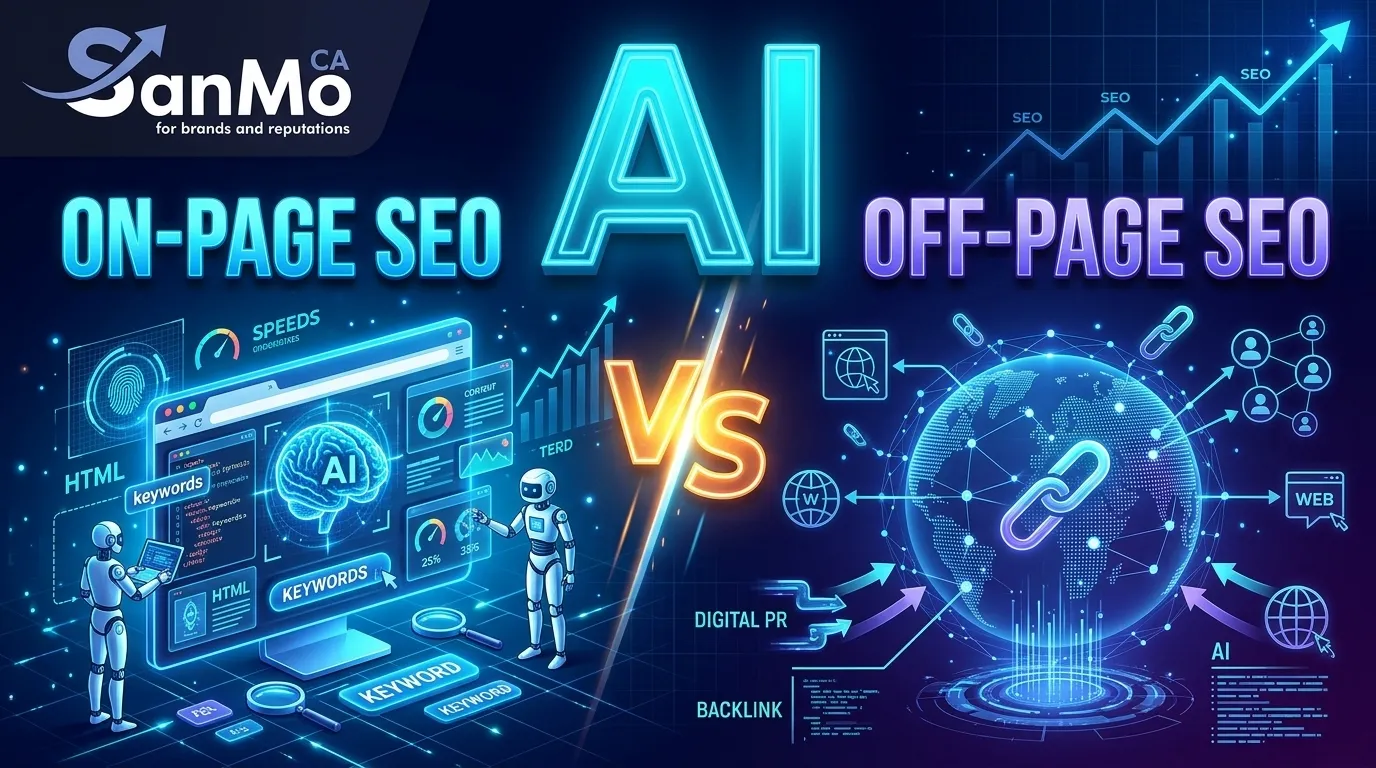
Search engine optimisation is constantly evolving, and artificial intelligence is changing how businesses improve their online visibility. AI SEO helps website owners optimise their content, understand search intent, identify keyword opportunities, analyse backlinks, and develop more effective optimisation strategies. However, on-page SEO and off-page SEO serve different purposes. On-page SEO focuses on improving elements within a website, while off-page SEO builds authority and trust through external signals. Understanding both approaches is essential for creating a successful SEO strategy. By combining AI-powered tools with effective optimisation practices, businesses can improve their search visibility, attract relevant visitors, and build sustainable organic growth.
AI-Powered On-Page SEO Techniques
On-page SEO focuses on improving different elements within a website to make its pages more understandable, relevant, and useful for visitors and search engines. AI SEO has made this process more efficient by helping website owners analyse content, identify optimisation opportunities, and improve their overall website structure. One of the most important applications of AI in on-page optimisation is content analysis. AI-powered platforms can evaluate existing articles, identify missing information, suggest relevant keywords, and recommend improvements based on search intent. This allows content creators to produce more informative articles that address the actual questions of their target audience.
AI can also help optimise title tags, meta descriptions, headings, image alt text, and internal links. For example, an AI SEO tool can analyse a blog post and suggest a more relevant title that includes the primary keyword while encouraging users to click through from search results. Another important technique is content readability optimisation. AI can identify unnecessarily complicated sentences, repetitive information, and poorly structured paragraphs. Improving these elements makes content easier to understand and creates a better experience for readers. However, AI-generated recommendations should not be followed blindly. Human expertise remains important for checking accuracy, adding original insights, and ensuring that the final content genuinely helps readers.
AI-Driven Off-Page SEO Strategies
Off-page SEO involves activities performed outside your website to improve its credibility, authority, and reputation. Unlike on-page optimisation, which focuses on website elements, off-page SEO concentrates on external signals that influence how search engines and audiences perceive a website. AI SEO tools can make off-page optimisation more organised by analysing backlink profiles, discovering potential link-building opportunities, monitoring brand mentions, and evaluating competitor strategies.
For example, AI-powered backlink analysis can help identify websites linking to competing businesses but not to your website. These insights can help marketers discover relevant publications, industry blogs, and authoritative platforms for potential outreach. AI can also support digital PR campaigns by identifying relevant topics, analysing audience interests, and helping marketing teams develop content that attracts attention from publishers and industry professionals.
Another useful application is brand monitoring. AI-powered systems can track online conversations and identify positive or negative mentions across different platforms. Businesses can use these insights to understand public perception and respond appropriately. A successful off-page SEO strategy should always prioritise genuine relationships, relevant backlinks, useful content, and trustworthy brand mentions. AI can simplify research and planning, but authentic authority must be earned through quality and credibility.
On-Page SEO vs Off-Page SEO Differences
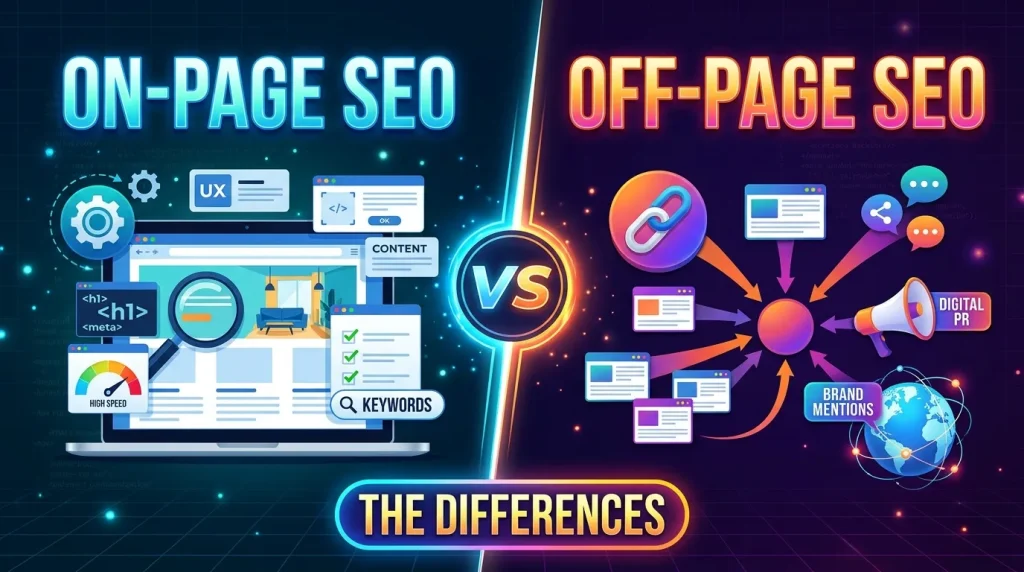 Although both approaches aim to improve organic search visibility, on-page SEO and off-page SEO focus on different areas of website performance. On-page SEO involves optimising elements that website owners can directly control. These include content quality, keyword placement, heading structure, internal linking, page titles, meta descriptions, image optimisation, and technical elements that affect the user experience. Off-page SEO focuses on external factors that help establish website authority. These include quality backlinks, digital PR, brand mentions, online reputation, and relationships with relevant websites and publishers. AI SEO supports both approaches by making research, analysis, and optimisation more efficient.
For example, when improving a blog article, an AI tool can recommend relevant keywords, identify missing subtopics, and suggest internal links. These activities contribute to on-page optimisation. On the other hand, the same technology can analyse competitor backlinks, identify potential outreach opportunities, and monitor brand mentions. These activities support off-page optimisation. Neither approach should be treated as a replacement for the other. A website with excellent content but limited authority may struggle to compete in highly competitive search results. Similarly, a website with numerous backlinks but poor content may fail to satisfy visitors. The strongest SEO strategy combines both approaches to create a relevant, trustworthy, and useful website.
AI SEO Optimization Techniques
AI SEO optimisation involves using artificial intelligence to improve different aspects of a website’s search performance. Rather than relying entirely on manual research, marketers can use AI-powered systems to process information, identify patterns, and make more informed decisions. Keyword research is one of the most common applications. AI tools can identify related search terms, analyse keyword intent, discover long-tail opportunities, and organise keywords into relevant topic groups.
Content optimisation is another important technique. AI can compare existing content with competing resources, highlight information gaps, and recommend additional topics that may improve the article’s usefulness. Technical SEO can also benefit from AI-assisted analysis. Certain platforms can help identify broken links, crawling issues, duplicate content, slow-loading pages, and other potential website problems. These findings should be verified using appropriate technical SEO tools.
AI can also support content refresh strategies. Older articles may lose visibility because information becomes outdated, competitors publish better resources, or search intent changes. Updating these pages with relevant information, improved structure, and better internal links can help maintain their usefulness. For a deeper understanding, explore this guide on content refresh strategies to recover lost SEO rankings. It explains how improving existing content can support long-term search performance. The key is to use AI as an optimisation assistant rather than relying on automated recommendations without proper evaluation.
AI Tools for On-Page SEO
Several AI-powered platforms help marketers improve on-page optimisation by simplifying keyword research, content development, competitor analysis, and website performance monitoring. ChatGPT can help generate content outlines, suggest relevant keywords, create meta descriptions, organise headings, and identify potential content gaps. It is particularly useful during the research and planning stages of content creation. Surfer SEO helps analyse competing search results and provides recommendations for improving content relevance and topical coverage.
Semrush offers keyword research, competitor analysis, backlink monitoring, and other SEO features that help marketers develop comprehensive optimisation strategies. Ahrefs provides tools for analysing backlinks, researching keywords, exploring competing websites, and identifying opportunities to improve organic search visibility. Frase can assist with content research, topic coverage, and developing structured articles based on search intent.
These platforms can improve the efficiency of AI SEO workflows, but they do not guarantee higher rankings. Search performance depends on multiple factors, including content quality, relevance, competition, technical health, and website authority. The best approach is to combine these tools with human research, industry knowledge, and a clear understanding of audience needs.
AI Link-Building Strategies
 Link building is an important part of off-page SEO because relevant backlinks can help search engines discover content and understand relationships between websites. AI SEO tools can simplify link-building research by analysing competitor backlink profiles, identifying relevant websites, and finding potential outreach opportunities. For example, a marketer can examine websites linking to competitors and identify publications that regularly cover similar industry topics. These websites may provide opportunities for guest contributions, expert commentary, or original research. AI can also help personalise outreach communication. Instead of sending identical messages to hundreds of websites, marketers can use AI to prepare relevant proposals based on each publisher’s audience and content interests.
Another useful strategy is developing link-worthy resources. Original research, detailed industry guides, informative reports, and useful resources can attract natural backlinks when they provide genuine value. However, link building should never focus only on increasing backlink numbers. The relevance, quality, and context of a link are more important than simply acquiring as many links as possible. Avoid automated link schemes, paid links intended to manipulate rankings, and irrelevant link exchanges. Sustainable AI SEO link-building strategies should prioritise editorial value, genuine relationships, and trustworthy websites.
AI-Powered Keyword Research
Keyword research helps businesses understand what their target audiences search for and how they can create relevant content to meet those needs. Traditional keyword research often involves manually analysing search volumes, competition, and related phrases. AI SEO tools can make this process faster by identifying keyword relationships, grouping search terms, and uncovering content opportunities. For example, a business targeting the keyword “digital marketing” may discover related searches such as digital marketing strategies, online marketing techniques, SEO services, and content marketing tips.
AI can also help classify keywords according to search intent. Some users want information, others compare different services, and some are ready to make a purchase. Understanding these differences allows marketers to create the right content for each stage of the customer journey. Another valuable technique is identifying long-tail keywords. These are more specific search phrases that often reveal clearer user intentions. Targeting relevant long-tail terms can help businesses attract visitors who are looking for particular solutions. AI SEO keyword research should also consider topical relevance. Instead of creating separate articles for every similar keyword, businesses can organise related terms into comprehensive content topics. This approach helps establish subject expertise and creates opportunities for meaningful internal linking between relevant pages.
AI Content Optimization for Search Engines
High-quality content remains an essential part of successful SEO. Artificial intelligence can support the content optimisation process by helping writers improve structure, relevance, readability, and topic coverage. AI SEO platforms can analyse existing articles and suggest improvements based on related search terms, common user questions, and competitor content. For example, if an article about website optimisation does not explain mobile responsiveness, page experience, or internal linking, AI-assisted research may highlight these missing areas.
Writers can then decide which topics genuinely improve the article instead of adding unnecessary information simply to increase word count. AI can also help improve content organisation. Clear headings, logical paragraph structure, relevant examples, and useful explanations make articles easier to navigate. Another important consideration is originality. Publishing large amounts of generic AI-generated content without meaningful research or human oversight can reduce content quality. Businesses should review AI-assisted content for factual accuracy, originality, relevance, and usefulness before publishing. Adding real examples, expert opinions, and practical experience makes content more valuable. A successful AI SEO content strategy combines technology with human judgement to create information that satisfies readers rather than simply targeting search engines.
AI Backlink Analysis and Link Building
Backlink analysis helps website owners understand which external websites link to their pages and how their backlink profiles compare with competitors. AI SEO tools can support this process by identifying backlink patterns, highlighting potentially unnatural links, and discovering new opportunities for acquiring relevant references. For example, marketers can analyse competitor backlink profiles to identify industry publications, business directories, blogs, and resource pages that may be relevant to their own websites.
AI can also help organise backlink data according to referring domains, link relevance, anchor text, and other useful characteristics. Another important application is backlink monitoring. Websites sometimes lose valuable backlinks when external pages are removed, updated, or redirected. Monitoring these changes helps marketers identify opportunities to recover lost links. AI-assisted analysis can also help identify unusual backlink patterns that deserve further investigation. However, not every low-quality-looking link requires action, and automated toxicity scores should not be treated as definitive evidence of a problem. When combined with professional judgement, AI SEO backlink analysis can help businesses develop a more informed link-building strategy. The ultimate objective should be earning relevant, editorially appropriate links that contribute to a trustworthy online presence.
How AI Improves On-Page and Off-Page SEO
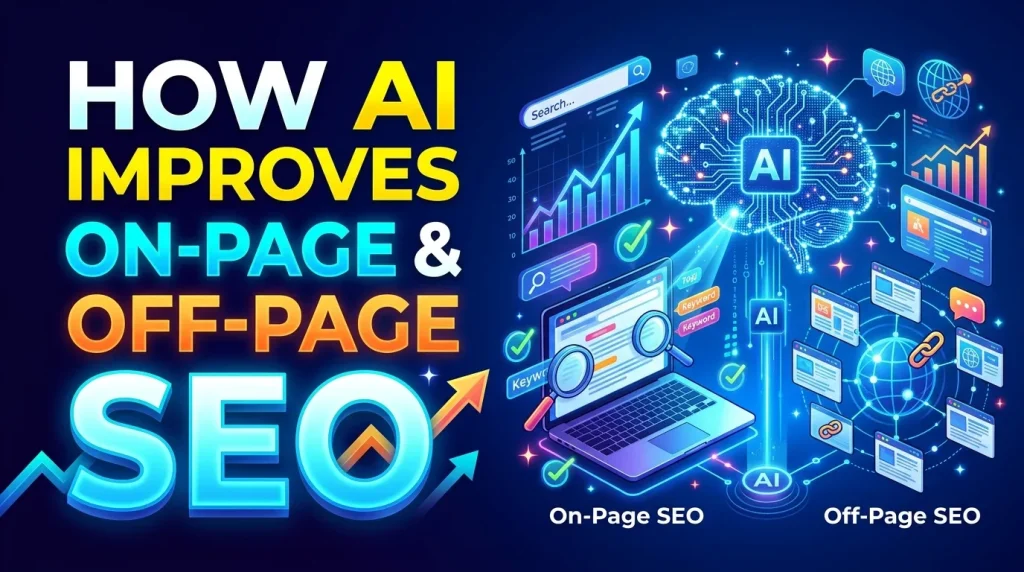 Artificial intelligence improves on-page and off-page SEO by helping marketers process information, recognise patterns, and make better optimisation decisions. For on-page SEO, AI can assist with content research, keyword analysis, metadata improvements, content structure, internal linking, and technical issue identification. For off-page SEO, it can help analyse backlinks, identify outreach opportunities, monitor brand mentions, and evaluate competitor strategies.
AI SEO also improves efficiency by reducing repetitive research tasks. Marketers can spend less time collecting basic information and more time developing valuable content, building relationships, and improving their websites. However, artificial intelligence does not replace the fundamental principles of SEO. Search engines aim to provide useful and relevant information to users. Therefore, content quality, technical accessibility, credibility, and user satisfaction remain important.
Online reputation is another consideration, particularly for businesses that depend on customer trust. Negative search results and unresolved complaints can influence how potential customers perceive a company. Businesses can learn more about this subject in how negative content management protects your online reputation. Similarly, authentic customer feedback can contribute to trust and local business visibility. Read how Google Reviews impact business growth to understand why customer experiences matter when building a strong digital presence. Ultimately, businesses should view AI SEO as a tool that supports a broader digital marketing strategy. Combining on-page improvements, off-page authority building, technical optimisation, and reputation management creates a stronger foundation for sustainable organic growth.
Conclusion
AI is changing how businesses approach search engine optimisation by making research, analysis, and content improvement more efficient. However, successful SEO still requires a balanced combination of on-page optimisation and off-page authority building. By using AI for keyword research, content optimisation, backlink analysis, and competitor research, businesses can develop more effective strategies and make informed decisions. The most important thing is to focus on delivering genuine value to visitors. AI should support human expertise, not replace it. A well-planned strategy that combines quality content, relevant backlinks, technical improvements, and a positive online reputation can create sustainable organic growth.
FAQ
1. What is the difference between AI on-page SEO and off-page SEO?
AI on-page SEO focuses on improving website content, headings, keywords, metadata, internal links, and technical elements. AI off-page SEO focuses on external activities such as backlink analysis, digital PR, brand monitoring, and link-building opportunities. Both approaches contribute to a stronger SEO strategy.
2. Can AI improve Google search rankings?
AI can help improve SEO workflows by identifying optimisation opportunities, improving content quality, and supporting keyword and backlink research. However, using AI does not guarantee higher Google rankings. Search performance depends on content relevance, website quality, competition, and other ranking considerations.
3. Which AI tools are best for SEO?
Popular tools include ChatGPT, Semrush, Ahrefs, Surfer SEO, and Frase. Each offers different capabilities for keyword research, content optimisation, competitor analysis, and backlink monitoring. The best choice depends on your SEO goals and budget.
4. Is AI-generated content good for SEO?
AI-generated content can be useful when it provides accurate, original, and helpful information. However, automatically publishing large amounts of low-quality or repetitive content is not a sustainable strategy. Human review, fact-checking, and original insights remain important.
5. How does AI help with keyword research?
AI helps identify related keywords, understand search intent, organise keyword groups, discover long-tail opportunities, and analyse content topics. This makes it easier to create relevant articles that address audience needs.
6. Can AI help build quality backlinks?
Yes. AI can help identify relevant websites, analyse competitor backlinks, discover outreach opportunities, and personalise communication. However, quality backlinks should be earned through valuable content, genuine relationships, and appropriate editorial opportunities.
7. Is on-page SEO more important than off-page SEO?
Neither is universally more important. On-page SEO helps search engines understand your website, while off-page SEO contributes to authority and credibility. A balanced approach is generally more effective than focusing exclusively on one area.
8. How often should I use AI SEO tools?
AI SEO tools can be used regularly for keyword research, content optimisation, competitor monitoring, and backlink analysis. The frequency depends on your publishing schedule, competition, and website performance. Regular monitoring helps identify new opportunities and potential problems.
9. Does AI replace traditional SEO techniques?
No. AI enhances traditional SEO techniques but does not replace the need for quality content, technical optimisation, ethical link building, and audience research. Human expertise is still essential for making strategic decisions and checking the quality of AI-assisted recommendations.
10. What is the future of AI in on-page and off-page SEO?
AI is likely to play an increasingly important role in search research, content analysis, technical auditing, competitor monitoring, and digital marketing automation. Businesses that combine AI capabilities with genuine expertise, original content, and trustworthy digital practices will be better positioned to adapt to changes in search technology.