
Getting content published is the easy part. Getting it to rank is where most businesses struggle. You can have the most insightful, well-written article on the web, but if it’s not optimized correctly, Google won’t surface it to the people who need it most.
Advanced content optimization goes far beyond sprinkling keywords into a blog post. It’s a multi-layered process that blends technical precision, user psychology, and strategic structure to help your content earn visibility—and keep it. At SanMo CA, we’ve seen firsthand how the right optimization approach can transform underperforming content into a consistent source of organic traffic.
This guide breaks down the most effective advanced content optimization techniques available today. Whether your content is brand new or collecting digital dust, these strategies will give it a serious competitive edge.
What Is Advanced Content Optimization?
Basic content optimization covers keyword placement, meta tags, and readability. Advanced content optimization takes things further—it’s about aligning every element of a piece of content with both search engine algorithms and real user intent.
That means analyzing search intent at a granular level, mapping your content to the full customer journey, optimizing for topical authority, and continuously improving based on performance data. It’s a cycle, not a checklist.
Google’s ranking systems have become remarkably sophisticated. They evaluate content based on E-E-A-T (Experience, Expertise, Authoritativeness, and Trustworthiness), semantic relevance, page experience signals, and behavioral data like dwell time and click-through rates. Keeping up requires a more advanced approach.
How Does Keyword Research Differ at an Advanced Level?
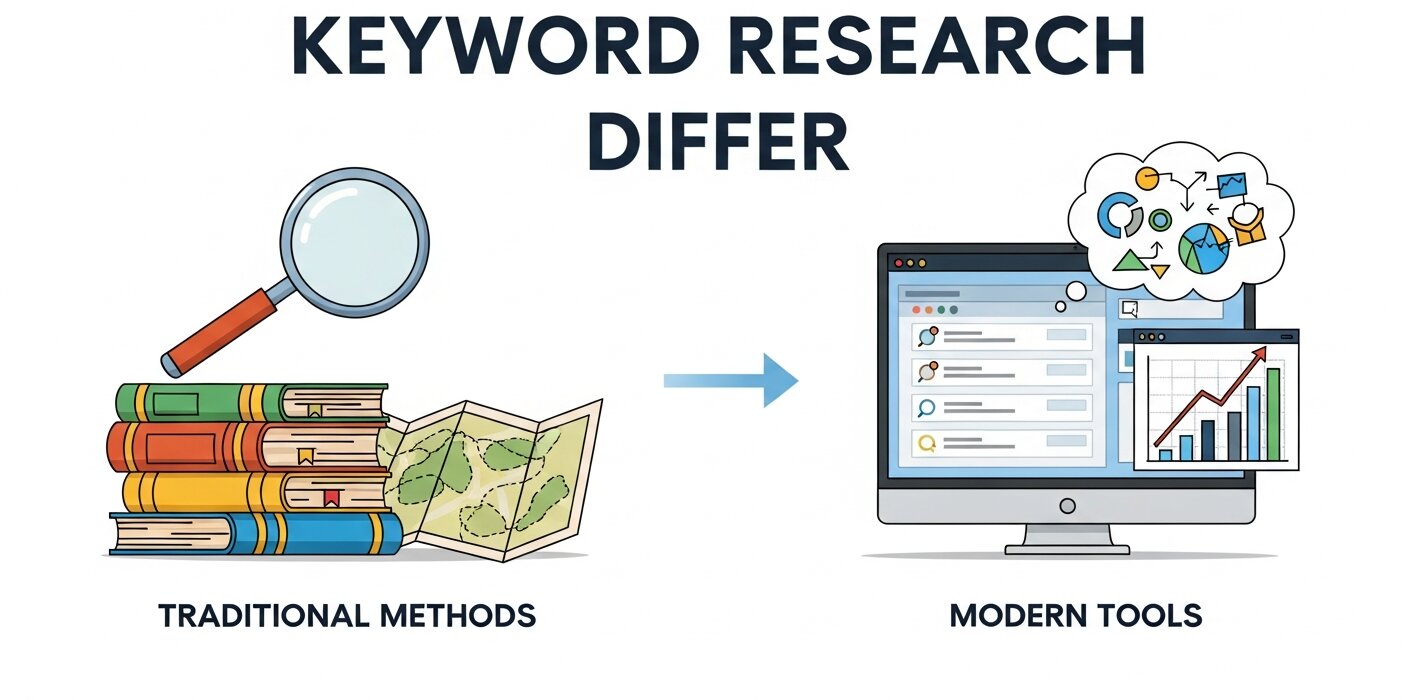 Most content teams are comfortable with basic keyword research—finding high-volume terms and building content around them. Advanced keyword research digs deeper.
Mapping Keywords to Search Intent
Every search query carries intent. Google classifies this broadly as informational, navigational, commercial, or transactional. Ranking for a keyword means satisfying the intent behind it, not just matching the phrase.
For example, someone searching “best CRM software” is in research mode—they want comparisons. Someone searching “buy CRM software” is ready to convert. These two pieces of content need very different structures, calls to action, and depths of information.
Audit your existing content to confirm that each piece aligns with the dominant search intent for its target keyword. A mismatch here is one of the most common reasons for high impressions but low clicks—or high clicks but poor conversions.
Targeting Semantic Variations and Related Entities
Google understands context. Optimizing for a single keyword is no longer enough. Advanced content optimization involves identifying semantically related terms, synonyms, and co-occurring concepts that strengthen topical relevance.
Tools like Surfer SEO, Clearscope, and MarketMuse analyze top-ranking content for your target keyword and surface the related terms you should be including. Adding these naturally to your content signals to Google that your page covers the topic comprehensively.
Identifying Content Gaps in Your Niche
Before creating something new, check what’s missing. Look at the questions your target audience is asking in forums, social media, and “People Also Ask” sections. Identify keywords your competitors rank for that you don’t. These gaps represent real opportunities to capture search demand with content that doesn’t yet exist—or content that’s underdeveloped in your space.
What Content Structures Drive the Best Rankings?
Structure is a ranking factor in the sense that it determines how easily users—and crawlers—can digest your content. Google rewards content that serves the reader well.
Using Headers Strategically for Topical Coverage
A well-structured article isn’t just easier to read—it signals topical depth. Use H2s to cover major subtopics and H3s to address specific nuances within each. Think of your headers as a mini table of contents that tells both readers and search engines exactly what ground you’re covering.
Avoid vague header labels like “Things to Consider.” Be specific. “What factors affect Google rankings in 2024?” is more useful than “Ranking Factors.” It mirrors how real users think and search, which improves the likelihood of your content appearing in featured snippets.
Optimizing for Featured Snippets and Rich Results
Featured snippets sit above standard search results—they’re prime real estate. To earn them, structure your content to directly answer specific questions. Use concise definitions (40–60 words), numbered lists, and comparison tables.
For example, if your target keyword is “advanced content optimization,” include a clear, paragraph-length definition early in the post. Format step-by-step instructions as numbered lists. These structures are exactly what Google looks for when selecting snippet candidates.
Using Internal Links to Build Topical Authority
Internal linking does two things: it helps search engines discover and understand your content, and it distributes link equity across your site. Advanced content optimization treats internal linking as a deliberate architecture decision.
Map out your content clusters—a pillar page covering a broad topic, supported by multiple cluster pages covering related subtopics. Link each cluster piece back to the pillar and cross-link between cluster pieces where relevant. This tells Google that your site has genuine depth on a given subject.
How Can You Improve Content Quality to Meet Google’s E-E-A-T Standards?
 E-E-A-T (Experience, Expertise, Authoritativeness, and Trustworthiness) is one of Google’s core quality frameworks. While it’s not a direct ranking signal in isolation, it heavily influences how Google’s quality raters assess content—and those assessments shape algorithm updates.
Demonstrating Experience and Expertise Through Content
First-hand experience matters more than ever. Content that reflects genuine, lived knowledge—specific examples, original insights, lessons learned—stands apart from generic information anyone could compile. At SanMo CA, we advise clients to include case studies, client results, and expert perspectives wherever possible. These elements make content credible and harder to replicate.
Author bios, clear sourcing, and references to real-world application all contribute to E-E-A-T signals. Don’t just tell readers what to do. Show them you’ve done it yourself.
Earning and Showcasing Backlinks and Brand Mentions
Authoritativeness is partly built through external validation. High-quality backlinks from reputable sources signal to Google that others trust your content. Earning these requires creating genuinely useful resources—original research, comprehensive guides, data-driven case studies—that others want to reference.
Brand mentions (even unlinked ones) and co-citations also contribute to how Google perceives your authority within a niche.
What Technical Optimization Factors Impact Content Rankings?
Advanced content optimization isn’t purely about the words on the page. Technical factors shape how Google crawls, indexes, and ranks your content.
Optimizing Page Speed and Core Web Vitals
Google’s Core Web Vitals—Largest Contentful Paint (LCP), Interaction to Next Paint (INP), and Cumulative Layout Shift (CLS)—measure real-world user experience. Content that loads slowly or shifts around as it loads creates friction, and Google factors this into rankings.
Compress images, use next-generation formats like WebP, minimize render-blocking scripts, and leverage browser caching. These optimizations don’t just help rankings—they improve the experience for every visitor.
Ensuring Content Is Crawlable and Properly Indexed
If Google can’t crawl your content, it can’t rank it. Use Google Search Console to identify indexing errors, blocked resources, and crawl issues. Ensure your most important pages are in your sitemap and that your robots.txt file isn’t accidentally blocking key content.
Canonical tags matter here too. Duplicate content dilutes your ranking signals. Make sure each piece of content has a canonical URL specified so Google knows which version to index.
How Should You Approach Content Refreshes and Performance Monitoring?
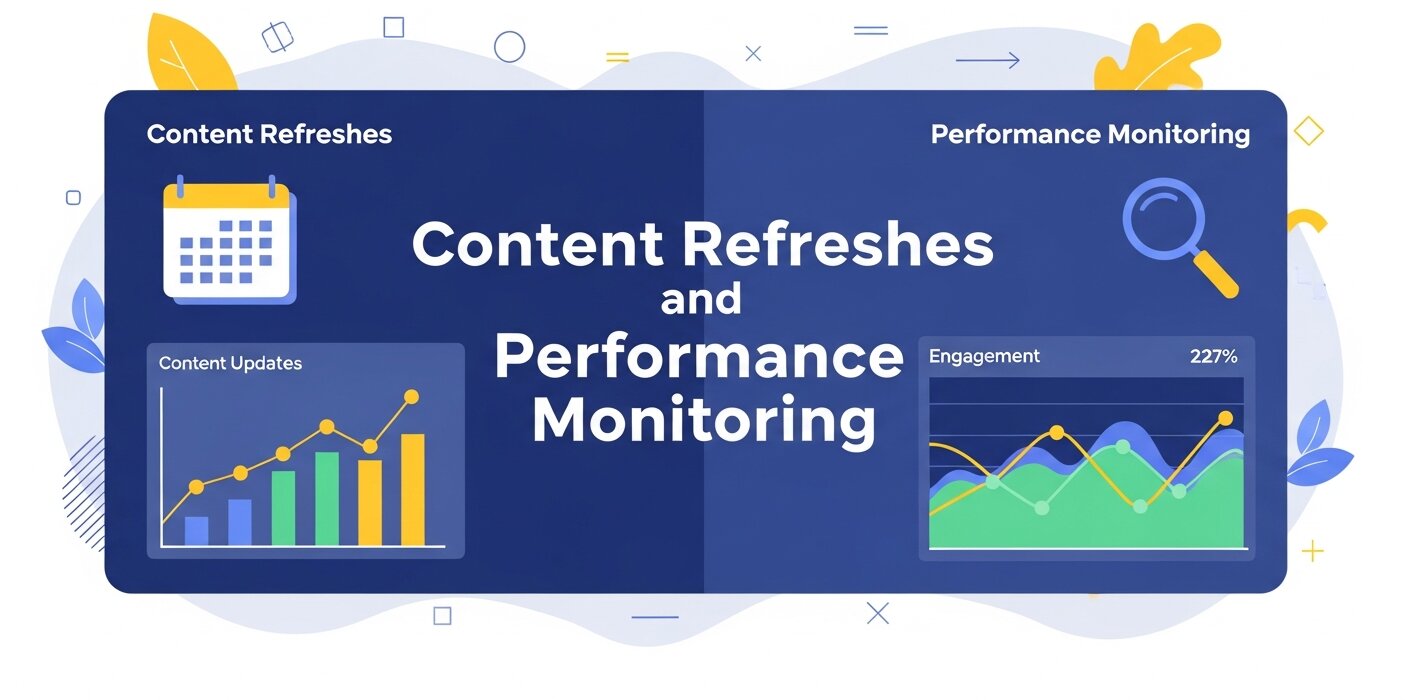 Publishing and walking away is a missed opportunity. Content decays. Rankings shift. Search trends evolve. The best-performing content programs treat optimization as an ongoing practice.
Identifying Which Content Needs Updating
Not all content needs to be refreshed equally. Use Google Search Console to identify pages that are ranking in positions 5–20 for valuable keywords—these are your best opportunities for a quick wins. Look for pages where impressions are high but clicks are low (a sign of poor meta data or mismatched intent), and pages that have dropped in rankings over the past 3–6 months.
How to Refresh Content Without Losing Rankings
When refreshing content, preserve the URL wherever possible. Update statistics, add new sections covering subtopics you missed, improve the introduction and headers, and ensure the content still aligns with current search intent. Then signal the update to Google by adjusting the publish date and submitting the URL for recrawling via Search Console.
At SanMo CA, we recommend auditing your content library at least once per quarter—more frequently for high-priority pages in competitive niches.
How to Optimize Content for Voice Search and Conversational Queries
Voice search has changed the way people formulate online queries. Instead of typing short keywords, users often ask complete questions such as “How can I improve my website rankings?” Advanced content optimization should account for these conversational patterns by including natural-language questions, concise answers, and long-tail search phrases throughout the content. FAQ sections, descriptive headings, and direct-answer paragraphs can help content address conversational searches more effectively. Businesses should also focus on providing clear, useful information that satisfies user intent without unnecessary complexity. By optimizing content around the way people naturally speak and search, businesses can increase their chances of appearing for question-based queries and reaching users at different stages of the search journey.
How to Strengthen Content With Original Research and Data
Original research can give content a significant competitive advantage. Instead of repeating information available across dozens of websites, businesses can incorporate surveys, industry statistics, proprietary findings, case studies, and real-world performance data. Unique information provides greater value to readers while creating opportunities for other websites to reference and link to the content. When publishing original data, explain the research methodology clearly and provide appropriate sources to support important claims. Visualizing findings through charts, tables, and infographics can also make complex information easier to understand and more shareable. For businesses competing in crowded search results, original research demonstrates expertise and creates a stronger reason for users and publishers to choose their content over generic alternatives.
How to Build a Content Optimization Workflow That Scales
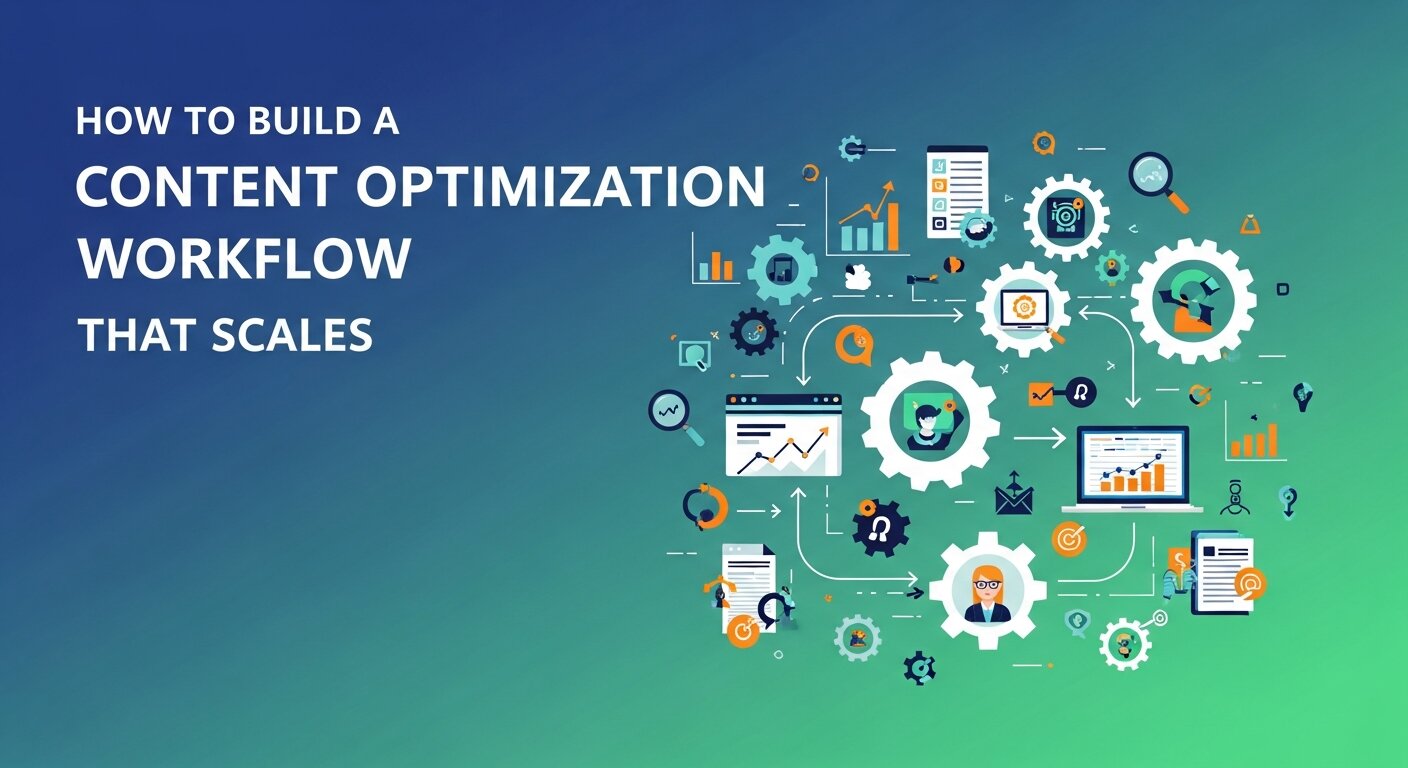 Consistent optimization requires a repeatable workflow rather than occasional updates. Start by auditing existing content and categorizing pages according to their traffic, rankings, conversions, and business value. Prioritize pages where relatively small improvements could produce significant gains, such as content ranking on the first or second page of search results. Establish a process for reviewing search intent, updating outdated information, improving internal links, refining metadata, and addressing technical issues. Assign clear responsibilities for research, writing, SEO review, publishing, and performance monitoring so optimization doesn’t become an inconsistent task. A scalable workflow allows businesses to manage large content libraries efficiently while ensuring important pages continue to meet changing search expectations and user needs.
Frequently Asked Questions
What is the difference between basic and advanced content optimization?
Basic content optimization involves keyword placement, meta titles, and alt tags. Advanced content optimization covers a broader range of techniques—including search intent alignment, semantic SEO, E-E-A-T signals, topical authority building, featured snippet targeting, and performance-based content refreshes. Advanced optimization treats content as an ongoing asset rather than a one-time task.
How long does it take to see results from advanced content optimization?
Results typically vary based on your site’s authority, the competitiveness of your target keywords, and how significant the optimizations are. Minor updates to existing content can show results within a few weeks via Google Search Console. Larger content overhauls or new content targeting competitive keywords may take 3–6 months to show meaningful ranking improvements.
How many keywords should I target in a single piece of content?
There is no fixed number, but most well-optimized content focuses on one primary keyword and a cluster of semantically related secondary keywords and long-tail variations. Trying to target too many unrelated keywords in one piece dilutes focus and confuses search engines about the page’s core topic.
Does content length directly impact Google rankings?
Length alone doesn’t guarantee rankings. What matters is whether the content satisfies search intent comprehensively. That said, more thorough content tends to cover more relevant subtopics, which correlates with stronger rankings. Aim for the depth the topic requires—not an arbitrary word count.
What tools does SanMo CA recommend for advanced content optimization?
Tools vary depending on your specific needs. For keyword research and gap analysis, Ahrefs and Semrush are industry standards. For on-page optimization and semantic analysis, Surfer SEO and Clearscope are highly effective. Google Search Console remains essential for monitoring performance and identifying technical issues. SanMo CA can help you build a tailored tool stack based on your goals and budget.
Turn Optimization Into a Competitive Advantage
Advanced content optimization is what separates content that ranks from content that disappears. The techniques in this guide—semantic keyword research, strategic structure, E-E-A-T alignment, technical hygiene, and consistent performance monitoring—work best when applied together and revisited regularly.
Google rewards depth, relevance, and user experience. Build your content strategy around those three pillars, and higher rankings become a natural outcome.
Ready to take your content performance to the next level? SanMo CA content optimization services are built to help businesses like yours achieve sustainable organic growth. Get in touch to find out how we can help.