Video content has become an essential part of modern digital marketing, helping businesses explain their services, demonstrate products, and connect with audiences. However, publishing high-quality videos alone does not guarantee visibility in search results. Businesses must optimize their video content so search engines can understand its purpose and users can discover it more easily. This is where Advanced Video SEO becomes important.
Advanced Video SEO involves optimizing video content, metadata, webpages, technical elements, and user experiences to improve discoverability across search engines and video platforms. A well-planned strategy helps businesses reach relevant audiences, attract organic traffic, and create stronger engagement opportunities.
For businesses operating in Canada, video optimization can support broader search engine optimization goals by making educational videos, product demonstrations, tutorials, and promotional content easier to find. Combining video content with relevant keywords, descriptive titles, structured data, and an effective website experience can improve its overall search performance.
Understanding Advanced Video SEO
Advanced Video SEO is the process of improving how search engines discover, interpret, index, and present video content. It combines keyword research, video metadata optimization, technical SEO, structured data, content relevance, and user experience to help videos reach their intended audiences.
Traditional SEO primarily focuses on optimizing webpages, while video SEO also considers video-specific elements such as thumbnails, transcripts, captions, video sitemaps, and watch-page accessibility. These elements help search engines understand what a video covers and how it relates to a user’s search intent.
For example, a Canadian software company publishing a product tutorial can optimize its video title, transcript, and accompanying webpage around relevant search queries. This gives search engines additional context while helping potential customers understand the content before watching. Advanced Video SEO is not about manipulating rankings. It involves making videos accessible, relevant, technically understandable, and useful to the people searching for information.
Conduct Keyword Research for Video Content
 Keyword research helps businesses understand what their target audiences search for when looking for videos, tutorials, product demonstrations, and educational resources. Selecting relevant search terms allows marketers to align video topics with genuine audience needs rather than relying on assumptions.
Identify Relevant Video Keywords
Start by researching the questions, problems, and interests associated with your products or services. Keyword research tools, search suggestions, competitor analysis, and customer feedback can reveal opportunities for relevant video topics. For example, a business offering digital marketing services might discover search demand around SEO tutorials, website optimization techniques, or content marketing strategies. These insights can guide the creation of videos that answer specific questions.
Focus on search intent when selecting keywords. Someone searching for a tutorial may want practical instructions, while someone looking for a product comparison may expect an evaluation of available options. Matching the content to the intended audience improves relevance and creates a stronger foundation for video optimization.
Use Primary and Secondary Keywords Naturally
Each video should have a clear primary keyword supported by relevant secondary terms. Incorporate the main keyword naturally into the video title, description, transcript, and relevant webpage content without repeating it excessively.
Related terms help communicate the broader subject of a video. For instance, a video about Advanced Video SEO might naturally discuss video metadata optimization, video indexing, structured data, video sitemaps, and search visibility. Avoid keyword stuffing because it can make titles and descriptions difficult to understand. Clear, descriptive metadata benefits both search engines and potential viewers.
Optimize Video Titles and Descriptions
Video titles and descriptions provide important context about the subject of a video. Well-written metadata helps users understand what they can expect and supports search engines in interpreting the content accurately.
Write Descriptive, Search-Friendly Titles
A strong video title communicates the main topic clearly and reflects the viewer’s search intent. Include the primary keyword when it fits naturally, and avoid misleading wording that promises information the video does not deliver.
For example, a title such as “Advanced Video SEO Best Practices for Higher Rankings” clearly identifies the subject and communicates the practical value of the content. Keep titles readable and specific. Although compelling language can encourage clicks, accuracy should remain the priority. A relevant title attracts the right audience and establishes realistic expectations before viewers begin watching.
Create Informative Video Descriptions
Video descriptions should explain the video’s subject, summarize its key information, and provide relevant context. On platforms such as YouTube, a useful description can help viewers understand the content and locate related resources.
Include important keywords naturally, but prioritize readability. When appropriate, provide chapter timestamps, links to supporting resources, and a relevant call to action. For videos embedded on business websites, the surrounding webpage should also contain meaningful text that explains the video’s purpose. This helps create a more complete experience for users and provides additional context for search engines.
Improve Video Thumbnails and Engagement
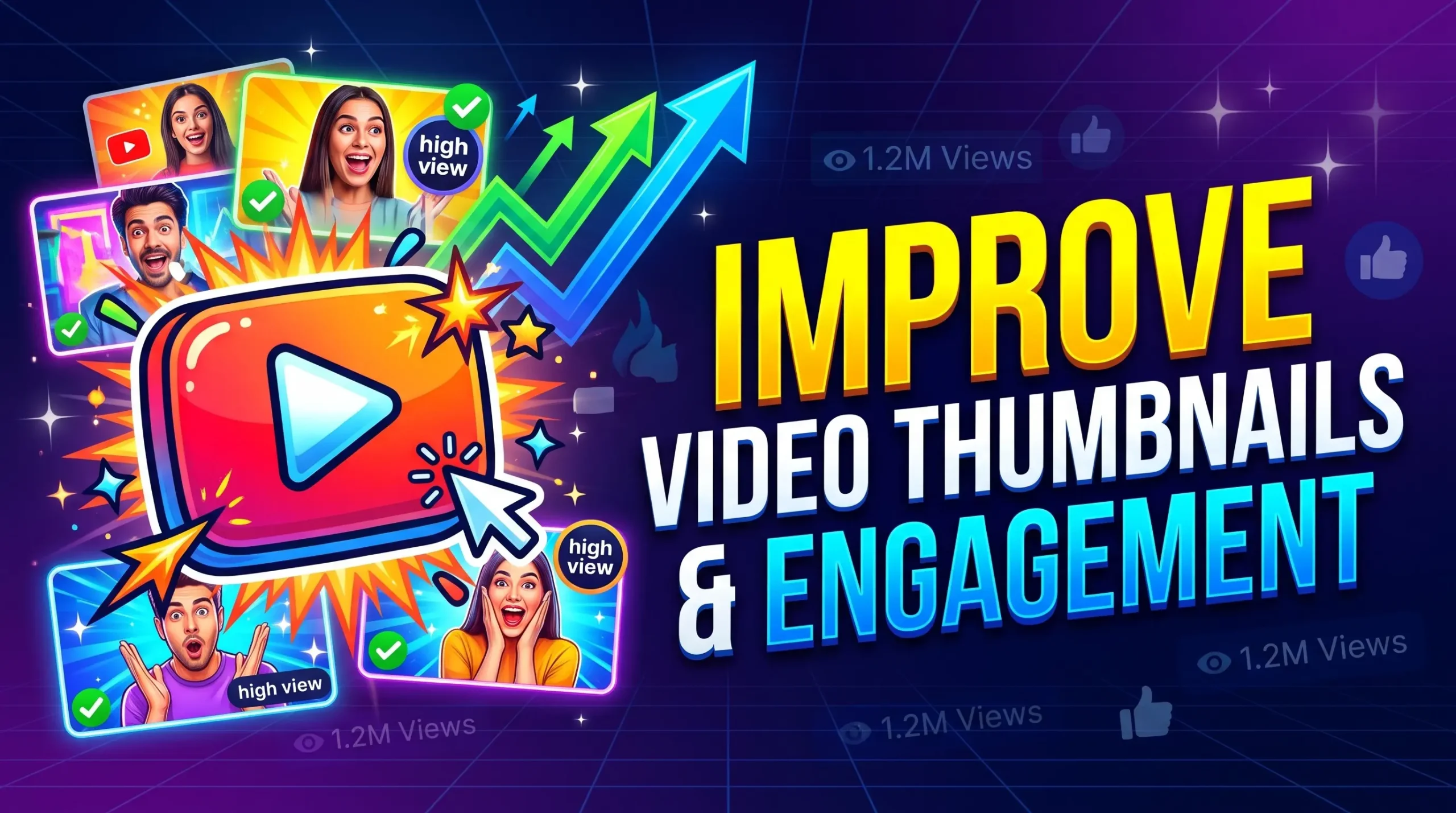 Thumbnails influence whether users choose to watch a video when it appears in search results or on a video platform. A clear, relevant thumbnail can communicate the subject quickly and help content stand out among competing results.
Create Relevant, High-Quality Thumbnails
An effective thumbnail should accurately represent the video and remain recognizable across different screen sizes. Use clear visual elements, strong contrast, and a composition that makes the subject easy to understand.
Avoid misleading imagery that creates expectations the video cannot meet. When thumbnails accurately represent the content, they help attract relevant viewers and support a consistent brand identity. Businesses should also maintain visual consistency across their video libraries. A recognizable style can make their content easier to identify, especially when viewers encounter multiple videos from the same company.
Focus on Viewer Engagement
Audience engagement can reveal whether a video meets viewers’ expectations. Watch time, audience retention, clicks, and interactions provide useful information about how people respond to video content.
However, engagement metrics should not be treated as guaranteed direct ranking factors across every search platform. Their interpretation depends on the platform and its systems. To improve the viewing experience, introduce the topic clearly, avoid unnecessary delays, and organize information logically. Videos that answer questions efficiently are more likely to satisfy viewers and support broader content marketing objectives.
Use Video Transcripts and Captions
Transcripts and captions improve accessibility while making spoken information available in text form. They can help viewers understand content in different environments and provide additional context about the subjects discussed in a video.
Add Accurate Transcripts
A transcript converts spoken dialogue into written text. Publishing an accurate transcript alongside a video can make educational content easier to review and help users find specific information.
Transcripts are particularly useful for interviews, demonstrations, webinars, and instructional videos. They also give businesses an opportunity to provide supporting explanations, relevant terminology, and additional resources. Although transcripts can improve accessibility and content understanding, they do not automatically guarantee higher rankings. Their value depends on accuracy, relevance, and how effectively they support the overall webpage.
Include Clear Captions
Captions display spoken dialogue and relevant audio information as text. They help viewers who are deaf or hard of hearing and benefit people watching videos without sound. Businesses should review automatically generated captions for spelling errors, incorrect technical terminology, and missing words. Accurate captions improve comprehension and create a more professional viewing experience.
For companies targeting audiences across Canada, accessibility should be considered alongside language preferences and audience requirements. Well-prepared captions can make video content more inclusive and easier to use.
Implement Video Structured Data
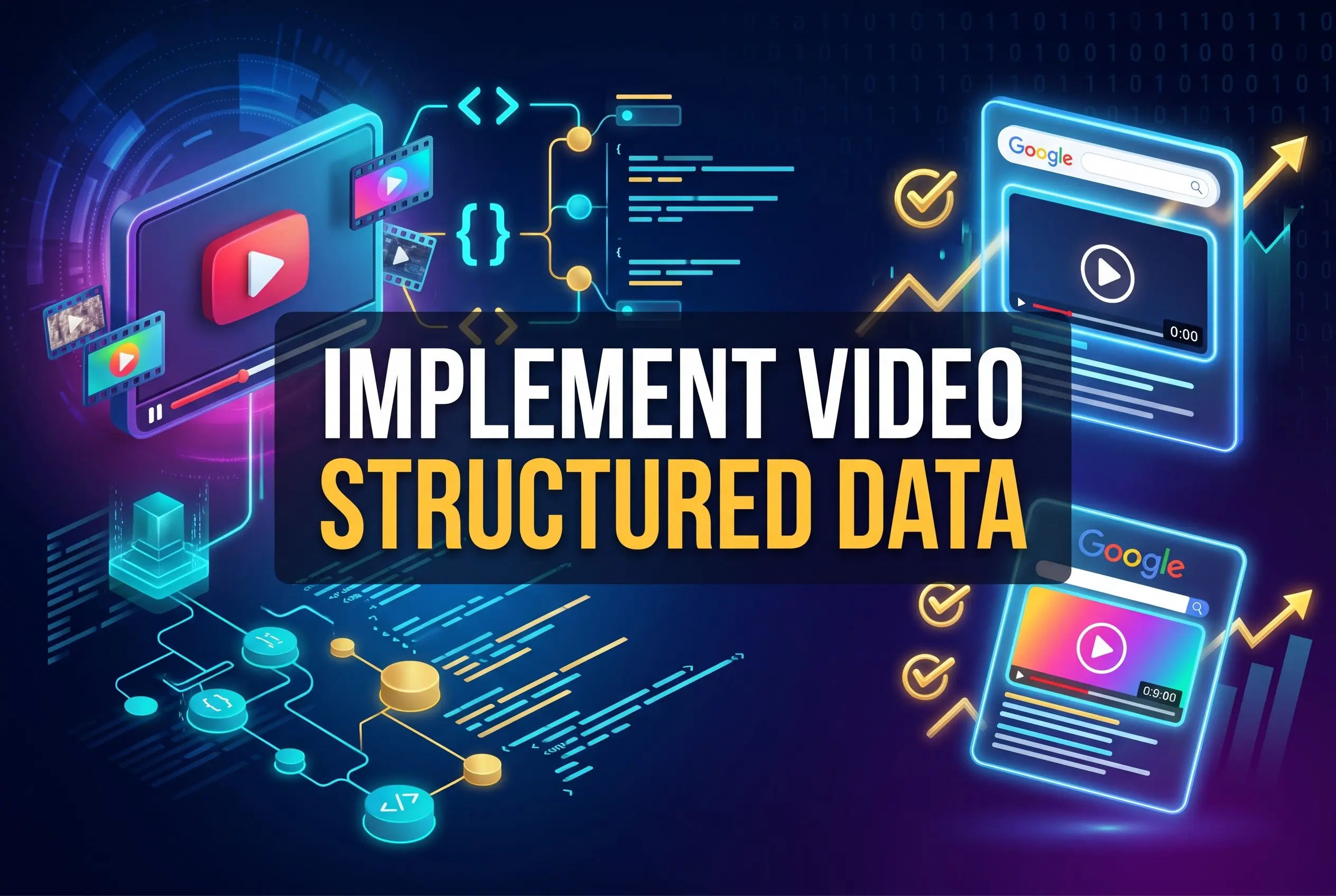 Structured data helps search engines interpret specific information about webpage content. For eligible video pages, VideoObject structured data can describe elements such as the video’s name, description, thumbnail, upload date, and duration.
Add VideoObject Schema
VideoObject schema provides structured information about a video using a supported format such as JSON-LD. When implemented correctly, it can help search engines understand the video and determine whether it qualifies for enhanced video search presentations.
Businesses should ensure that structured data accurately reflects the visible page content. Important properties should contain valid information, and the referenced video and thumbnail should be accessible to search engines. Structured data does not guarantee enhanced search appearances or improved rankings. Its purpose is to communicate content information in a format search engines can process more consistently.
Validate Your Structured Data
After implementing video schema, use Google’s supported testing tools to identify errors and warnings. Review the results whenever the video URL, thumbnail, metadata, or page structure changes.
Technical validation is an important part of Advanced Video SEO because incorrect markup can prevent search engines from interpreting information as intended. Businesses should also monitor indexing reports and search performance to identify issues that require further investigation.
Improve Video Indexing and Technical SEO
Even valuable videos may struggle to appear in search results if search engines cannot discover or access them properly. Technical video SEO focuses on ensuring that important video pages are crawlable, indexable, and accessible to users.
Create a Video Sitemap
A video sitemap provides search engines with additional information about videos hosted or embedded on a website. Depending on the implementation, it can include details such as the video title, description, thumbnail location, and associated webpage. This can be particularly useful for websites containing many videos or video content that is not easily discovered through ordinary crawling.
Businesses should keep sitemap information accurate and ensure that the URLs point to accessible resources. A video sitemap supports discovery, but submitting one does not guarantee that every video will be indexed or shown in search results.
Improve Page Speed and Mobile Usability
Video pages should load efficiently and function well across mobile devices, tablets, and desktop computers. Slow pages, intrusive layouts, and difficult navigation can prevent visitors from accessing the content comfortably.
Use appropriate video embedding methods, optimize surrounding images, and avoid loading unnecessary resources before the main content becomes available. Where suitable, consider lazy loading for embedded video players while ensuring the implementation does not interfere with discovery or usability.
Mobile optimization is particularly important because many users discover and watch video content on smartphones. A responsive page creates a more consistent experience and supports the broader technical health of a website.
Build a Strong Video Content Strategy
A successful video SEO strategy requires consistent planning, useful content, and alignment with audience needs. Rather than publishing unrelated videos, businesses should develop topics that support their expertise and answer the questions their potential customers are likely to ask.
Create Topic Clusters Around Video Content
Topic clusters organize related content around a central subject. A business could publish an introductory video, detailed tutorials, product demonstrations, and frequently asked questions that address different aspects of the same topic.
These videos can connect with relevant articles and service pages on the company’s website. Internal links help visitors discover related information while establishing clearer relationships between relevant resources.
The goal is to provide a useful content journey rather than create multiple videos that repeat the same information. Each video should serve a distinct purpose and offer value to its intended audience.
Repurpose Videos Across Marketing Channels
Repurposing allows businesses to adapt video content for different platforms and audience preferences. A long educational video might become several short clips, a written article, a social media post, or a transcript-based resource.
Each version should suit its intended platform instead of simply duplicating content without considering presentation. For example, short-form social videos may need a faster introduction, while a detailed website tutorial can provide more extensive explanations. A coordinated approach helps businesses extend the usefulness of their content and create more opportunities for audiences to discover their expertise.
Measure Video SEO Performance
 Performance measurement helps businesses determine whether their video optimization efforts are producing meaningful results. Instead of relying on a single metric, marketers should evaluate search visibility, video discovery, viewer behavior, and relevant business outcomes together. Useful measurements include video impressions, search clicks, organic visits, watch time, audience retention, and conversions where tracking is available. Google Search Console can provide information about website search performance, while platform-specific analytics can reveal how viewers interact with published videos.
Businesses should establish a baseline before making major changes and review results over time. A video may attract substantial viewing activity without generating qualified leads, while a specialized tutorial may reach a smaller audience but produce more relevant inquiries. Regular analysis helps marketers identify content gaps, improve underperforming metadata, and prioritize topics that align with business goals. SanMo CA can serve as a starting point for businesses exploring professional SEO services to support a more structured approach to online visibility.
Why Choose SanMo CA for Video SEO?
Businesses looking to improve video visibility need an SEO strategy that considers content quality, technical accessibility, keyword relevance, and the overall website experience. Video optimization should support the company’s wider marketing objectives instead of operating as a disconnected activity.
SanMo CA provides a platform for exploring professional SEO services in Canada. Businesses can review its available services and determine how video optimization may fit within their broader search engine optimization requirements.
A thoughtful strategy can combine video metadata optimization, technical SEO improvements, content planning, structured data, and performance analysis. The exact approach should reflect the website’s existing condition, the competitiveness of its target keywords, and the needs of its intended audience.
Conclusion
Advanced Video SEO helps businesses improve how their video content is discovered, understood, and presented across search platforms. By combining keyword research, descriptive metadata, accurate transcripts, structured data, technical optimization, and useful content, companies can create stronger foundations for video visibility.
Higher rankings are never guaranteed, because search performance depends on competition, relevance, indexing, platform systems, and many other factors. However, following established optimization practices makes video content more accessible to search engines and more useful to potential viewers.
Businesses in Canada can benefit from integrating video SEO into their broader digital marketing strategies. Consistent optimization, audience-focused content, and ongoing performance measurement help organizations identify opportunities and improve their approach over time. SanMo CA can help businesses explore professional SEO services suited to their online visibility goals. With a clear strategy and a commitment to useful content, video can become a valuable component of long-term organic growth.
Frequently Asked Questions (FAQs)
1. What Is Advanced Video SEO?
Advanced Video SEO is the process of optimizing video content, metadata, technical accessibility, structured data, and related webpages to improve video discovery and search visibility. It combines content optimization with technical practices that help search engines understand videos.
2. How Does Video SEO Improve Search Rankings?
Video SEO helps search engines understand a video’s subject and discover its associated webpage. Relevant titles, descriptions, structured data, accessible video files, and useful surrounding content can improve eligibility for search visibility, although rankings are never guaranteed.
3. What Are the Most Important Video SEO Factors?
Important considerations include keyword relevance, descriptive titles, useful descriptions, accurate transcripts, appropriate thumbnails, accessible video pages, structured data, and mobile usability. The relative importance of each factor depends on the search platform and the specific video.
4. How Do Keywords Help With Video SEO?
Keywords help businesses understand audience search intent and describe video content accurately. Using relevant terms naturally in titles, descriptions, transcripts, and supporting webpages can help search engines interpret the subject and connect it with appropriate searches.
5. Does VideoObject Schema Improve Rankings?
VideoObject structured data helps search engines understand information about a video. It may support eligibility for enhanced search presentations, but implementing schema does not guarantee rich results, indexing, or higher rankings.
6. Why Are Video Transcripts Important for SEO?
Transcripts make spoken information available in written form, improving accessibility and helping users review video content. They can also provide additional context when included on relevant webpages, but transcripts alone do not guarantee better rankings.
7. How Can Businesses Improve Video Indexing?
Businesses can improve video discovery by creating accessible watch pages, using accurate metadata, implementing appropriate structured data, maintaining video sitemaps, and ensuring that important resources are crawlable. Indexing should be monitored through available search tools.
8. Is YouTube Optimization Part of Advanced Video SEO?
Yes. YouTube optimization can include relevant titles, detailed descriptions, accurate captions, useful thumbnails, and content that matches audience expectations. Website video SEO and YouTube SEO have different technical requirements, so strategies should reflect the platform being targeted.
9. How Long Does Video SEO Take to Show Results?
The timeline varies depending on competition, website authority, content quality, indexing, and the search platform. Some improvements may be noticed relatively quickly, while meaningful organic growth can require several months of consistent optimization and performance monitoring.
10. How Can SanMo CA Help With SEO Goals?
SanMo CA provides a starting point for exploring professional SEO services in Canada. Businesses can review its available offerings and determine which solutions align with their video visibility, organic traffic, and broader digital marketing objectives.