Commerce has fundamentally changed. Customers expect to pay instantly, securely, and from any device—whether they’re buying software subscriptions, booking services, or purchasing physical goods across borders. For businesses navigating this shift, the underlying technology that processes those payments isn’t just a back-end detail. It’s a strategic asset.
Payment gateway solutions sit at the core of modern digital commerce. They authenticate transactions, protect sensitive data, connect businesses to global financial networks, and generate the kind of real-time data that fuels smarter decisions. Yet many organizations still treat them as a commodity—a checkbox rather than a competitive lever.
That’s a costly oversight. The right payment gateway doesn’t just move money from one account to another. It shapes the customer experience, reduces operational friction, and positions a business to scale without rebuilding its infrastructure every time the market shifts. For companies like SanMo CA that are committed to helping businesses grow through digital transformation, payment gateway solutions represent one of the most impactful investments a modern organization can make.
This post breaks down exactly how payment gateways support business transformation—covering everything from security and global reach to automation and the customer experience.
What Is a Payment Gateway Solution, and Why Does It Matter?
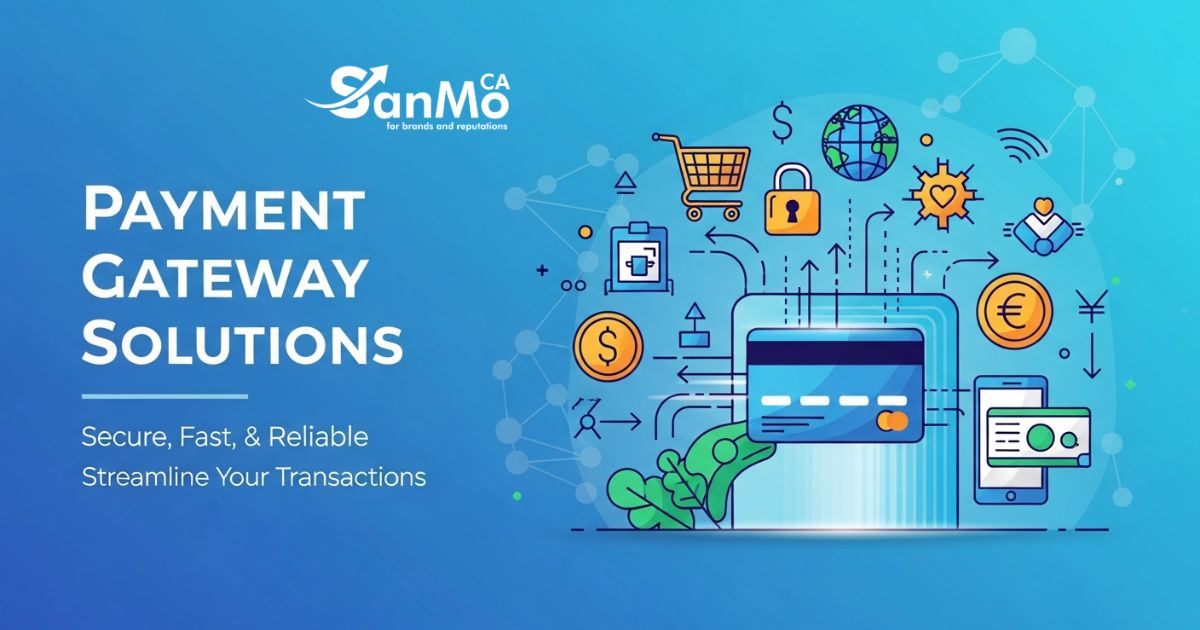
A payment gateway is the technology layer that authorizes and processes digital payments between a customer, a merchant, and their respective banks. When a customer enters their card details at checkout, the gateway encrypts that data, sends it to the payment processor, receives an approval or decline, and returns the result—all within a few seconds.
But that technical definition undersells the strategic role gateways play. Modern payment gateway solutions handle far more than simple card transactions. They support digital wallets, bank transfers, buy-now-pay-later (BNPL) options, recurring billing, multi-currency payments, and fraud detection—often through a single integration.
For businesses undergoing digital transformation, this matters because payment infrastructure touches every part of the customer journey. A slow or unreliable gateway creates cart abandonment. A limited one locks businesses out of international markets. A poorly integrated one creates manual reconciliation work that drains team resources. The gateway is rarely the flashiest part of a digital strategy, but it’s often the part where transformation succeeds or stalls.
How Payment Gateway Solutions Drive Digital Transformation
Seamless Customer Experiences That Reduce Drop-Off
Checkout is where intent converts to revenue—or doesn’t. Research consistently shows that complicated, slow, or unfamiliar checkout processes are among the top reasons customers abandon purchases. A modern payment gateway addresses this directly.
Advanced gateways support one-click payments, saved card credentials, digital wallets like Apple Pay and Google Pay, and smart form autofill. They also optimize dynamically for mobile, reducing the friction that comes with typing payment details on a small screen. For subscription-based businesses, gateways handle automatic billing without requiring customers to re-enter information each cycle.
The cumulative effect is a checkout experience that feels effortless—which is exactly what customers have come to expect from digitally mature businesses.
Enterprise-Grade Security and Fraud Prevention
Security concerns are among the most significant barriers to digital adoption, both for businesses and their customers. Payment gateway solutions help address these concerns through multiple layers of protection.
PCI DSS (Payment Card Industry Data Security Standard) compliance is the baseline. Reputable gateways handle the heavy lifting of compliance, reducing the burden on internal IT and security teams. Beyond compliance, modern gateways use tokenization to replace sensitive card data with unique identifiers, meaning actual card numbers are never stored on a merchant’s servers.
Fraud prevention has also become significantly more sophisticated. Machine learning models analyze transaction patterns in real time, flagging anomalies and blocking suspicious activity before charges are processed. For businesses scaling rapidly or operating in high-risk verticals, this kind of adaptive fraud detection is critical—not just for loss prevention, but for maintaining customer trust.
Global Payment Acceptance and Multi-Currency Support
Digital transformation often means reaching customers beyond your home market. But global expansion introduces complexity: different preferred payment methods, currencies, tax requirements, and banking systems. A payment gateway solution built for global commerce handles this complexity at the infrastructure level.
Multi-currency support allows customers to pay in their local currency while merchants receive settlements in their preferred currency. Gateway solutions also support local payment methods—iDEAL in the Netherlands, Pix in Brazil, UPI in India, and dozens of others—that can dramatically improve conversion rates in specific markets. Without this capability, international growth requires significant custom development or costly workarounds.
For SanMo CA clients expanding into new markets, selecting a gateway with genuine global payment infrastructure is often the difference between a smooth launch and a delayed one.
Automation, Reconciliation, and Back-Office Efficiency
Manual payment reconciliation is a known bottleneck in finance operations. Every mismatched transaction, disputed charge, or failed recurring payment that requires human intervention adds cost and slows reporting cycles. Modern payment gateways significantly reduce this burden.
Automated reconciliation tools match transactions to invoices, flag discrepancies, and integrate directly with accounting platforms like QuickBooks, Xero, and NetSuite. Subscription management features handle dunning—the process of retrying failed payments and notifying customers—without requiring manual follow-up. Refund processing, chargeback management, and reporting dashboards can all be handled within the gateway interface.
The result is a leaner finance operation that spends less time on data entry and more time on analysis. For growing businesses, this kind of automation is essential to scaling without proportionally scaling headcount.
Real-Time Data and Business Intelligence
 Every payment transaction generates data. The businesses that extract value from that data gain a measurable advantage over those that don’t.
Payment gateway solutions with robust reporting capabilities give businesses visibility into transaction volumes, conversion rates, payment method preferences, geographic distribution of sales, and chargeback trends. This data feeds directly into decisions about product pricing, market expansion, marketing spend, and customer retention strategies.
Some advanced gateways also offer predictive analytics—identifying patterns that signal churn risk, seasonal demand shifts, or fraud exposure before they become problems. For businesses committed to data-driven decision-making, the gateway becomes a source of intelligence, not just a processing mechanism.
Flexible Integration With Existing Digital Infrastructure
Digital transformation rarely happens in isolation. Businesses invest in CRMs, ERPs, e-commerce platforms, marketing automation tools, and customer support systems. A payment gateway that integrates poorly with this stack creates data silos, manual workarounds, and technical debt.
Modern payment gateway solutions are built with integration in mind. APIs allow developers to embed payment functionality directly into custom applications. Pre-built connectors support popular platforms like Shopify, WooCommerce, Salesforce, and HubSpot. Webhooks deliver real-time event data to connected systems the moment a transaction status changes.
This flexibility means businesses can adopt a best-in-class gateway without ripping out their existing technology stack. For SanMo CA clients managing complex digital ecosystems, this interoperability is a significant practical advantage.
Choosing the Right Payment Gateway Solution for Your Business
Not every gateway is the right fit for every business. The decision depends on several key variables:
- Transaction volume: High-volume businesses benefit from gateways with enterprise pricing, dedicated support, and robust uptime guarantees.
- Business model: Subscription and SaaS businesses need strong recurring billing features. Marketplaces need split payment functionality. Retail businesses need point-of-sale integration.
- Geographic footprint: Businesses operating internationally need multi-currency support, local payment methods, and compliance with regional regulations.
- Technical resources: Businesses with strong development teams can leverage API-first gateways for maximum flexibility. Those with limited technical capacity may prioritize hosted, low-code solutions.
- Security requirements: Businesses in regulated industries—healthcare, financial services, education—may need gateways with specific compliance certifications beyond standard PCI DSS.
The evaluation process should also account for total cost of ownership, including setup fees, transaction fees, chargeback fees, and the cost of any required integrations.
Optimizing Checkout Performance for Higher Conversions
 A payment gateway plays a critical role in the checkout experience, directly influencing conversion rates and customer satisfaction. Slow-loading payment pages, limited payment options, or failed transactions can lead to abandoned carts and lost revenue. Modern payment gateway solutions optimize checkout by supporting one-click payments, digital wallets, autofill capabilities, and responsive mobile experiences. They also minimize processing delays with intelligent routing and high system availability. Businesses that prioritize checkout performance create a smoother purchasing journey, increasing customer confidence and encouraging repeat purchases. By reducing friction at the final stage of the buying process, organizations can improve sales performance while strengthening brand loyalty.
Building Customer Trust Through Reliable Payment Experiences
Trust is essential in every online transaction, and payment gateway solutions help businesses establish that trust through secure and consistent payment processing. Customers are more likely to complete purchases when they recognize trusted payment methods and see visible security measures during checkout. Features such as SSL encryption, tokenization, secure authentication, and instant payment confirmations reassure customers that their financial information is protected. Reliable gateways also reduce payment failures and downtime, ensuring uninterrupted service even during peak shopping periods. A dependable payment experience enhances brand credibility, increases customer retention, and encourages long-term business relationships built on confidence and convenience.
Future-Proofing Your Business with Modern Payment Technology
 Technology continues to reshape the way businesses accept and manage payments. Investing in a modern payment gateway solution prepares organizations for emerging payment trends without requiring costly infrastructure changes. Today’s gateways support contactless payments, mobile wallets, QR code transactions, subscription billing, and alternative payment methods while remaining flexible enough to adopt future innovations. Cloud-based architectures and API-driven integrations make it easier to introduce new features as customer expectations evolve. Businesses that future-proof their payment infrastructure remain competitive, adapt more quickly to market changes, and provide seamless payment experiences that support sustainable growth in an increasingly digital economy.
Frequently Asked Questions About Payment Gateway Solutions
What is the difference between a payment gateway and a payment processor?
A payment gateway is the technology that captures and encrypts payment data at the point of sale—whether online or in-person. A payment processor is the entity that moves the funds between the customer’s bank and the merchant’s account. Many modern providers combine both functions into a single solution, but they are technically distinct components of the payment stack.
How do payment gateway solutions support recurring billing?
Most modern payment gateway solutions include native support for subscription billing. They store tokenized card credentials, automatically charge customers on a defined schedule, manage failed payment retries (dunning), and send automated notifications for payment events. This allows subscription businesses to manage recurring revenue without manual intervention.
Are payment gateways suitable for small and mid-sized businesses?
Yes. Many payment gateway providers offer tiered pricing and flexible plans that make enterprise-grade features accessible to smaller businesses. The key is matching the gateway to the specific needs of the business—transaction volume, business model, and integration requirements—rather than defaulting to the most or least expensive option.
How does a payment gateway protect customer data?
Payment gateways use several layers of protection: SSL/TLS encryption for data transmission, tokenization to replace card numbers with non-sensitive identifiers, PCI DSS compliance to meet industry security standards, and real-time fraud detection to flag suspicious transactions. Together, these mechanisms reduce the risk of data breaches and unauthorized charges.
What should businesses look for when evaluating payment gateway solutions?
Key criteria include security certifications, supported payment methods and currencies, integration compatibility with existing platforms, pricing transparency, uptime and reliability guarantees, and the quality of customer support. Businesses with international ambitions should pay particular attention to global payment method support and cross-border settlement capabilities.
The Strategic Case for Investing in Payment Infrastructure
Digital transformation is a broad initiative, and it’s easy for payment infrastructure to get deprioritized in favor of customer-facing projects. That’s understandable—but shortsighted. Payments touch every revenue transaction a business processes. Inefficiencies, security gaps, or poor customer experiences at the payment layer have direct bottom-line consequences.
Businesses that invest in purpose-built payment gateway solutions position themselves to grow without rebuilding core infrastructure. They reduce fraud exposure, expand into new markets more efficiently, and deliver checkout experiences that match what customers expect from modern digital brands.
SanMo CA works with organizations navigating these exact decisions—helping them identify the right payment infrastructure for their business model, integrate it effectively with existing systems, and measure the impact on operational performance.