SEO is a long-term digital marketing strategy that requires time, consistency, and proper planning to deliver meaningful results. Generally, businesses may start noticing initial improvements within 3 to 6 months, while significant organic traffic growth and stronger Google rankings can take 6 to 12 months or longer. The exact timeline depends on website quality, competition, keyword difficulty, content quality, backlinks, and technical SEO. Understanding how long does SEO take to show results helps businesses establish realistic expectations and build an effective SEO strategy for sustainable online growth.
How Long Does SEO Take to Work?
Search Engine Optimization (SEO) is not an overnight marketing solution. It takes time for search engines like Google to discover, crawl, index, and evaluate website content before deciding where it should appear in search results. Therefore, businesses should understand that SEO requires consistent effort before delivering noticeable results. In most cases, SEO may start showing early improvements within 3 to 6 months. However, achieving competitive keyword rankings, consistent organic traffic, and a strong online presence may require 6 to 12 months or more. The timeline depends on several factors, including your website’s current condition, industry competition, keyword difficulty, content quality, and overall SEO strategy.
When businesses ask how long does SEO take to show results, the answer depends on their starting position. A newly launched website may require more time to establish authority, while an existing website with quality content and backlinks may experience improvements sooner. It is also important to remember that SEO results develop gradually. Improvements in indexing, impressions, keyword positions, and organic clicks are often early signs that your SEO campaign is moving in the right direction.
SEO Results Timeline
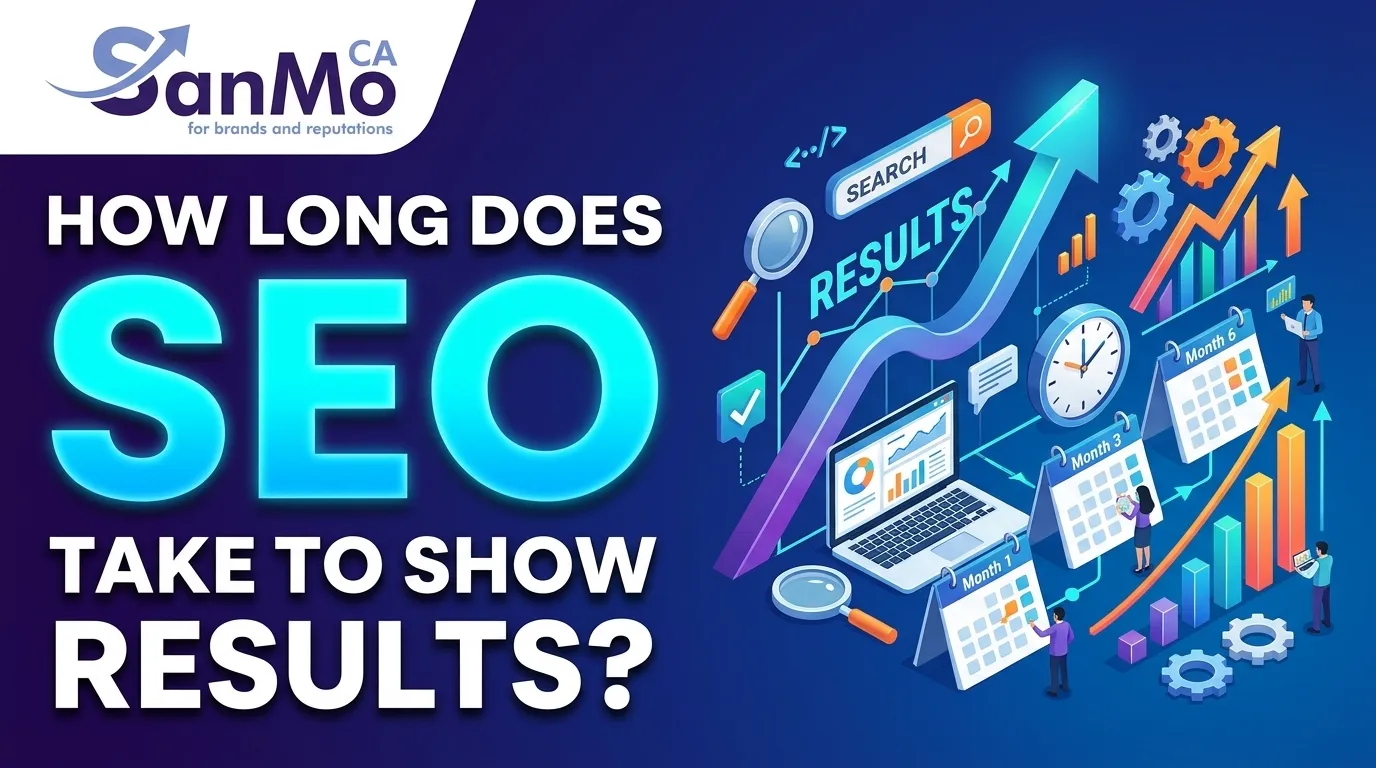
Understanding an SEO results timeline helps businesses measure progress and set realistic expectations. Although every website is different, most SEO campaigns follow a gradual development process. During the first month, SEO professionals generally focus on website audits, keyword research, competitor analysis, technical improvements, and content planning. This stage helps identify problems that may prevent a website from performing well on Google.
Between the second and third months, businesses may begin noticing improvements in website indexing, technical performance, and keyword impressions. New content may also start appearing in search results. However, significant traffic growth is not guaranteed at this stage. From the fourth to sixth month, some websites begin experiencing better keyword rankings, increased impressions, and improvements in organic traffic. Websites targeting less competitive keywords may notice faster progress.
Between the sixth and twelfth months, an established SEO strategy may generate more consistent organic traffic, stronger keyword positions, and increased opportunities to attract potential customers. This is why understanding how long does SEO take to show results is important before starting a campaign. Businesses should evaluate progress over several months instead of expecting immediate ranking improvements.
How Long Does It Take to Rank on Google?
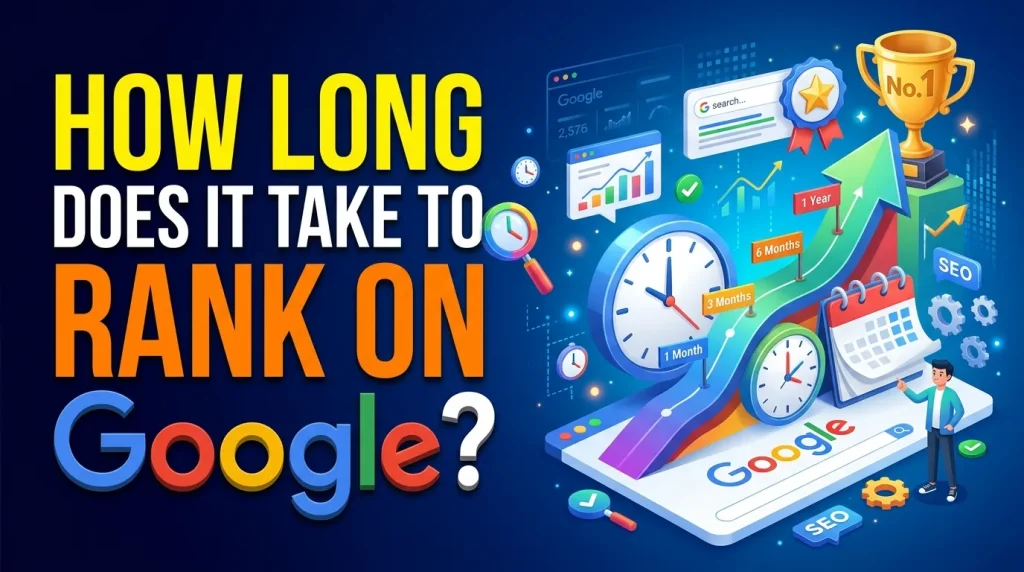 Ranking on Google depends on several factors, including keyword competition, website authority, content relevance, and the quality of your overall SEO strategy. For less competitive keywords, a website may achieve first-page rankings within a few months, particularly when the content closely matches search intent and the website has a technically sound structure. However, highly competitive keywords can take considerably longer.
New websites generally face additional challenges because Google needs time to understand their content, evaluate their relevance, and identify their authority within a particular industry. For established websites, ranking improvements may happen faster if they already have quality backlinks, relevant content, and a strong technical foundation.
Businesses wondering how long does SEO take to show results should also understand that ranking on Google is not the only measure of success. A website ranking for relevant long-tail keywords can generate valuable visitors even before it reaches the first page for highly competitive search terms. If your website is struggling to gain visibility, identifying the underlying ranking problems is an important first step. You can read our guide on why your website is not ranking on Google to understand common SEO issues and how to address them.
SEO Ranking Improvement Time
SEO ranking improvements do not happen at the same speed for every keyword. Some search terms may improve within weeks, while others may require several months of optimization and content development. One important reason for this difference is keyword difficulty. Keywords with lower competition generally provide better opportunities for newer websites. In contrast, competitive keywords often require stronger content, relevant backlinks, and greater website authority.
Content optimization also plays an important role in ranking improvement. Google evaluates whether a webpage provides useful information that satisfies the user’s search intent. Improving headings, page structure, internal links, content depth, and keyword relevance can help search engines better understand your website. Technical SEO is another important consideration. Slow loading speeds, broken links, indexing problems, duplicate content, and mobile usability issues can negatively affect website performance.
When evaluating how long does SEO take to show results, businesses should monitor keyword movements regularly. Even small improvements in average ranking positions can indicate that optimization efforts are producing positive results. However, ranking fluctuations are normal. Instead of making frequent changes based on short-term movements, businesses should focus on consistent improvements and long-term performance.
When Will SEO Start Showing Results?
SEO can start showing early signs of progress before generating significant traffic or sales. These early indicators help businesses understand whether their SEO strategy is working. For example, Google Search Console may show an increase in impressions when your website begins appearing for more relevant searches. Your average keyword positions may also improve, indicating that Google is recognizing your content for specific search queries.
An increase in indexed pages, organic clicks, and relevant keyword visibility can also indicate progress. However, businesses should distinguish between early SEO improvements and meaningful business results. More impressions do not necessarily mean more customers. The ultimate objective should be attracting relevant visitors who are interested in your products or services.
If you want to understand how long does SEO take to show results, it is important to measure performance using meaningful indicators such as organic traffic, keyword rankings, qualified leads, conversions, and revenue. A successful SEO campaign should gradually improve both search visibility and the quality of website traffic.
Factors Affecting SEO Results
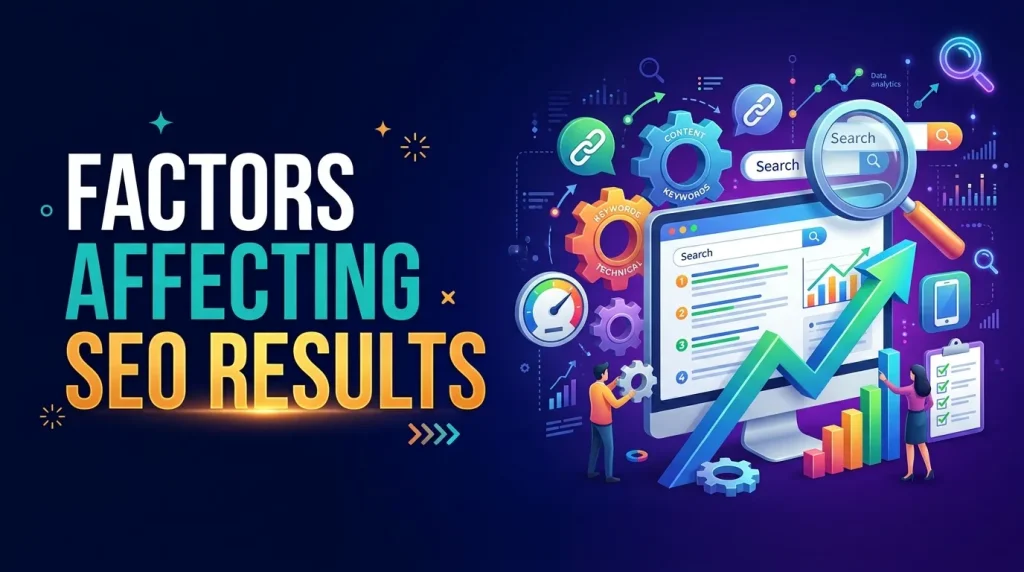
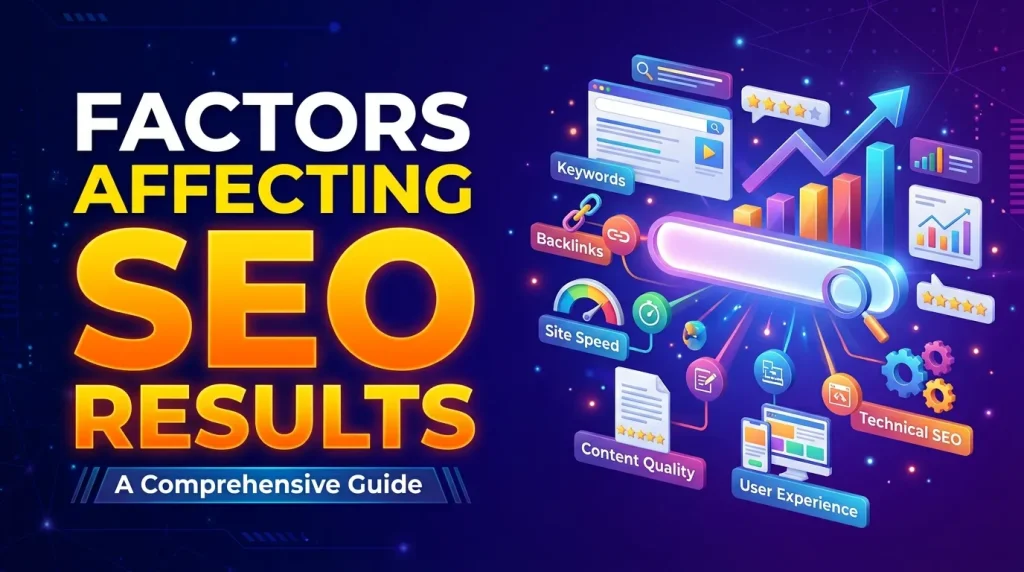 Several factors influence how quickly an SEO campaign produces results. Understanding these factors helps businesses identify opportunities and avoid unrealistic expectations. Website age and existing authority can influence the time required to achieve better rankings. Older websites with established backlinks, relevant content, and consistent search visibility may have an advantage over newly launched websites. However, website age alone does not guarantee higher rankings.
Keyword competition is another major factor. Ranking for broad keywords in competitive industries generally requires more time and resources than targeting specific, less competitive search terms. Content quality also plays a significant role. Search engines aim to provide users with helpful, relevant, and trustworthy information. Websites that publish original, informative, and well-structured content can improve their chances of attracting organic visibility.
Backlinks help search engines discover and evaluate relationships between websites. Relevant, trustworthy backlinks can support website authority, although acquiring them requires time and a strategic approach. Technical SEO is equally important. Website speed, mobile usability, secure connections, crawlability, indexing, and proper site structure all contribute to a healthy website. Finally, consistency matters. Regular content improvements, technical maintenance, competitor analysis, and performance monitoring help businesses maintain their SEO progress. These factors explain why how long does SEO take to show results can vary significantly between businesses, even when they operate in the same industry.
How Long Does Organic Traffic Take to Grow?
Organic traffic growth is one of the most important objectives of an SEO campaign. However, increasing website visitors through organic search requires more than simply publishing content and adding keywords. For many websites, initial organic traffic improvements may become noticeable within 3 to 6 months. More substantial and consistent growth may take 6 to 12 months or longer, depending on the website’s competition, authority, content strategy, and technical condition.
One effective way to improve organic traffic is by targeting relevant long-tail keywords. These keywords are usually more specific and may have lower competition than broad search terms. They also help attract visitors who have a clearer understanding of what they are looking for. Publishing helpful blog posts, optimizing existing service pages, improving internal linking, and answering common customer questions can also increase opportunities to appear in search results.
Businesses should focus on attracting relevant visitors rather than increasing traffic numbers without considering user intent. When evaluating how long does SEO take to show results, remember that organic traffic growth is usually gradual. Consistent improvements in content relevance, website authority, and user experience can help create a sustainable source of visitors over time.
SEO Campaign Results Timeline
An effective SEO campaign follows a structured process that focuses on improving different aspects of a website over time. The initial stage involves understanding the business, researching its target audience, identifying relevant keywords, and conducting a complete website audit. SEO professionals use this information to create a strategy based on business objectives and industry competition.
The next stage focuses on technical SEO and on-page optimization. This may include fixing indexing issues, improving page titles and meta descriptions, optimizing headings, improving website speed, and strengthening internal linking. Content development becomes an important priority as the campaign progresses. Publishing useful blog posts, improving existing pages, and creating relevant landing pages help websites target more search queries.
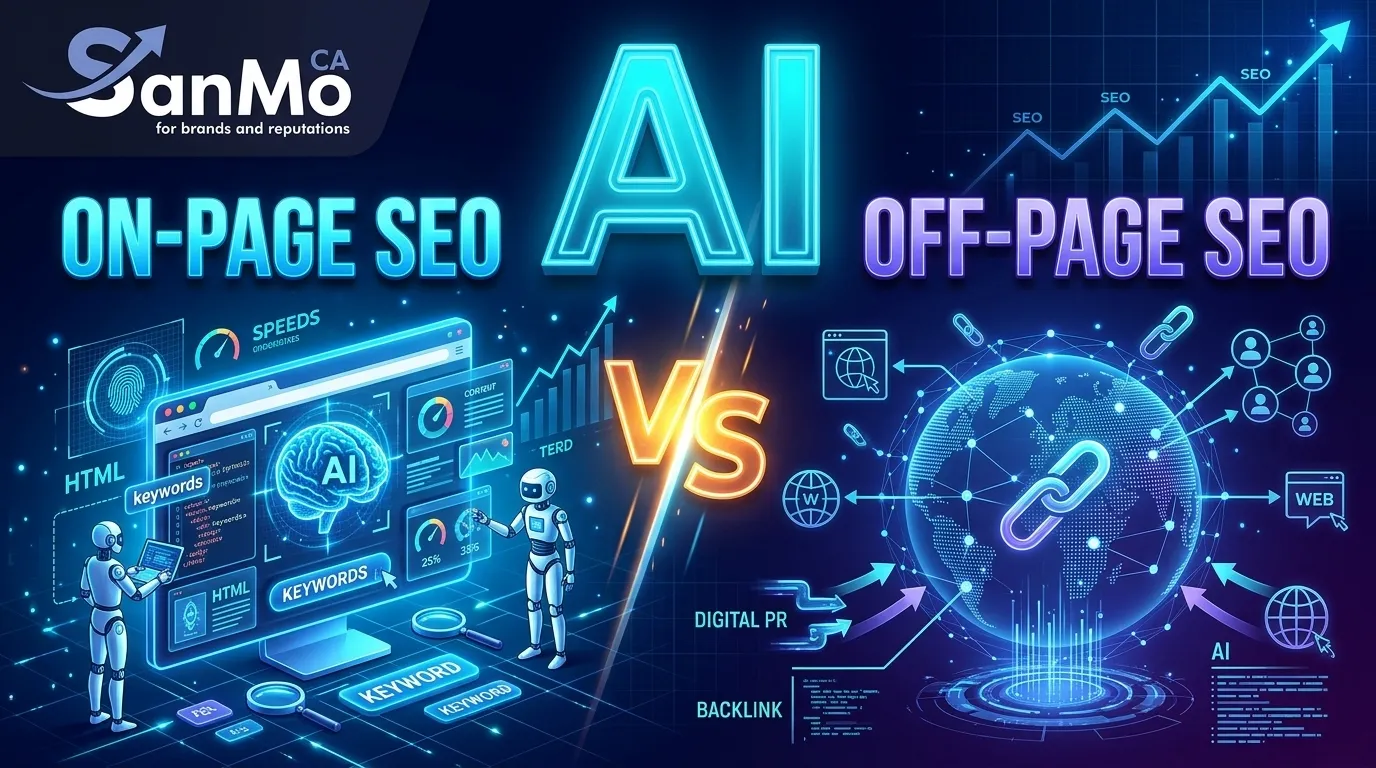
Off-page SEO activities may also support campaign performance. Building relevant backlinks, developing partnerships, and improving online brand visibility can help strengthen a website’s authority. Regular reporting is necessary throughout the campaign. Businesses should monitor keyword rankings, organic traffic, impressions, clicks, and conversions to understand what is working and where improvements are needed. A realistic understanding of how long does SEO take to show results allows businesses to invest consistently instead of abandoning their strategy before meaningful progress becomes visible. For businesses looking to strengthen their overall digital communication and customer outreach alongside organic marketing, bulk SMS services and their role in business communication provide additional insight into connecting with customers through direct communication channels.
Time Required to See SEO Results
The time required to see SEO results depends on what a business considers a successful outcome. Some businesses may consider improved keyword rankings a positive result, while others focus on generating leads, increasing sales, or achieving a higher return on investment. Initial technical improvements may become visible relatively quickly. However, stronger keyword rankings and meaningful organic traffic growth generally require more time.
For example, a local business targeting location-specific keywords may experience improvements sooner than a national business competing for highly searched industry terms. Similarly, an established website with a strong content foundation may achieve better results than a new website starting without existing authority. Another important consideration is conversion performance. Even when organic traffic increases, businesses need relevant landing pages, clear calls to action, and a positive user experience to turn visitors into customers.
Online reputation can also influence customer decisions. Positive customer reviews help potential customers evaluate a business before contacting or purchasing from it. Businesses can learn more about this process through our complete guide to Google Review Management. Ultimately, how long does SEO take to show results depends on the objectives, competition, and consistency of the campaign. Measuring both search performance and business outcomes provides a clearer picture of SEO success.
How to Get Faster SEO Results
 Although SEO requires patience, businesses can take several steps to improve the efficiency of their campaigns and avoid unnecessary delays. The first step is conducting a complete SEO audit. Identifying technical problems, indexing issues, broken links, duplicate content, and poorly optimized pages helps establish a strong foundation. Next, businesses should prioritize relevant keywords with realistic ranking opportunities. Instead of targeting only highly competitive search terms, focusing on specific long-tail keywords can help attract targeted visitors and create opportunities for earlier ranking improvements.
Creating high-quality content is another important strategy. Every webpage should provide useful information, address user questions, and match the search intent behind its target keywords. Avoid publishing content simply to increase the number of pages on your website. Optimizing existing content can also produce improvements. Updating outdated information, improving headings, adding relevant internal links, and strengthening page descriptions can make existing pages more useful.
Building quality backlinks is another way to support SEO performance. Focus on earning links from relevant and trustworthy websites instead of purchasing large quantities of low-quality backlinks. Local SEO can also help businesses targeting customers in specific geographical areas. Optimizing Google Business Profile information, maintaining accurate business details, and encouraging genuine customer reviews can strengthen local search visibility.
Finally, monitor performance through Google Analytics and Google Search Console. These tools help identify which pages attract visitors, which keywords generate impressions, and where additional optimization is needed. Remember, how long does SEO take to show results cannot be controlled entirely. However, following a well-planned strategy, maintaining consistency, and focusing on quality can help businesses achieve better results without wasting time on ineffective SEO practices.
Conclusion
SEO is a long-term investment that requires consistency, patience, and a well-structured strategy. While some businesses may notice early improvements within a few months, achieving meaningful rankings, sustainable organic traffic, and consistent leads often takes 6 to 12 months or longer. The most important thing is to focus on quality content, technical optimization, relevant keywords, trustworthy backlinks, and a positive user experience. Businesses should also monitor their performance regularly and adjust their strategies based on actual results. Understanding how long does SEO take to show results helps businesses set realistic expectations and make better marketing decisions. Rather than looking for overnight success, invest in consistent SEO improvements that support long-term business growth.
FAQ
1. How long does SEO take to show results for a new website?
A new website may take around 3 to 6 months to show early SEO improvements. However, building authority, improving keyword rankings, and generating consistent organic traffic can take 6 to 12 months or longer. The timeline depends on competition, content quality, technical SEO, and backlink development.
2. Can SEO work in 30 days?
SEO improvements can begin within 30 days, particularly when technical issues are fixed or existing content is optimized. However, achieving significant keyword rankings, organic traffic, and conversions within one month is uncommon, especially for new websites.
3. Why is SEO taking so long to show results?
SEO may take longer because of high keyword competition, weak website authority, technical problems, poor content quality, insufficient backlinks, or inconsistent optimization. Identifying these issues and improving the website gradually can help strengthen performance.
4. How long does it take to rank on the first page of Google?
There is no fixed timeline for reaching the first page of Google. Less competitive keywords may achieve first-page rankings within a few months, while highly competitive keywords can take a year or longer. Results depend on website authority, content relevance, competition, and SEO execution.
5. Does SEO work faster for older websites?
Older websites may have an advantage when they already have quality backlinks, relevant content, and established authority. However, age alone does not guarantee faster results. A well-optimized new website can also achieve strong rankings with the right strategy.
6. How often should I update my website content for SEO?
Content should be reviewed regularly to ensure accuracy, relevance, and usefulness. Update pages when information becomes outdated, search intent changes, or new information can improve the content. There is no requirement to change every page on a fixed schedule.
7. Do backlinks help improve SEO rankings faster?
Relevant and trustworthy backlinks can support website authority and help search engines discover content. However, backlinks do not guarantee immediate ranking improvements. Quality, relevance, and natural link-building practices are more important than simply increasing backlink numbers.
8. Can I get SEO results without backlinks?
Yes. Websites can rank for certain keywords without backlinks, particularly when competition is low and the content satisfies search intent. However, backlinks can be valuable when competing for more difficult keywords and building website authority.
9. How can I measure SEO results?
You can measure SEO performance using Google Search Console and Google Analytics. Important metrics include organic clicks, impressions, keyword positions, organic sessions, conversions, and qualified leads. Monitoring these metrics over time helps determine whether your SEO strategy is delivering progress.
10. Is SEO worth the investment for small businesses?
Yes. SEO can help small businesses attract relevant visitors, increase online visibility, generate leads, and build long-term brand awareness. Although it requires time and consistent investment, a well-planned SEO strategy can become a valuable source of sustainable organic traffic.