
We live in an era where your first impression is often digital. Before a client shakes your hand, an investor signs a check, or a hiring manager schedules an interview, they have likely already Googled your name. What they find there can open doors or slam them shut.
Negative search results—whether from an old news article, a misunderstanding on social media, or a vindictive review—can feel permanent. You might feel like you are being held hostage by an algorithm, defined by a single moment rather than your entire career or character. This anxiety is common, but the situation is rarely hopeless.
Personal reputation management is the strategic process of influencing how you are perceived online. It is not about “deleting the internet” or hiding the truth. Instead, it is about curating a digital footprint that accurately reflects who you are today. It involves suppressing unfair or outdated negative content by promoting positive, relevant, and authoritative assets.
In this guide, brought to you by the experts at SanMo CA, we will explore actionable strategies to regain control of your online narrative. We will look at why search results matter, the mechanics of search engines, and the specific steps you can take to repair a damaged reputation.
The High Cost of a Bad Reputation
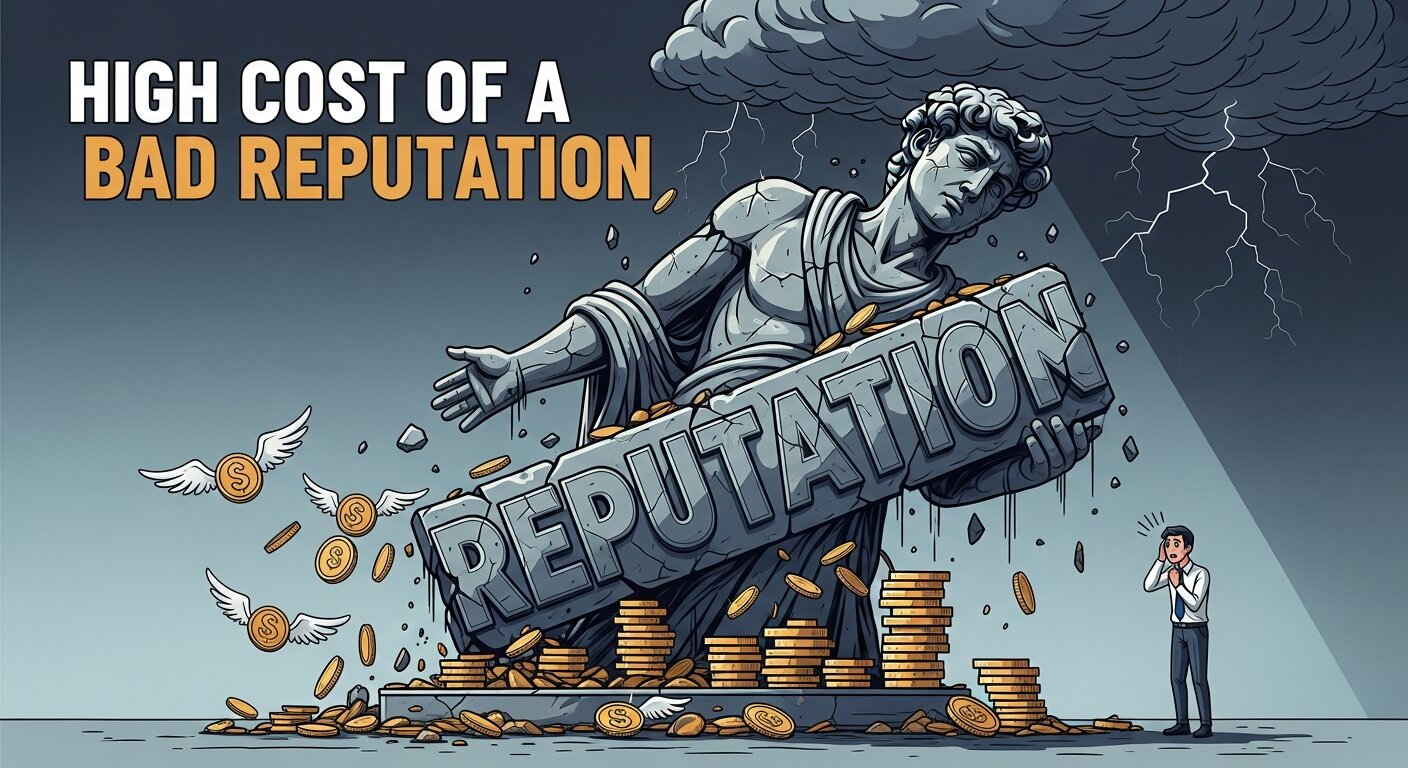
Many individuals underestimate the tangible impact of negative search results until a crisis hits. They assume that their offline reputation—their handshake, their word, their track record—is enough to override a bad Google search. Unfortunately, data suggests otherwise.
In a highly competitive marketplace, trust is the currency of transactions. When someone searches for you and finds negative content, it creates cognitive dissonance. Even if they know you personally, seeing a mugshot, a lawsuit summary, or a scathing blog post creates doubt for those who don’t know you; that negative result is often the end of their research.
Professional Consequences
For executives and entrepreneurs, personal reputation is inextricably linked to business success. A CEO with a tarnished online image can drag down the stock price or valuation of their entire company. Investors conduct rigorous due diligence, and red flags in search results can kill deals before they reach the negotiation table.
Job seekers face similar hurdles. Recruiters routinely screen candidates online. If the top result for your name is a rant you posted five years ago or a news story about a past dispute, you may never get the chance to explain your side of the story. You are simply filtered out.
Personal and Social Impact
The damage isn’t limited to professional spheres. Negative search results can affect personal relationships, housing applications, and even volunteer opportunities. The internet does not distinguish between your work life and your personal life; it aggregates everything into a single, often messy feed.
The psychological toll is also significant. Knowing that anyone who meets you might “look you up” and see something negative can lead to social anxiety and withdrawal. Taking control of your search results is often as much about peace of mind as it is about career advancement.
Understanding How Search Engines Work
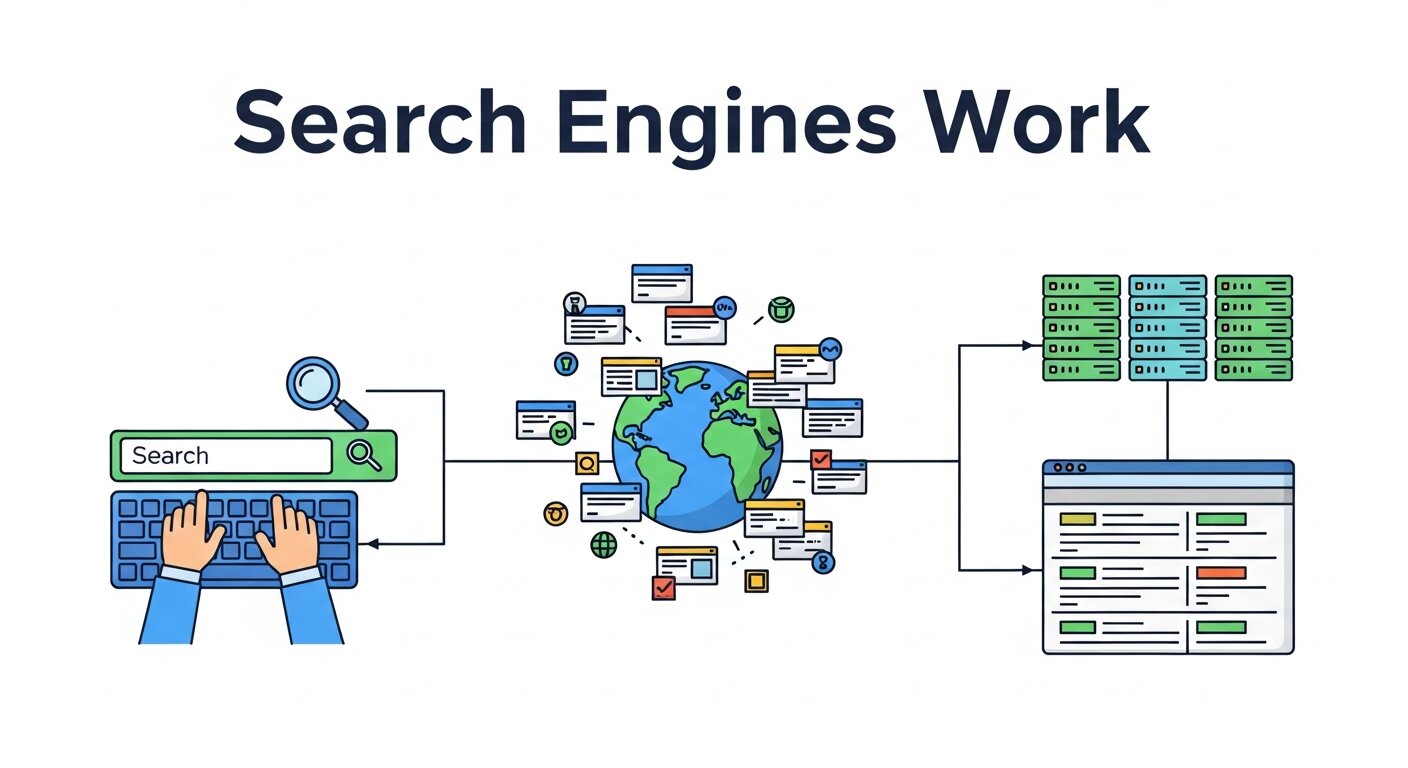
To fix your search results, you first need to understand the mechanism that orders them. Google does not hate you, nor does it love you. Google is a machine designed to answer user queries with the most relevant and authoritative information available.
Search engines use complex algorithms to crawl, index, and rank web pages. When someone searches for your name, the algorithm looks for signals to decide what to show first.
Relevance and Authority
Google prioritizes content that it deems “relevant” to the keyword (your name) and “authoritative” (trustworthy). High-authority sites, like major news outlets or government domains, naturally rank higher. This is why a negative news article from a local paper can stick to the first page for years—the domain authority of the newspaper is likely higher than your personal blog or social media profile.
Recency and Engagement
Search engines also look at how fresh the content is and how people interact with it. If people click on a negative link frequently, it sends a signal to Google that the result is relevant, reinforcing its position at the top. This creates a vicious cycle where the more people see a bad result, the more cemented it becomes.
Effective personal reputation management works by disrupting these signals. By creating new, high-authority, and engaging positive content, you can push the negative results down. This strategy is known as suppression.
Step 1: Audit Your Digital Footprint
Before you can fix the problem, you need to measure it. A thorough audit of your online presence is the foundation of any reputation management strategy.
Open an incognito or private browsing window. This ensures that your previous browsing history doesn’t influence the results. Search for your name in several variations:
- “First Name Last Name”
- “First Name Last Name + City”
- “First Name Last Name + Job Title”
- “First Name Last Name + Company”
Look at the first three pages of results. Most users rarely go past page one, but for reputation management, you need to know what is lurking on pages two and three, as these items could move up over time.
Categorize what you find:
- Positive: Profiles you control, positive news, awards.
- Neutral: Directory listings, public records.
- Negative: The content you want to suppress.
Take note of the “Negative” URLs. Are they news sites? Blogs? Social media posts? Understanding the source of the negativity helps determine the strategy. A bad review on a complaint site requires a different approach than a court record on a government domain.
Step 2: Removal vs. Suppression
The most common question clients ask SanMo CA is, “Can you just delete it?”
The answer is usually no, but with caveats. You generally cannot delete content from a website you do not own. If a newspaper wrote a story about you, they have the right to keep it published.
However, there are exceptions where removal is possible:
- Copyright Infringement: If the negative content uses a photo or text you own without permission, you can file a DMCA takedown request.
- Terms of Service Violations: If the content violates the platform’s rules (e.g., revenge porn, doxxing, hate speech), you can report it to the host for removal.
- Right to Be Forgotten: In the EU and certain other jurisdictions, citizens have legal avenues to ask search engines to delist outdated or irrelevant information. In the US, this is much harder to achieve.
For the vast majority of cases, suppression is the viable strategy. Since you cannot remove the negative link, you must bury it. The goal is to fill the first page of Google with positive, controlled assets so that the negative result is pushed to page two, where it is effectively invisible.
Step 3: Building a Fortress of Positive Content
Suppression requires you to outrank the negative content. To do this, you need to build a network of high-quality web properties that Google loves.
Secure Your Personal Domain
If you haven’t already, buy yourname.com. If that is taken, try yournamelastname.com or yourname-profession.com.
Use this domain to build a personal website. This should be the hub of your online presence. Include a professional bio, a high-quality headshot, and links to your social media profiles. Google gives significant weight to exact-match domains (domains that match the search term), so this site has a high probability of ranking #1.
Optimize Social Media Profiles
Social media profiles are incredibly powerful for reputation management because they have high domain authority. Google trusts LinkedIn, Twitter (X), Facebook, and Instagram.
Ensure you have profiles on all major networks. Optimize them by:
- Using your full professional name as the handle or URL.
- Writing a detailed bio that includes your name and profession.
- Linking back to your personal website.
- Posting regular updates. Dormant profiles are less likely to rank.
Don’t ignore secondary platforms. Sites like Medium, Crunchbase, Behance, Vimeo, and SlideShare also rank well. Create profiles there and populate them with relevant content.
Step 4: Content Creation and Blogging
Creating empty profiles isn’t enough. Google craves fresh content. You need to demonstrate to the search engine that you are an active, relevant figure in your industry.
Start a blog on your personal website. Write about industry trends, share professional insights, or discuss your volunteer work. Consistency is key. One high-quality post a month is better than five low-quality posts dropped in a single week.
Consider guest posting on other reputable industry blogs. When you write a guest post, you usually get an author bio with a link back to your site. This serves two purposes:
- It creates a new positive search result (the guest post itself).
- It creates a backlink to your personal site, boosting its authority.
The content doesn’t need to be Pulitzer Prize-winning, but it must be original and helpful. Avoid using AI to spam generic articles; search engines are getting better at devaluing low-effort, automated content.
Step 5: Leveraging Multimedia
Text isn’t the only way to rank. Images and videos take up valuable real estate on search engine results pages (SERPs).
Images:
Upload professional headshots and images of you speaking at events or working. When you upload them to your website or social media, use your name in the file name (e.g., john-smith-ceo.jpg) and in the “alt text.” This helps these images appear in Google Images results.
Video:
YouTube is the second-largest search engine in the world and is owned by Google. YouTube videos frequently appear at the top of Google search results. Create a YouTube channel under your name. Upload videos of you giving talks, tutorials, or even simple video introductions. Title the videos with your name and relevant keywords.
Step 6: Review Management

If your negative search results stem from bad reviews (for example, if you are a doctor, lawyer, or consultant), you need a proactive review strategy.
You cannot simply delete bad reviews from Google or Yelp unless they violate specific policies. Instead, you must dilute them with positive feedback. actively encourage satisfied clients to leave reviews. A 4.5-star rating with 100 reviews looks much better than a 3-star rating with two reviews.
Respond to reviews—both positive and negative. Responding to negative reviews professionally shows that you care and are willing to resolve issues. It creates context for anyone reading the review.
Step 7: The Long Game
Personal reputation management is not a quick fix. It takes time for search engines to crawl your new content and re-rank the results. It can take months to move a negative result from position #3 to position #12.
Patience and consistency are essential. Many people make the mistake of creating a flurry of content for two weeks and then stopping. When the activity stops, the new results may slip, and the old negative content might resurface.
Think of this as digital hygiene. Just as you brush your teeth every day to prevent cavities, you must maintain your online presence to prevent reputational decay.
When to Call the Professionals
While the steps above are effective for many situations, some scenarios require professional intervention. If you are dealing with a coordinated smear campaign, legal issues, or highly authoritative negative news from major media outlets, DIY methods might not be enough.
This is where a dedicated firm like SanMo CA becomes invaluable. Professional reputation managers have access to advanced SEO tools, legal networks, and publishing relationships that individuals do not. They can execute complex suppression campaigns and monitor the SERPs around the clock.
If your livelihood depends on your reputation, investing in professional help is often a calculated business decision rather than a vanity expense.
Frequently Asked Questions (FAQ)
How long does it take to push down negative search results?
There is no set timeline, as it depends on the authority of the negative site and the competition for your name. Generally, you can expect to see initial movements within 2-3 months, but significant suppression often takes 6-12 months of consistent effort.
Can I just change my name?
While legally possible, this is rarely a practical solution for established professionals. You lose the value of your career history and network. It is almost always better to repair the reputation of your existing name than to start from zero.
Does clicking on the negative link hurt my efforts?
Yes. Every time you click the negative result to “check if it’s still there,” you are telling Google that the result is relevant to your search. Stop clicking it. If you need to monitor it, use a rank tracking tool or clear your cache and cookies, but avoid interacting with the link.
Is reputation management legal?
Absolutely. Personal reputation management is about promoting truthful, positive information to balance the narrative. It uses standard SEO and public relations techniques. It is not about hacking, bribery, or illegal takedowns.
Why do negative results rank so high?
Negative content often attracts clicks (human curiosity) and is frequently hosted on news sites or forums with high “Domain Authority.” Google interprets this high authority and high engagement as a signal that the content is the “best” answer for the search query.
Can SanMo CA help with mugshots?
Mugshots are a specific type of predatory content. While policies vary by state, professional services often have specific legal strategies and contacts to assist with the removal or de-indexing of mugshot websites, which can be difficult to do on your own.
Taking Back Control
Your online reputation is an asset. Like your home or your retirement savings, it needs protection and maintenance.
Negative search results can feel overwhelming, but they do not have to define your future. By understanding how search engines work and implementing a strategic plan of content creation and SEO, you can reclaim your narrative.
Start today. Secure your domain, update your LinkedIn, and write that first blog post. Every positive piece of content you create is a brick in the wall that protects your good name.