

Your website often serves as the first handshake with a potential customer. It works around the clock, showcasing your brand, explaining your services, and ideally, generating leads. But even the most beautifully designed websites can suffer from invisible issues that drive users away and tank search engine rankings.
Many business owners assume that because their site looks good on a desktop, it performs well everywhere. Unfortunately, digital performance is rarely that simple. Beneath the surface, broken links, slow-loading scripts, and confusing navigation structures might be silently killing your conversion rates.
This is where a complete website audit comes into play. It is not just a quick scan for spelling errors; it is a comprehensive health check for your digital presence. By examining the intersection of technical performance, content quality, and user experience (UX), an audit reveals exactly why you might be losing traffic to competitors.
For businesses looking to dominate their market, understanding the mechanics of an audit is the first step toward recovery and growth. Here is how a deep dive into your website’s architecture can transform your user experience and propel your SEO rankings to the top of the search results.
What Exactly is a Complete Website Audit?
A complete website audit is a systematic analysis of all factors that affect your website’s visibility in search engines and its usability for visitors. While many free tools offer a surface-level “score,” a professional audit goes much deeper. It provides a roadmap for your SEO services team to fix foundational problems.
Think of it as a home inspection before you buy a house. The paint might be fresh, but an inspector checks the foundation, the wiring, and the plumbing. Similarly, a website audit looks at three primary pillars:
- Technical SEO: The backend infrastructure that allows search engines to crawl and index your site.
- On-Page SEO and Content: The quality, relevance, and structure of the words and images on your pages.
- User Experience (UX) and Design: How easy and enjoyable it is for a human to navigate your site.
When these three pillars align, Google rewards you with higher rankings, and customers reward you with their business.
The Critical Link Between UX and SEO
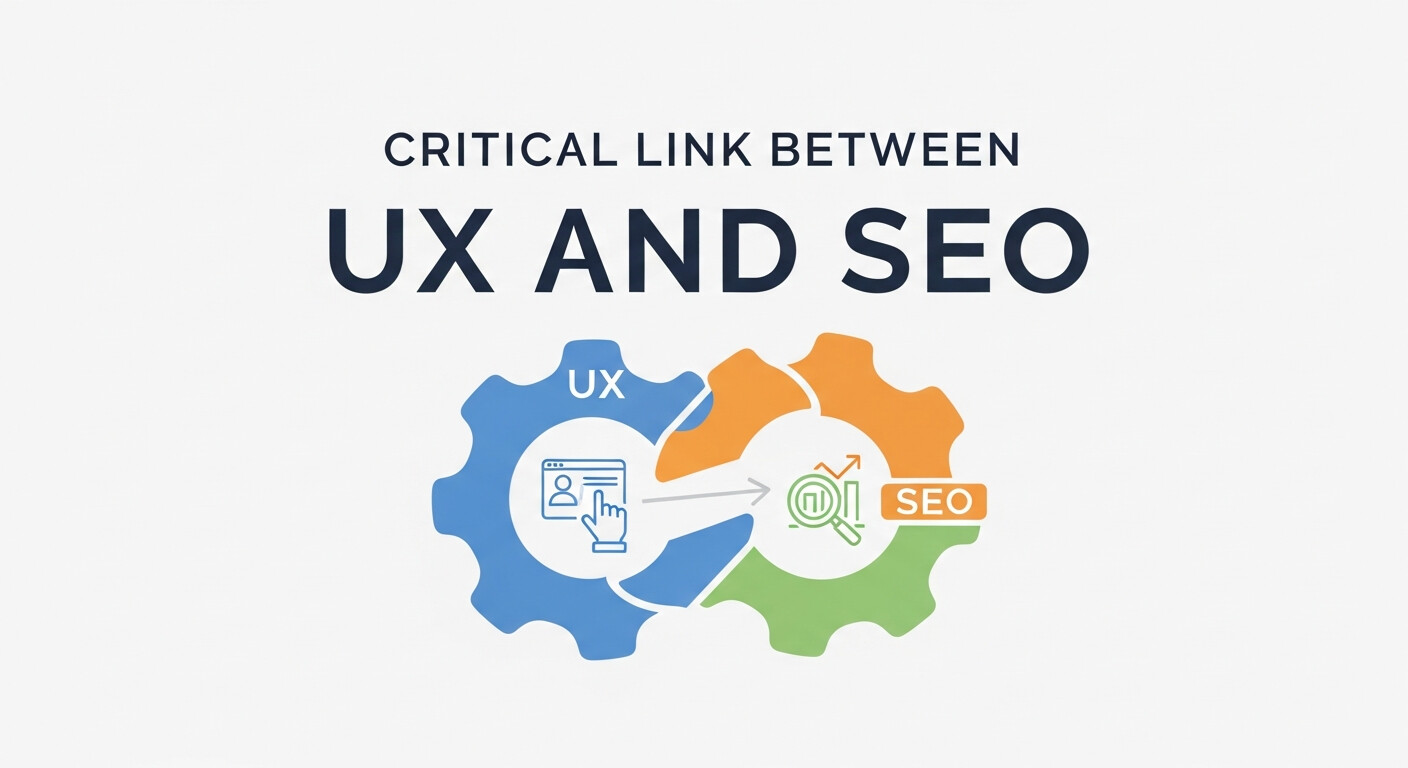
Historically, Search Engine Optimization (SEO) and User Experience (UX) were treated as separate disciplines. SEO was about keywords and backlinks, while UX was about colors and button placement. Those days are gone.
Google’s algorithms have evolved to prioritize the user. Updates like Core Web Vitals explicitly measure how users interact with a page. If a visitor lands on your site and immediately leaves because the layout shifts or the text is too small (a high “bounce rate”), Google notices. It interprets this behavior as a sign that your website does not answer the user’s query effectively. Consequently, your rankings drop.
A complete website audit bridges this gap. It identifies friction points that frustrate users. By fixing UX issues—such as simplifying a checkout process or making text readable on mobile—you aren’t just being nice to your customers. You are directly signaling to search engines that your site is high-quality and deserves a top spot in the index.
Technical SEO: Building a Solid Foundation

The most intimidating part of an audit for most business owners is the technical analysis, yet it is often where the quickest wins are found. If search engines cannot read your website, the best content in the world won’t save you.
Site Speed and Core Web Vitals
Speed is currency. Research consistently shows that conversion rates drop significantly with every second of delay in load time. An audit measures metrics like Largest Contentful Paint (LCP), which marks the time it takes for the main content to load.
If your site takes five seconds to load on a 4G network, you are losing a massive chunk of your audience before they even see your headline. An audit identifies the culprits, which are often oversized images, unnecessary code, or slow server response times.
Mobile-Friendliness
We live in a mobile-first world. Google uses the mobile version of your content for indexing and ranking. A complete website audit rigorously tests your site across various screen sizes.
It looks for issues such as:
- Touch targets: Are buttons too close together for a thumb to tap?
- Viewport configuration: Does the content fit the screen, or does the user have to scroll horizontally?
- Font size: Is the text legible without zooming?
Indexing and Crawlability
You want Google to visit your site, but you also want to guide it. An audit checks your robots.txt file and XML sitemap to ensure you aren’t accidentally blocking search bots from important pages. Conversely, it ensures you aren’t wasting your “crawl budget” on low-value pages, like duplicate tags or admin login screens.
Content Analysis: Quality Over Quantity
Once the technical foundation is secure, the audit turns to what visitors actually see. Content is the vehicle for your keywords, but modern SEO services focus on context and intent rather than keyword stuffing.
Identifying Thin and Duplicate Content
“Thin” content refers to pages with very little value—perhaps a few sentences that don’t answer a user’s question. Google dislikes these pages. Even worse is duplicate content, where the same text appears on multiple URLs. This confuses search engines, forcing them to choose which version to rank, often diluting your authority.
An audit highlights these problem areas. The solution might be to consolidate several weak pages into one comprehensive guide or to rewrite descriptions to be unique and valuable.
Keyword Gaps and Opportunities
Are you ranking for the terms your customers are actually typing? Sometimes businesses get stuck using industry jargon that their clients don’t use. An audit compares your content against your competitors. It reveals “keyword gaps”—topics your competitors are covering that you are missing.
This analysis helps you build a content calendar that answers real questions. When you align your content with user intent, you naturally improve dwell time (how long people stay on your site), which is a powerful ranking signal.
Off-Page Factors and Authority
Your website doesn’t exist in a vacuum. Its authority is largely determined by the quality of other websites linking back to it. A complete website audit includes a thorough review of your backlink profile.
Toxic Backlinks
Not all links are good links. If your site has attracted links from spammy, low-quality, or irrelevant directories, Google might penalize you. An audit identifies these “toxic” links so your SEO team can disavow them, essentially telling Google to ignore them.
Competitor Link Analysis
Where are your competitors getting their authority? If the top-ranking business in SanMo CA has a link from a prominent local news outlet or a specific industry association, an audit will find it. This provides a clear target list for your own outreach and digital PR efforts.
Why SanMo CA Businesses Need Regular Audits
For companies operating in competitive markets like SanMo CA, standing out is non-negotiable. Local SEO is a specific beast that requires precise auditing.
A localized audit checks for consistency across your Name, Address, and Phone number (NAP) citations. It ensures your Google Business Profile is fully optimized and integrated with your website. If your website says you are located in one zip code, but a directory listing puts you in another, search engines lose trust in your data.
SanMo CA offers specialized SEO services that go beyond generic advice. By understanding the local search landscape, a tailored audit helps you capture “near me” searches and drives foot traffic, not just web traffic.
Conversion Rate Optimization (CRO)
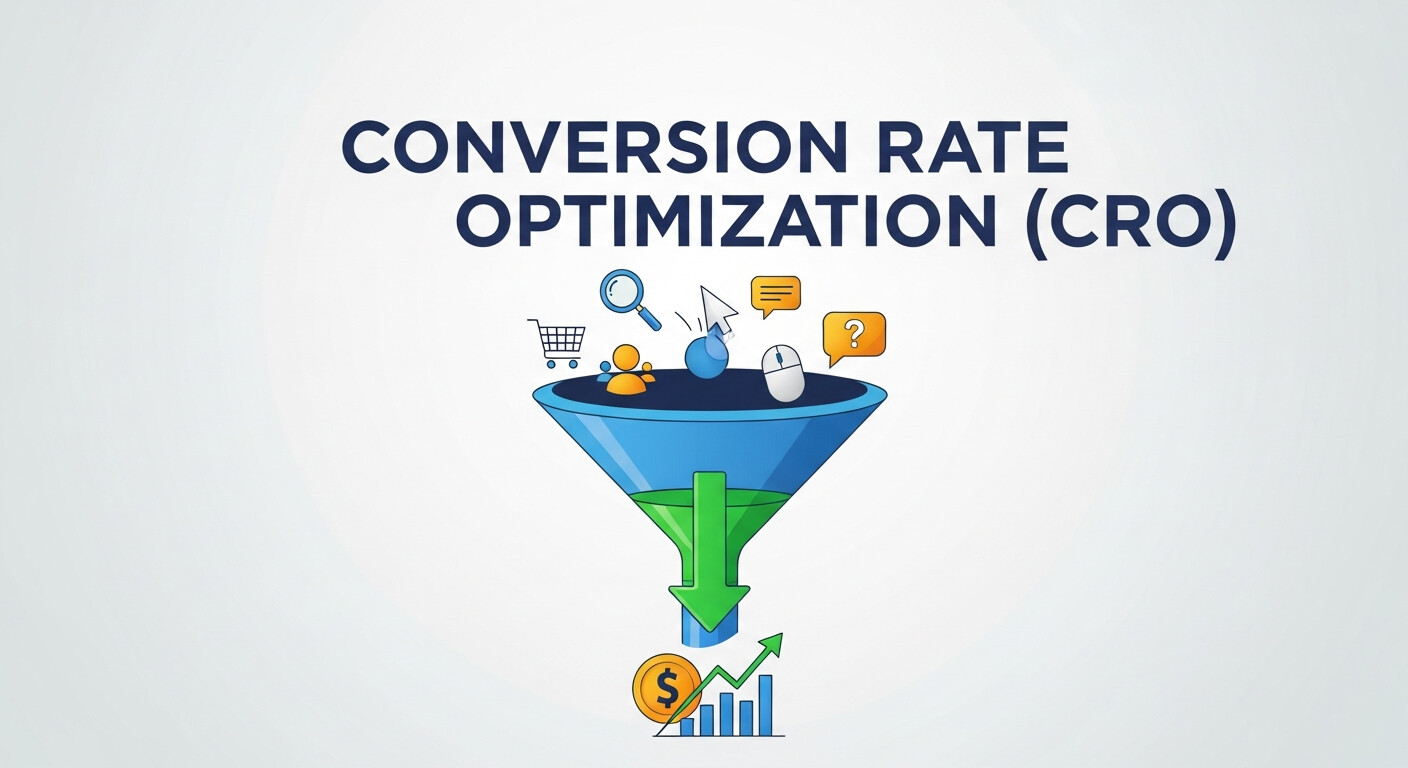
Bringing traffic to your site is only half the battle. You need that traffic to take action. This is where Conversion Rate Optimization (CRO) overlaps with your audit.
An audit looks at the user journey.
- Are your Calls to Action (CTAs) clear and compelling?
- Is the contact form asking for too much information, causing users to abandon it?
- Is the navigation intuitive, or are users getting lost?
By smoothing out these pathways, you maximize the value of every visitor. You don’t always need more traffic to get more sales; sometimes, you just need to fix the leaks in your current funnel.
The Roadmap to Recovery
The final deliverable of a complete website audit is not just a list of problems—it is a prioritized action plan.
A good audit separates issues into three categories:
- Critical Errors: High-priority items that are actively blocking revenue or rankings (e.g., a broken checkout page or a no-index tag on the homepage).
- Quick Wins: Low-effort changes that yield noticeable results (e.g., compressing images or fixing meta descriptions).
- Long-Term Strategy: Ongoing tasks like content creation and link building.
This roadmap allows business owners to budget their time and resources effectively. Instead of guessing what might move the needle, you have a data-backed strategy.
Conclusion
Ignoring the health of your website is a risk no modern business can afford to take. The digital landscape changes too quickly. What worked two years ago might be considered a penalty risk today. A complete website audit provides the clarity needed to navigate these changes.
By systematically improving your technical performance, content quality, and user experience, you create a digital asset that works harder for your business. You stop fighting against the algorithms and start working with them.
If you have noticed a dip in traffic, a lack of leads, or if it has simply been a while since anyone looked “under the hood,” it is time to take action. Investing in a comprehensive audit is the most effective way to secure your rankings and ensure your customers enjoy a seamless experience.
Frequently Asked Questions
How often should I perform a website audit?
For most businesses, a full, comprehensive audit should be conducted once a year. However, smaller “mini-audits” focusing on technical health should be done quarterly. If you are launching a new website, migrating a domain, or recovering from a Google penalty, an immediate audit is essential.
Can I do a website audit myself?
There are many tools available that generate automated reports. These can be useful for spotting basic errors like broken links. However, a tool cannot interpret nuance, understand your specific business goals, or evaluate the quality of your content. Professional SEO services provide the human insight needed to turn data into a strategy.
How long does an audit take to complete?
A thorough audit is not an overnight process. Depending on the size of the website, it typically takes anywhere from two weeks to a month. This allows time for crawling the site, analyzing the data, cross-referencing competitors, and compiling a detailed strategy document.
Will an audit fix my ranking immediately?
The audit itself is a diagnostic tool—it finds the problems. The ranking improvements come after you implement the recommended fixes. Some changes, like fixing technical errors, can lead to quick improvements. Others, like building authority through content, take time to mature.
What is the difference between an SEO audit and a content audit?
An SEO audit is broad, covering technical issues, off-page factors, and on-page elements. A content audit focuses specifically on the performance of your blog posts and landing pages. It evaluates metrics like engagement, relevance, and keyword targeting. A complete website audit typically includes both.