Every successful business starts with a single idea, but in the digital era, that idea needs a home. Your website is often the very first interaction a potential customer has with your brand. It serves as your storefront, your sales representative, and your portfolio all at once. If that digital storefront is boarded up because of server downtime, or if the door is stuck because of slow loading speeds, you aren’t just losing traffic—you are losing revenue and credibility.
Choosing the right infrastructure is one of the most critical decisions a business owner makes. Yet, it is often treated as an afterthought. Many entrepreneurs rush to buy the first cheap domain they find and couple it with bargain-bin hosting, only to realize six months later that their site cannot handle a traffic spike or that their data is vulnerable.
The market is flooded with thousands of providers promising the world. Navigating this crowded space requires understanding what actually matters for your business. It is not just about getting online; it is about staying online, loading fast, and scaling up without technical headaches.
This guide will walk you through the essential factors of choosing domain & hosting services that support your vision. We will look at performance, security, and scalability, and explore why companies like SanMo CA are becoming the go-to choice for businesses that are serious about their digital future.
The Symbiosis of Domains and Hosting
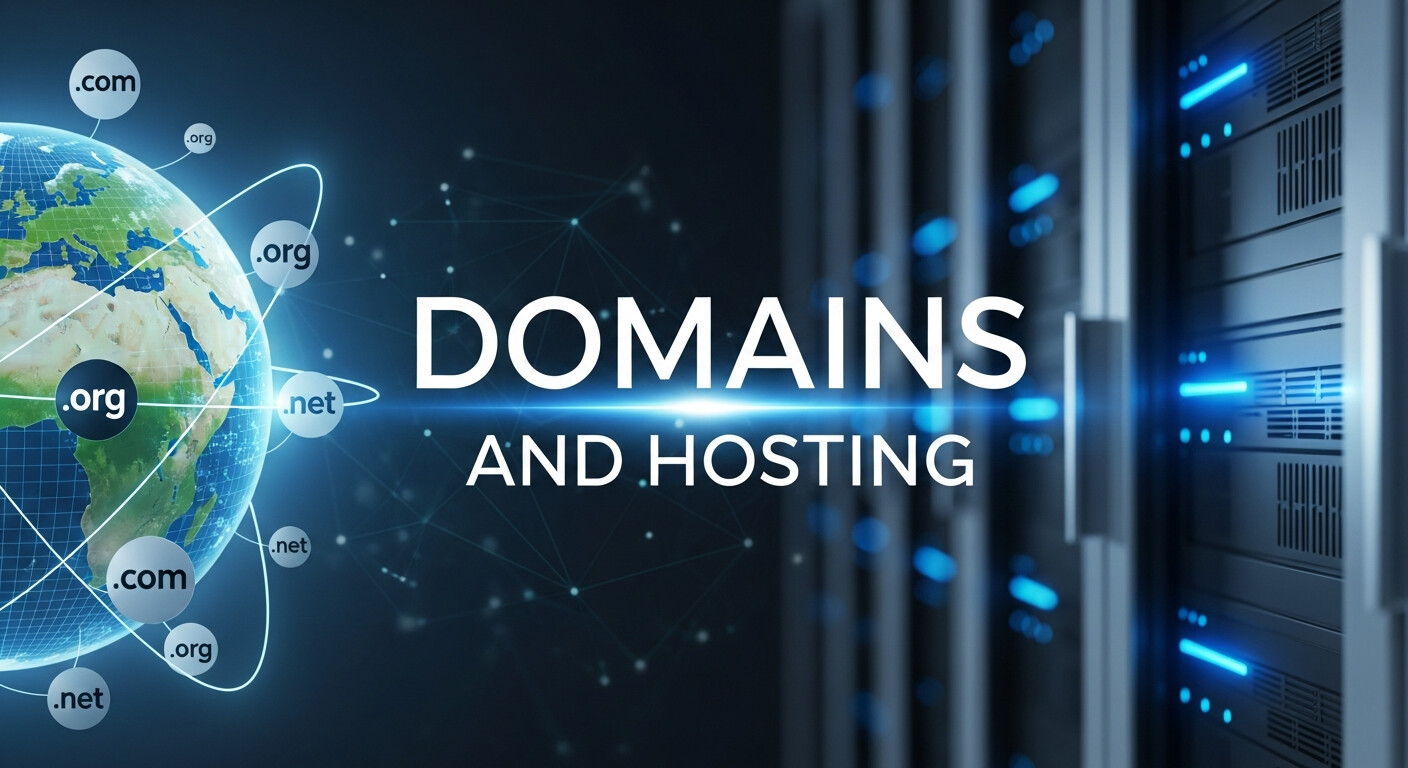
Before analyzing the technical specs, it helps to clarify the relationship between these two services. They are distinct, yet they must work in perfect harmony for your website to function.
Think of your domain name as your street address (e.g., sanmo.ca). It tells people where to find you on the vast map of the internet. It is your identity. A good domain is easy to remember, professional, and aligned with your brand voice.
Web hosting is the plot of land and the house built at that address. It is where your website’s files, images, code, and databases physically reside. When someone types in your domain, the hosting server delivers the content to their browser.
You can buy them separately, but managing them through a unified provider often simplifies billing and technical support. The goal is to find a partner that excels at both management and infrastructure.
Why Performance Is the New Marketing
You might have the best marketing campaign in the world, but if your landing page takes five seconds to load, your budget is wasted. User expectations have changed. Most visitors expect a site to load in under two seconds. If it takes longer than three, a significant percentage will abandon the tab and head to a competitor.
This is where website performance optimization becomes critical. While you can optimize your images and code, the raw speed of your server is the ceiling for how fast your site can go. A sluggish server means a sluggish site, no matter how clean your code is.
The Role of Server Location and Technology
Distance matters. If your customers are in California but your server is in Germany, data has to travel halfway across the world. This creates latency. Premium hosting providers allow you to choose data center locations near your target audience.
Furthermore, the hardware matters. Modern hosting should utilize NVMe SSD storage, which is significantly faster than traditional spinning hard drives. This drastically reduces the time it takes for the server to find and serve your data.
Understanding Connectivity: The BDIX Advantage
For businesses targeting specific regions, connectivity protocols can be a game-changer. One prime example of localized optimization is BDIX Shared hosting.
BDIX stands for the Bangladesh Internet Exchange. It is a local peering facility that keeps internet traffic within the country rather than routing it through international servers. If your target audience includes users in this region, utilizing BDIX hosting ensures:
- Lower Latency: Data travels a much shorter distance, resulting in lightning-fast load times for local users.
- Bandwidth Efficiency: It reduces the load on international bandwidth, often resulting in more stable connections during peak hours.
- Cost-Effectiveness: It often allows for high-speed data transfer at a lower cost compared to purely international routing.
While this is a specific example, the principle applies globally: your hosting provider should offer network solutions optimized for where your customers actually live.
Reliability: The 99.9% Uptime Standard
Uptime is the measurement of how often your website is accessible. A guarantee of 99.9% sounds impressive, but let’s do the math. Over a year, 0.1% downtime equals nearly 9 hours of your site being offline. For an e-commerce store during a holiday sale, that could mean thousands of dollars in lost sales.
Reliability isn’t just about keeping the lights on; it’s about redundancy. A reliable provider like SanMo CA invests in redundant power supplies, backup generators, and network failovers. If one server fails, another should take over immediately.
When vetting a provider, look for:
- Service Level Agreements (SLAs): Do they offer compensation if uptime drops below the guarantee?
- Proactive Monitoring: Do they fix issues before you even notice them, or do you have to submit a ticket to tell them your site is down?
Security Protocols You Cannot Ignore
The internet is a hostile environment. Bots, malware, and hackers are constantly scanning for vulnerabilities. Your hosting provider is your first line of defense. If they are weak, your customer data is at risk.
Cheap hosting often cuts corners on security. Reliable domain & hosting services should include:
- Free SSL Certificates: This encrypts data between the user and the server. It is mandatory for SEO and user trust (the little padlock icon in the browser).
- Automated Backups: If your site gets hacked or an update breaks the code, you need a one-click restore option.
- DDoS Protection: Distributed Denial of Service attacks can crash your site by flooding it with fake traffic. Enterprise-grade hosting filters this traffic out.
- Malware Scanning: Regular scans to identify and isolate malicious files before they spread.
DNS Management and Domain Control
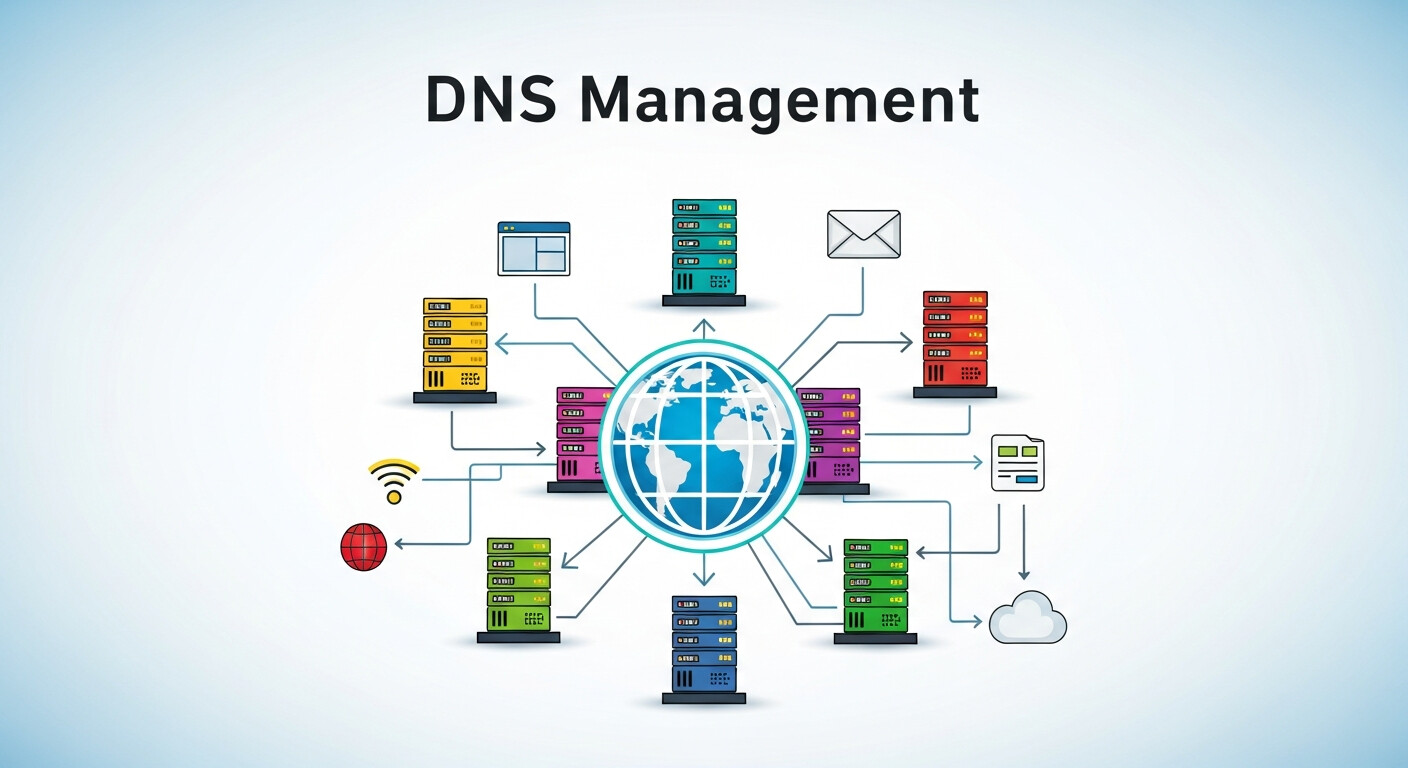
Your domain is more than just a name; it is a control panel for how users and services reach your website. Advanced DNS management plays a crucial role in website availability, speed, and security. Poorly configured DNS records can cause slow resolution times or even make your site inaccessible. Reliable domain & hosting services provide intuitive DNS management with fast propagation, allowing changes to take effect quickly across the global internet. Features like custom nameservers, DNS failover, and TTL control help ensure stability during traffic surges or server issues. For growing businesses, having full control over DNS settings means smoother integrations with email services, CDNs, and third-party tools without risking downtime.
Email Hosting as a Brand Credibility Factor
Professional email hosting is often overlooked, yet it directly impacts brand trust. An email address like [email protected] signals legitimacy, while free email providers can raise red flags for potential customers. High-quality domain & hosting services include secure, reliable email hosting with spam filtering, virus protection, and high deliverability rates. Beyond communication, email hosting supports internal collaboration through shared inboxes and autoresponders. Downtime or poor configuration can cause lost leads and missed opportunities. By choosing a provider that integrates email hosting seamlessly with your domain and server infrastructure, businesses ensure consistent communication, stronger branding, and a more professional digital presence.
Backup and Disaster Recovery Planning
No website is immune to failure. Hardware crashes, human errors, malware infections, or faulty updates can bring a site down instantly. This is why backup and disaster recovery should be a core part of any hosting decision. Advanced hosting providers offer automated daily backups stored in secure, off-site locations. In the event of a failure, one-click restoration allows businesses to recover within minutes instead of days. Disaster recovery planning ensures continuity, protecting both data and revenue. Reliable domain & hosting services treat backups not as an optional add-on, but as a fundamental safeguard that allows businesses to operate with confidence, even when the unexpected happens.
The Need for Scalable Hosting Solutions

Growth is the goal, but growth breaks bad infrastructure. A shared hosting plan that works perfectly for 1,000 monthly visitors will likely crash under the weight of 50,000 visitors.
You need a provider that offers scalable hosting solutions. This means you can upgrade your resources (RAM, CPU, Storage) instantly without migrating your entire website to a new server.
The Hosting Tier Progression
- Shared Hosting: Economical and good for beginners. You share server resources with other websites.
- VPS (Virtual Private Server): You still share a physical server, but you have dedicated portions of resources that others cannot touch. This offers better stability.
- Dedicated Hosting: You rent the entire physical server. Maximum power, maximum control, higher cost.
- Cloud Hosting: Your site lives on a network of connected servers. If one goes down, another takes over. This is the ultimate in scalability.
SanMo CA specializes in guiding clients through this progression. You might start small, but their infrastructure is built to let you grow big without technical friction.
Why Support Trumps Features
Technological glitches are inevitable. A plugin might conflict with your PHP version, or a DNS record might fail to propagate. When this happens, you are not looking for a chatbot; you are looking for an expert.
The true test of a hosting company is their support team.
- Availability: Is it 24/7/365? Problems rarely happen during convenient business hours.
- Expertise: Are you talking to a Tier 1 support agent reading a script, or a technician who understands server architecture?
- Channels: Can you reach them via live chat, phone, and ticket?
SanMo CA prides itself on a support-first approach. The goal is to act as an extension of your IT team, resolving infrastructure issues so you can focus on running your business.
Evaluating the SanMo CA Difference
When you combine all these factors—speed, security, scalability, and support—you begin to see why SanMo CA stands out in the crowded hosting market.
SanMo CA understands that hosting is not a commodity; it is a service. They focus on website performance optimization at the server level, ensuring that your WordPress, Magento, or custom-built site runs at peak efficiency.
Whether you require high-speed BDIX Shared hosting for localized traffic or robust cloud infrastructure for a global audience, SanMo CA offers tailored plans. They do not believe in one-size-fits-all. They believe in one-size-fits-you.
Their commitment to scalable hosting solutions means they are invested in your long-term success. They want you to outgrow your current plan because that means your business is thriving.
Frequently Asked Questions
What is the difference between a domain and hosting?
A domain is your digital address, while hosting is the physical storage space where your website files live. You need both to have a functioning website.
Why is BDIX shared hosting important?
If your target audience is located in or near Bangladesh, BDIX Shared hosting allows data to transfer locally rather than routing internationally. This drastically reduces latency (lag) and improves page load speeds for those users, providing a smoother browsing experience.
Can I upgrade my hosting plan later?
Yes. Reliable providers offer scalable hosting solutions. You can usually start with a basic shared hosting plan and upgrade to a VPS or dedicated server as your traffic grows, often with zero downtime during the switch.
How does hosting affect my SEO?
Search engines like Google prioritize fast, secure, and always-online websites. If your host is slow, has frequent downtime, or lacks SSL security, your search rankings will suffer regardless of your content quality. Website performance optimization starts with your host.
Do I need technical skills to manage my hosting?
Not necessarily. Managed hosting services handle the technical backend (updates, security patching, backups) for you. However, having access to a responsive support team like the one at SanMo CA is vital for when you have questions.
Building Your Digital Foundation
The internet is littered with the ghosts of businesses that failed to plan for their technical needs. They chose the cheapest option, ignored security, or failed to account for growth. Don’t let your business become a cautionary tale.
Your domain and hosting are the bedrock of your digital presence. They determine how fast you can run, how safe you are from threats, and how high you can climb. Investing in reliable domain & hosting services is an investment in your brand’s reputation and revenue.
By prioritizing performance, ensuring security, and demanding scalability, you set the stage for long-term success. Whether you are launching a startup or migrating an enterprise platform, SanMo CA offers the expertise and infrastructure to support your journey. Stop worrying about your server status and start focusing on your growth.