Search engine optimization (SEO) used to be the Wild West. Ten or fifteen years ago, digital marketing strategies were often about volume over value. If you wanted to rank higher, you could simply buy thousands of low-quality links from obscure websites, stuff your footer with keywords, and watch your site climb the search results.
Those days are long gone.
Google’s algorithms have evolved significantly. With updates like Penguin and the more recent Helpful Content Update, search engines are now incredibly efficient at identifying and penalizing manipulative tactics. Today, building a backlink profile isn’t about tricking the system; it’s about earning trust.
This brings us to the concept of ethical link building. Unlike “black hat” techniques that risk getting your site de-indexed, ethical strategies focus on sustainable growth, genuine relationships, and high-quality content. It is a slower process, but it is the only way to build a Domain Authority (DA) that withstands the test of time and algorithm changes.
If you want to improve your search visibility without looking over your shoulder for a Google penalty, you need a strategy rooted in value. Here is how modern businesses are securing high-quality backlinks the right way.
Understanding the “Why” Behind Link Building
Before executing a strategy, it is vital to understand the mechanics of why links matter in digital marketing. Google views a hyperlink from Site A to Site B as a vote of confidence. If a reputable website links to you, they are essentially telling Google, “We trust this resource.”
However, not all votes are equal. A link from a major news outlet or a respected university (.edu) carries significantly more weight than a link from a generic directory site. Ethical link building focuses on acquiring these high-value “votes” through merit.
White Hat vs. Black Hat
In the SEO world, strategies are often categorized by the color of their “hat.”
- Black Hat SEO: This involves buying links, using private blog networks (PBNs), link farming, and spamming comment sections. These tactics might offer a temporary boost, but they usually result in severe penalties that can destroy a business’s online presence.
- White Hat (Ethical) SEO: This involves creating content that people want to link to, guest posting on relevant industry sites, and digital PR. These links are earned, not bought.
At SanMo CA, we emphasize that the goal of ethical link building isn’t just to increase a metric like Domain Authority. The goal is to drive relevant traffic and build your brand’s reputation as a thought leader.
Strategy 1: Create “Linkable Assets”
The harsh reality of the internet is that nobody links to boring content. You cannot expect high-authority websites to cite your homepage or your product service pages unless you are a household brand name like Apple or Nike.
To earn links, you need to create something worth linking to. In the industry, we call these “linkable assets.”
Original Research and Data
Journalists and bloggers are constantly hungry for statistics to back up their arguments. If you can provide original data, you become the primary source. This could be a survey of your customer base, an analysis of industry trends, or a case study.
For example, a digital marketing agency might publish a study titled “The State of Email Open Rates.” When other writers mention email marketing trends, they will cite your study and link back to your site.
Comprehensive Guides and Tools
Create the definitive resource on a specific topic. If you write “The Ultimate Guide to Sustainable Packaging,” and it is truly better than anything else on page one of Google, other writers will naturally reference it as a resource for their readers.
Free tools are another magnet for links. Calculators, templates, and interactive widgets provide immense value. If a financial advisor creates a free “Retirement Savings Calculator,” finance bloggers will link to it because it helps their audience.
Strategy 2: The Modern Approach to Guest Blogging

Guest blogging has a bad reputation because spammers ruined it for a while. However, when done correctly, it remains a cornerstone of ethical link building.
The difference lies in intent. “Old school” guest blogging was about writing 500 words of fluff just to get a link in the author bio. Modern, ethical guest blogging is about partnership and audience overlap.
Finding the Right Partners
Stop looking for sites that advertise “Write for Us” on reputable marketplaces; often, these are content farms. Instead, look for complementary businesses in your niche. If you sell hiking boots, you shouldn’t be guest posting on a site about cryptocurrency. You should be pitching to travel blogs, outdoor lifestyle magazines, or camping equipment retailers.
The Pitch
When you pitch a guest post, focus on the value you are bringing to their audience, not the link you want for yourself. Pitch unique, high-quality topics that they haven’t covered yet. If your content is excellent, they will usually allow a contextual link back to a relevant resource on your site (not just your homepage).
Strategy 3: Broken Link Building
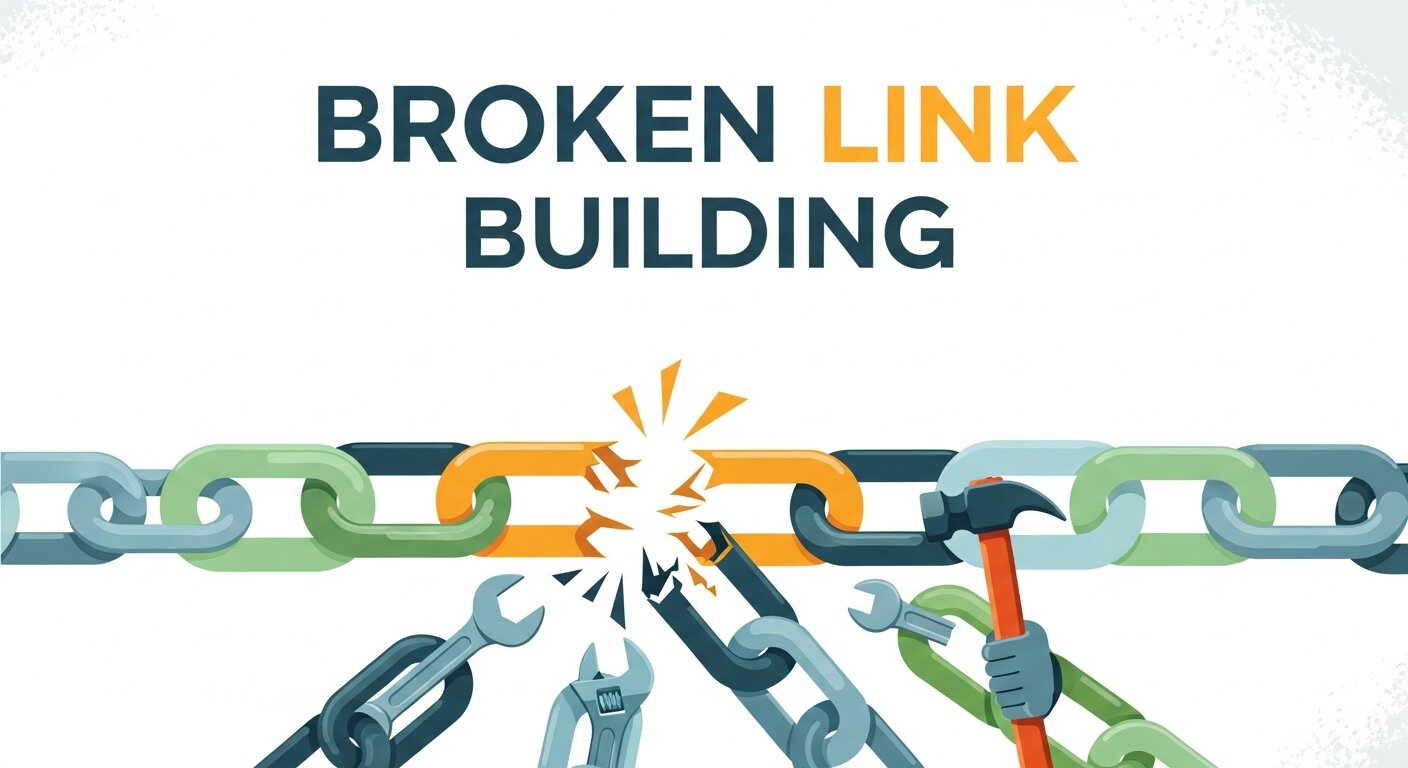
The internet is constantly decaying. Websites go offline, pages are moved, and URLs change. This creates “link rot,” where thousands of links across the web point to 404 error pages. This is bad for user experience and bad for SEO.
Broken link building turns this problem into an opportunity.
- Identify a Target: Find a high-authority website in your niche from which you would like a link.
- Scan for Errors: Use SEO tools to scan the website for broken external links.
- Create the Replacement: If you find a broken link pointing to a resource that no longer exists (e.g., a guide on “Social Media Trends 2018”), check if you have a current, better version of that content. If not, create it.
- The Outreach: Contact the webmaster. Be helpful, not demanding. Your email should say, “Hey, I was reading your great article on X and noticed this link is broken. Just thought you should know. By the way, I have a similar, up-to-date guide on that topic if you want to swap it out.”
This strategy works well because you are doing the webmaster a favor by helping them fix their site.
Strategy 4: Digital PR and HARO
One of the most effective ways to get links from top-tier publications (like Forbes, Business Insider, or major industry news sites) is through Digital PR.
Platforms like Connectively (formerly HARO – Help a Reporter Out) and Qwoted connect journalists with expert sources. Reporters are often on tight deadlines and need quotes from experts to round out their stories.
How to Win at Digital PR
- Be Fast: Journalists work on tight deadlines. Respond to queries as soon as they come in.
- Be specific: Don’t send a generic pitch. Answer their specific question with a quotable, insightful soundbite.
- Show Credentials: Briefly explain why you are the expert on this topic.
If they use your quote, they will almost always credit you with a link to your website. This is how small businesses in SanMo CA and beyond end up featured in national publications.
Strategy 5: Reclaiming Unlinked Mentions
As your brand grows, people will start talking about you. However, they won’t always link to you. They might mention “SanMo CA’s marketing report” without actually hyperlinking the text.
These are unlinked mentions, and they are the lowest-hanging fruit in link building.
You can set up Google Alerts or use paid SEO tools to monitor the web for mentions of your brand name. When you find a mention that lacks a hyperlink, reach out to the writer or editor. A simple, polite email thanking them for the mention and asking if they wouldn’t mind adding a link so readers can find the original source often has a high success rate.
The Role of Relationships
At its core, ethical link building is relationship building. It is about connecting with other humans behind the screens.
Engage with other creators in your space. Comment on their LinkedIn posts, share their content, and offer genuine value before you ever ask for a favor. When you treat link building as a byproduct of networking rather than a transactional exchange, the results are far more sustainable.
Measuring Success Beyond Domain Authority

Many marketers obsess over Domain Authority (DA) or Domain Rating (DR). While these metrics are useful benchmarks, they are third-party estimates, not official Google metrics.
Ethical link building should be measured by:
- Referral Traffic: Are people actually clicking the links and visiting your site?
- Keyword Rankings: Is your content moving up in the SERPs (Search Engine Results Pages)?
- Relevance: Are the links coming from sites that actually matter to your industry?
A single link from a highly relevant, lower-DA industry blog is often worth more than a link from a high-DA site that has nothing to do with your business.
Leveraging Content Partnerships for Scalable Link Growth
One of the most overlooked ethical link-building tactics is long-term content partnerships. Instead of one-off guest posts, focus on building recurring collaborations with complementary brands, SaaS companies, or industry publishers. For example, co-authoring research reports, hosting joint webinars, or publishing expert roundups can naturally generate authoritative backlinks for both parties. These collaborations increase reach, strengthen brand credibility, and create multiple linking opportunities across blogs, landing pages, and press releases. Unlike transactional outreach, partnerships compound over time. Search engines reward consistent relevance and authority signals, so repeated contextual links from trusted industry sources carry significant weight. When partnerships are rooted in shared value and audience alignment, link acquisition becomes a byproduct of strategic relationship building.
Using Internal Linking to Amplify External Backlinks
While earning high-quality backlinks is essential, many businesses fail to maximize their impact through internal linking. When a blog post attracts authoritative external links, it gains “link equity.” Strategic internal links allow you to distribute that authority to important commercial or conversion-focused pages. For instance, if your in-depth SEO guide earns backlinks, you can link from that guide to your service pages, case studies, or lead magnets. This strengthens overall site architecture and helps search engines understand content hierarchy. Ethical link building is not just about acquiring links—it’s about managing them intelligently. A well-structured internal linking strategy ensures that every earned backlink contributes to broader ranking improvements and business growth.
Building a Fortress Around Your Business
The temptation to take shortcuts in digital marketing is always present. Black hat tactics can seem appealing because they promise speed. But in an era where trust is the ultimate currency, ethical link building is the only insurance policy your website has.
By focusing on high-quality content, genuine outreach, and adding value to the internet ecosystem, you build a “moat” around your business. You protect yourself from algorithm updates and build a brand that is recognized as an authority.
Whether you are a local startup or a major enterprise, the principles remain the same: Give value to get value. That is the SanMo CA philosophy, and it is the key to winning in the long run.
Frequently Asked Questions (FAQ)
Is it ever okay to buy links?
Generally, no. Google’s Webmaster Guidelines strictly prohibit buying links to manipulate PageRank. If you get caught, your site can be penalized or removed from search results entirely. The only exception is “sponsored” content, where the link is tagged with a rel="sponsored" or rel="nofollow" attribute, telling Google not to count it as a vote of authority.
How long does it take to see results from ethical link building?
Link building is a long-term strategy. Unlike paid ads, which turn on instantly, SEO takes time. You might start seeing movement in your rankings within 3 to 6 months of a consistent campaign, but substantial growth in Domain Authority often takes a year or more of dedicated effort.
What is a “good” Domain Authority score?
DA is a comparative metric, not an absolute one. A “good” score is one that is higher than your direct competitors. If your competitors average a DA of 30, then a DA of 35 is excellent. You don’t need a DA of 90 to rank well unless you are competing with sites like Wikipedia or Amazon.
Can I build links to my product pages?
It is very difficult to get organic links to product or sales pages because they are inherently commercial. Most natural links will go to your informational content (blog posts, guides, tools). You can then use internal linking to pass that authority from your blog posts to your product pages.